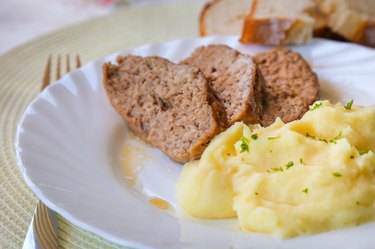
According to the North Carolina Potato Association, the average adult consumes about one potato each day, and potatoes are the second most consumed food in America after dairy products. A side of mashed potatoes with a meal may be an American staple, but if you have diabetes, you may be concerned about the carbohydrate content of this popular side dish. You can include mashed potatoes as part of your diabetes diet, and preparation and serving size will help you keep your blood sugar under control.
Carbohydrates and Mashed Potatoes
Video of the Day
Diabetes occurs when your body cannot effectively control your blood sugar levels. Carbohydrates affect blood sugar, so the American Diabetes Association's meal plan recommends that people with diabetes limit their carbohydrate intake to 45 percent of their total calories, or 45 to 60 grams of carbohydrates per meal. Fruit, vegetables, grains, breads and added sugar all contribute to the carbohydrate total of your meal. One cup of mashed potatoes prepared with whole milk provides 174 calories and 37 grams of carbohydrates, between 62 and 82 percent of the total carbohydrates recommended for an entire meal.
Video of the Day
The Glycemic Index
Mashed potatoes also rate high on the glycemic index, a tool that measures a food's impact on blood sugar levels. Unprocessed, high-fiber foods, such as whole grains and most fruits and vegetables, tend to be low-glycemic foods because fiber slows the rate of blood sugar increase. Processing and cooking often increases the glycemic index of foods. High-glycemic foods have a rating of 70 or above. The University of Sydney's glycemic index database reports that mashed potatoes have a glycemic index of 83. Instant mashed potatoes have a glycemic index of 87, according to Harvard Health Publications. If you follow the glycemic index diet to control your diabetes, eat small portions of high-glycemic foods, such as mashed potatoes, and balance them with low-glycemic foods in your meal.
Preparation of Mashed Potatoes
When making mashed potatoes for a diabetes diet, ingredients count. Diabetes increases your risk of heart disease, so keep your potatoes heart healthy by avoiding high-fat ingredients. Plain potatoes contain a trivial amount of fat, less than 0.5 gram per small potato, but whole milk, butter and cheese contain high levels of saturated fat, which can raise your blood cholesterol levels. Of the 10 grams of total fat in 1 cup of mashed potatoes prepared with whole milk and butter, 7 grams come from saturated fat. The Dietary Guidelines for Americans 2010 recommends adults consume less than 10 percent of their calories from saturated fat, but people with heart disease risk factors should lower their intake to 7 percent or less. Fat contains 9 calories per gram, so 7 percent of an average 2,000 calorie diet equals 15.5 grams of saturated fat per day.
A Healthier Side Dish
You can still enjoy mashed potatoes every so often on a diabetes diet, but limit your serving size. Instead of butter, flavor your potatoes with herbs and spices. Skip the salt because a high-sodium diet leads to hypertension, a risk factor for heart disease. For variety, mash sweet potatoes. A sweet potato with skin has a glycemic index of 44, making it a low-glycemic food. You can even skip the potatoes entirely and try mashed cauliflower. One cup of raw cauliflower contains only 5 grams of carbohydrates and 2 grams of fiber, making it a healthy choice for anyone following a diabetes diet.
- North Carolina Potato Association: Consumer Information
- American Diabetes Association: About Our Meal Plans
- USDA National Nutrient Database: Potatoes, Mashed, Home-prepared, Whole Milk Added
- American Diabetes Association: Glycemic Index and Diabetes
- Harvard Health Publications: Glycemic Index and Glycemic Load for 100+ Foods
- The University of Sydney: Mashed Potato, Type Not Specified
- USDA National Nutrient Database: Potatoes, Russet, Flesh and Skin, Baked
- USDA National Nutrient Database: Potatoes, Mashed, Dehydrated, Prepared From Flakes Without Milk, Whole Milk and Butter Added
- The University of Sydney: Sweet Potato (Ipomoea Batatas), Boiled
- USDA National Nutrient Database: Cauliflower, Raw