



























Following a high-protein diet can help encourage muscle development in active women. For women who want to lose weight, a high-protein diet improves feelings of satiation, stabilizes blood sugar to reduce cravings and causes the body to burn slightly more calories during digestion. When developing a high-protein diet menu, emphasize proteins low in saturated fat to protect your heart health. You should also continue to consume moderate amounts of healthy carbohydrates and unsaturated fats to provide your body with adequate energy and nutrition.
Composition
A high-protein diet may ask that you consume about 1 g of protein per lb. of body weight, or consume 30 percent of your daily calories from proteins. For a typical 2,000-calorie diet recommended for the average woman, you would aim for 600 calories of protein. One gram of protein contains 4 calories, so this amounts to about 150 g of protein daily. You should still aim to consume about 45 to 55 percent of daily calories from carbohydrates and the remaining 20 to 25 percent of calories from fats.
Food Choices
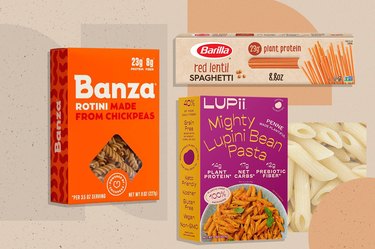
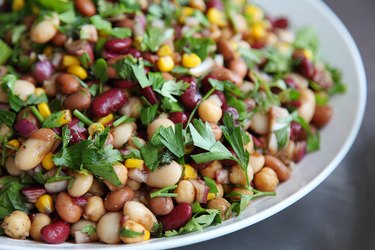
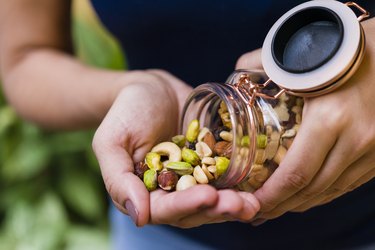
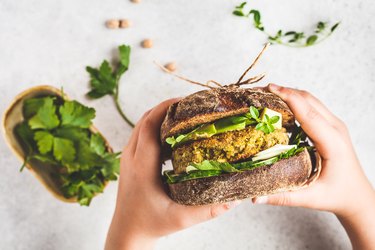
Find protein in meats, fish, poultry, dairy and soy products. Some protein is also available in grains and produce, but most of these plant sources of protein are considered incomplete -- meaning they do not provide all the essential amino acids that your body cannot produce on their own. Beans and nuts are also incomplete sources of protein, however they can easily be combined with grains such as rice or whole-wheat bread to create a complete protein. One oz. of chicken or beef contains about 8 g of protein, 1 oz. of fish has 7 g and 1 oz. of beans has 2 g.
Considerations
When devising a high-protein menu, keep in mind what additional nutrients or anti-nutrients come with your protein choice. Red meat is often higher in saturated fat, which can cause high cholesterol, than white-meat poultry or seafood. Red meat is a good source of iron, however -- and the average woman needs 18 mg daily for good health. Beans come with fiber and multiple vitamins and minerals, in addition to protein. Nuts and fatty fish are sources of protein and heart-healthy fats. While protein supplements, such as bars and shakes, can be convenient, they are often highly processed and contain added sugars and artificial ingredients. Dairy sources of protein, such as low-fat cheese and yogurt, offer calcium -- which can help promote a woman's bone health. You should consult your doctor before following a high-protein diet as it can aggravate some specific medical conditions.
Sample Menu
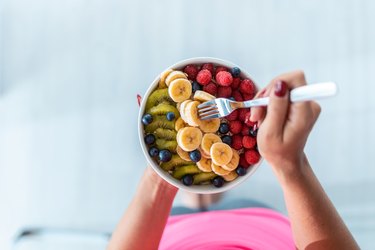
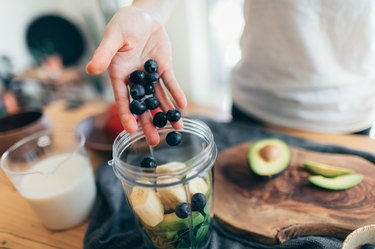
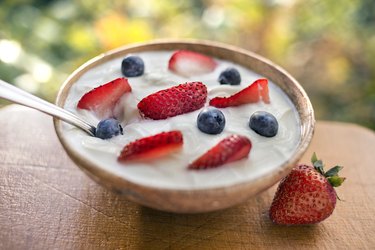
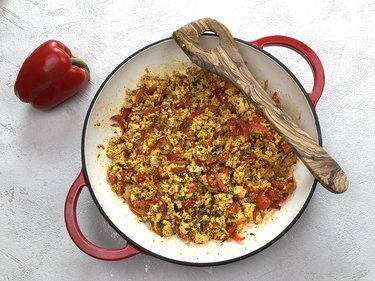
A high-protein menu for a woman might begin with 1 whole egg scrambled with 4 egg whites and topped with 2 tbsp. of salsa. Have with 3/4 cup of cooked oatmeal with 1 cup blueberries, ½ oz. chopped almonds, a small apple and 8 oz. of skim milk. For lunch, make a pasta salad by stirring together 4 oz. of roasted chicken breast, 1 cup whole-grain pasta, 1/2 cup sliced mushrooms, a slice of avocado and 1 tbsp. light mayonnaise. For dinner, broil 6 oz. of tilapia and serve with 1 cup of brown rice, 1 cup roasted butternut squash and 2 cups of leafy greens tossed with 1 tsp. of olive oil and 1 tsp. balsamic vinegar. For a morning snack, have 1 cup of low-fat cottage cheese with a banana and 24 almonds. After your workout, have a cup of nonfat Greek yogurt topped with 1 cup raspberries. This menu plan has about 2,000 calories and is 30 percent protein.


Member Comments