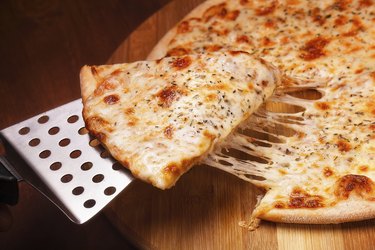
High blood pressure affects more than 30 percent of all adults in the United States, according to 2013 information provided by the Centers for Disease Control and Prevention. Having high blood pressure increases your risk of heart disease, stroke, congestive heart failure and kidney disease. You can improve your blood pressure by making lifestyle changes, including diet changes such as limiting your sodium intake. Because pizza is considered a high-sodium food item, you might think that it's necessary to eliminate it from your meal plan; however, with careful planning, you can still enjoy it on occasion.
Blood Pressure
Video of the Day
Your blood pressure is the force of blood against the walls of your arteries measured in two numbers -- systolic and diastolic. The systolic represents the pressure in your blood vessels when your heart beats, while the diastolic measures the pressure in between beats. A normal blood pressure is 120 systolic and 80 diastolic. If you systolic is 140 or higher and your diastolic 90 or more, your blood pressure is consider high. The added pressure on your artery walls can damage the vessels, increasing your risk of heart disease, stroke and kidney disease.
Video of the Day
Sodium and Blood Pressure
Sodium is a mineral that your body needs to balance fluid. Certain individuals are genetically predisposed to retain higher amounts of sodium in their blood. High blood sodium levels increase thirst, causing the body to retain more fluids and increase blood volume. The increase in volume raises blood pressure. Sodium-sensitive people need to be extra cautious about the amount of sodium in their diets. On average the higher your sodium intake, the higher your blood pressure, notes the USDA.
Sodium in Pizza
Pizza, because of the cheese and sauce, is a high-sodium food item. The sodium content can vary depending on the ingredients and toppings. One slice of a traditional-crust cheese pizza from a chain restaurant generally contains anywhere from 490 to 900 milligrams of sodium per slice. Add pepperoni, and sodium increases to 680 to 1,010 milligrams per slice. Vegetable toppings make a better choice, but can still add sodium, depending on the restaurant. One slice of vegetable pizza on average contains 490 to 730 milligrams of sodium.
Pizza and Your Diet
The American Heart Association recommends eating foods with little or no added salt, as well as aiming to consume less than 1,500 milligrams of sodium per day to reduce your risk of cardiovascular disease. If you track your daily sodium intake, you can include one slice of regular cheese pizza on occasion. You can also make your own low-sodium pizza at home using low-sodium sauce, low-sodium cheese and fresh vegetable toppings.
- FamilyDoctor.org; High Blood Pressure: Things You Can Do to Lower Yours; January 1996
- Centers for Disease Control and Prevention; High Blood Pressure Facts; March 2011
- The DASH Diet Eating Plan; Feb. 26, 2011
- American Association or Kidney Patients; Why Does Salt Cause High Blood Pressure; Stephen Fadem
- National Heart Lung and Blood Institute: What is Blood Pressure
- American Heart Association: Sodium (Salt or Sodium Chloride)
- USDA; Dietary Guidelines for Americans, 2010; Foods and Food Components to Reduce
Is this an emergency? If you are experiencing serious medical symptoms, please see the National Library of Medicine’s list of signs you need emergency medical attention or call 911.