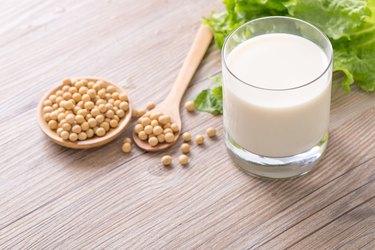
If you're lactose intolerant, concerned about the environment or you just aren't into the taste of cow's milk, you can reach for soy milk as a comparable alternative. Made from soybeans or soy flour, this pick is one of the more popular milk alternatives on the market.
It generally has a longer shelf life than dairy milk and some types of packaged soy milk can be stored at room temperature for months, which helps eliminate waste caused by food spoilage.
Video of the Day
Video of the Day
There are many pros and cons of soy milk to consider. While it's high in beneficial nutrients, some varieties come loaded with sugar, which can pose a health risk.
Consider these pros and cons of soy milk before you swap your go-to glass.
The Health Benefits of Soy Milk
1. It's Full of Protein
Try including soy milk in your diet as a source of protein. Soy protein can help lower levels of LDL "bad" cholesterol, according to the National Institutes of Health (NIH).
Each cup of unsweetened, plain soy milk provides 7 grams of protein, according to the USDA. For reference, a glass of two-percent dairy milk has 8 grams of protein.
Unlike most plant-based proteins — which have some, but not all, of the amino acids you need in your diet — soy has all nine essential amino acids. Your body assembles these amino acids into new proteins, including antibodies essential for immune system function, structural proteins that hold your tissues together and enzymes that help your cells produce energy.
2. It Doesn’t Increase Risk of Breast Cancer
It was once thought that soy foods — because of their isoflavones, a phytoestrogen — can increase your risk of breast cancer. This belief has since been refuted, according to the American Cancer Society.
Recent research has found that drinking soy milk is not linked to an increased risk of breast cancer and may actually help protect against it, per a February 2020 study in the International Journal of Epidemiology
3. It Doesn't Cause Hormone Imbalances
The phytoestrogens in soy milk perform functions in the human body similar to the hormone estrogen. Some people assigned male at birth (AMAB) may avoid soy foods out of worry that too many phytoestrogens can have a negative effect on their hormone balance.
But, isoflavones in soy do not increase estrogen levels in people AMAB, and eating soy does not seem to affect testosterone levels, according to a May 2010 analysis in Fertility and Sterility.
And a bonus: Eating or drinking soy foods, like soy milk, is associated with a reduced risk of prostate cancer, according to Oregon State University.
4. It Contains Calcium and Iron
Drinking soy milk can help you get more calcium and iron, as long as you buy soy milk that is fortified. Your body relies on the calcium from your diet to maintain dense and strong bone tissue. Without it, your body draws on your bones as a source of calcium, which can reduce your bone density over time.
One cup of unsweetened plain soy milk boasts 301 milligrams of calcium. This contributes close to 30 percent of your recommended daily amount, according to the NIH.
The iron in soy milk helps your red blood vessels function properly, helping ensure that all the tissues throughout your body get the oxygen they need. Each serving of soy milk provides 1.1 milligrams of iron, contributing to your daily needs for the nutrient.
5. It Boasts Riboflavin and Vitamin B12
Soy milk also helps you get more B-complex vitamins and serves as an especially rich source of riboflavin (vitamin B2) and vitamin B12. Getting enough vitamin B12 in your diet helps your cells produce DNA, aids in red blood cell function and also keeps your nerves healthy.
One cup of soy milk provides 2.7 micrograms of vitamin B12, which is more than the 2.4 micrograms you need each day. The riboflavin in soy milk helps your cells produce energy and shields your DNA from damage. Drinking one cup of soy milk gives you 0.5 milligrams of riboflavin — close to 50 percent of the recommended daily amount.
6. Soy Milk Is Vegan
Vegans can eat soy and soy milk is a good alternative for anyone who chooses to avoid dairy products for health or other reasons.
Soy provides protein — a significant benefit to vegans or anyone following a diet low in animal proteins. Soy does not have cholesterol and is low in fat. Products with soy also provide important nutrients such as calcium, vitamin D and vitamin A.
You can use soy milk in any recipe as a substitute for regular milk, and you can simply drink a glass of it. You will likely notice some flavor differences, but most people adjust to the taste of soy milk easily.
7. Some Are Shelf-Stable
Unlike cow's milk, you can find some soy milk in the non-refrigerated section of your grocery store. Aseptic packaging is used and you'll find them with other shelf-stable milk alternatives, typically in the "natural foods" section of your supermarket.
The aseptic packaging has a 12-month shelf life and once it's opened, it must be refrigerated and used within a week.
Potential Disadvantages of Soy Milk
Drinking soy milk can have disadvantages for some people. While it's generally considered safe, here are a few factors to consider.
1. Soy Allergy
For many people, there are no soy milk side effects and it's completely safe to drink. But if you have an allergy to soy, you should steer clear of soy milk.
Soy is one of the top nine food allergies, according to Food Allergy Research and Education (FARE). It can be a difficult ingredient to avoid because soy is commonly used in many processed foods as soy lecithin or soybean oil.
If you have an allergy, you may experience minor side effects of soy milk including skin rash or itching, stomach pain, stuffy nose and wheezing. More severe side effects include diarrhea, vomiting and in rare cases, anaphylactic shock.
If you're allergic to soy, avoid soy milk and any processed foods that have soy-derived ingredients. According to FARE, you'll also have to watch out for other names for soy in foods, including:
- Edamame
- Miso
- Natto
- Shoyu
- Soya
- Tamari
- Tempeh
- Textured vegetable protein (TVP)
- Tofu
Tip
If you're allergic to soy and looking for another non-dairy milk alternative, consider trying oat milk, coconut milk, almond milk or flax milk.
2. Added Sugars
Some types of soy milk do have a major nutritional disadvantage because of added sugar. Added sugars increase non-nutritive calories in your diet, and they can increase your risk of heart disease and type 2 diabetes.
Go with unsweetened soy milk to minimize added sugar — the unsweetened stuff has just 1 gram of naturally occurring sugars per cup and no added sugar. Chocolate- and vanilla-flavored soy milk, in contrast, have around 20 and 7 grams of added sugar per serving, respectively.
3. Check the Calcium
If you're replacing cow's milk with soy milk in your diet, be aware that soy is not naturally a good source of calcium. Calcium is an extremely important nutrient that plays a role in our bone strength as well as our nerve and muscle health.
But because soy milk is typically used as an alternative to cow's milk, many soy milk products are fortified with nutrients like calcium and vitamin D, which enhances calcium absorption. Just make sure to check your nutrition labels and opt for soy milk choices that have added calcium, and offer at least 20 percent of your daily needs.
4. Anti-Nutrients
Soy also has phytates, which are anti-nutrients that can block the absorption of certain minerals, like iodine, zinc, iron, magnesium, copper and chromium. If you're drinking a lot of soy milk and eating processed foods that contain soy, this can increase your risk of developing nutritional deficiencies.
That said, rest assured that the benefits of having some soy milk in your diet outweigh the negative effects of anti-nutrients found in them, according to the Harvard T.H. Chan School of Public Health. As always, practice moderation when adding soy milk to your diet.
5. Genetic Modification
In simple terms, genetic modification is when food scientists and chemists introduce new DNA to crops to make it more resistant to threats, like pests and bad weather, so they can grow more.
Soy is one of the leading genetically modified, or GM, crops (also called genetically modified organisms or GMOs) in the United States. In fact, the USDA notes that 94 percent of the soy currently grown in the U.S. is genetically modified. While genetic modification increases crop yield, it also introduces potential problems.
One of the main concerns is that, because GM crops are resistant to bacteria, they may give way to the growth of bacteria strains that are antibiotic-resistant, per January 2011 research in the Journal of Toxicology and Environmental Health. And if these antibiotic-resistant bacteria make you sick, they'll be difficult to treat.
Another concern is that the process of genetic modification may introduce new allergens and toxic substances, like heavy metals, into the plant, according to Virginia State University. If this happens, and you drink a lot of genetically-modified soy milk, it can lead to health problems, like heavy metal toxicity. That said, you'd have to drink huge quantities of soy milk over long periods of time.
Does Soy Milk Cause Gout?
Uric acid is a waste product that forms from the degradation of genetic material such as DNA and RNA. Uric acid is benign at normal levels but if excessive levels of uric acid build-up and form needle-like crystals in the joints, it can cause a painful inflammatory arthritic condition known as gout. This is most likely to occur in the big toe, knee or ankle joints, per the U.S. National Library of Medicine.
Purines are thought to increase uric acid levels in the blood. But soy milk is very low in purines and therefore OK to eat on a gout diet, per a 2014 study in Biological & Pharmaceutical Bulletin.
Soy Milk for Kids
Many people wonder whether or not soy milk is good for kids. This depends on their age and other factors.
Babies
Babies under one year old should not drink soy milk, cow's milk or any other milk alternative, as only formula and breast milk are recommended at this stage, per John Hopkin's Medicine.
There is some debate about the safety and side effects of soy formula for babies, according to the NIH. While there are no studies that show that soy formula is unsafe, infants are considered more likely than adults to be vulnerable to the estrogen-like effects of soy, which some research suggests could affect their reproductive development.
Toddlers
For toddlers, soy milk can offer many of the important nutrients they need for healthy development, like protein, vitamin D and calcium (as long as you're choosing fortified soy milk).
That said, soy is a common allergen among kids, and kids who are allergic to cow's milk often react to soy protein, too, according to the Royal Children's Hospital.
Always check with your child's pediatrician if you're concerned about adding a new food like soy milk to their diet.
- USDA National Nutrient Database: SILK Unsweetened, Soymilk
- National Center for Complementary and Integrative Health: Soy
- National Institutes of Health, Office of Dietary Supplements: Calcium
- National Institutes of Health, Office of Dietary Supplements: Iron
- National Institutes of Health, Office of Dietary Supplements: Vitamin B12
- USDA National Nutrient Database: Vitasoy, Soy Drink, Chocolate
- USDA National Nutrient Database: Vitasoy Light Vanilla Soymilk
- American Cancer Society: "Soy and Cancer Risk: Our Expert’s Advice"
- International Journal of Epidemiology: "Dairy, Soy, and Risk of Breast Cancer: Those Confounded Milks"
- Food Allergy Research & Education (FARE): "Food Allergy Essentials, Common Allergies"
- Harvard TH Chan School of Public Health: Anti-Nutrients
- Journal of Toxicology and Environmental Health: Potential Adverse Health Effects of Genetically Modified Crops
- Royal Children's Hospital: Allergy and Immunology: Cow's Milk and Soy Allergy
- John's Hopkin's Medicine: Feeding Guide for the First Year
- NIH: Soy Infant Formula
- USDA MyFoodData: Unsweetened Soy Milk