














































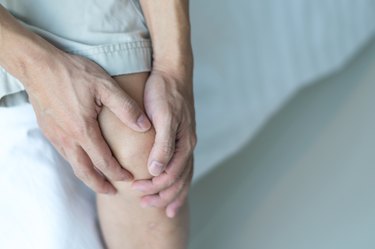







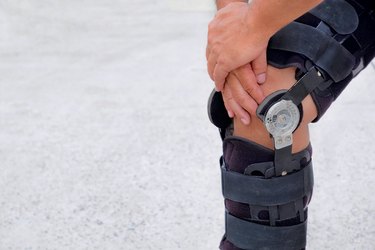


A Baker's cyst -- also known as a popliteal cyst -- causes a feeling of pain and tightness behind one or both of your knees. Baker's cysts -- fluid-filled cysts -- can lead to discomfort during physical activity, walking and during normal, weight-bearing tasks. If you experience pain and tightness behind your knees, discontinue physical activity and contact your doctor for a diagnosis.
Causes
A Baker's cyst is the result of excessive synovial fluid -- the fluid responsible for allowing your knee to move freely and without friction. A Baker's cyst can be the result of an underlying condition, including arthritis and torn cartilage. In young athletes, injury is often the cause. Baker's cysts are most often the result of arthritis in older individuals. You may also develop a Baker's cyst as the result of fluid buildup around your knees.
Signs
Some individuals may never experience one sign or symptom when they have a Baker's cyst. Other individuals may experience swelling behind the knees and occasionally along the back of the leg. You may experience pain ranging from mild to severe. Your knee may be stiff. Upon feeling the back of your leg, your knee may feel like a water balloon. Your knee may ache and the pains are likely to increase with physical activity.
Diagnosis
If you experience symptoms of a Baker's cyst, you should make an appointment with your doctor. Your doctor will take a medical history and reform a physical examination. Since a Baker's cyst can mimic more serious conditions -- including tumors and blood clots -- your doctor may order further testing. An ultrasound or MRI may be ordered to help your doctor get a clearer picture of your knee. These imaging studies examine your bones as well as the ligaments, tendons, cartilage and other soft tissues around your knee. They can diagnose injuries as well as arthritis that may be the cause of your Baker's cyst.
Treatment.
Baker's cysts often disappear without any treatment. If you have a large cyst or experience severe pain, your doctor may opt to drain your knee. Physical therapy can also be used to reduce symptoms and restore function to your knee. Your doctor may also prescribe anti-inflammatory or injection medication to reduce inflammation. Treatment for a Baker's cyst also depends on the underlying cause. Treating arthritis or an injury can help reduce symptoms of a Baker's cyst.


