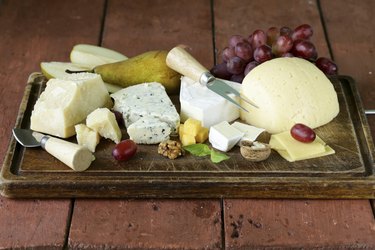
Most dairy products, including cheese and milk, aren't allowed on a candida diet. That's because dairy contains lactose, a simple sugar thought to provide fuel for candida, the yeast that grows naturally on the skin and in the urinary tract. Unchecked candida growth -- a condition known as candidiasis -- may cause diarrhea, joint or muscle pain, depression and headaches. While a candida diet limits products that can serve as food for candida, not all types of cheese are forbidden. Before starting any version of the candida diet, speak to your doctor about the possible benefits and dangers.
Types of Allowed Cheese
Video of the Day
While you're on a candida diet, you're allowed to eat soy cheese as long as it does not include the sweetener maltodextrin or modified food starch as ingredients. Sugar and any other type of sweetening agent -- white or brown sugar, corn syrup, brown rice syrup, honey, maple syrup, molasses, agave nectar or syrup and high fructose corn syrup, for example -- supposedly serve as food for candida and can contribute to an increase of the organism in your body. Food starch is metabolized into simple sugar and may have the same effect. Unaged goat cheese is also allowed on a candida diet.
Video of the Day
Cheeses to Avoid
Stay away from cheeses prepared from cow or rice milk, as well as any brand of soy cheese that has modified food starch or maltodextrin as an ingredient. This restriction includes all types of cheeses, though you may be able to include small amounts of low-lactose varieties into your diet occasionally, as tolerated. Sharp white cheddar, mozzarella, provolone, Swiss, Monterey Jack, Colby and dry curd cottage cheese are the ones with the least amount of lactose per serving.
Sample Menus With Cheese
When you're following a candida diet, you will need to eliminate all processed foods, grains -- both refined and whole -- sweeteners, dried fruit, starchy vegetables like potatoes and corn, alcohol and yeast-dependent foods like bread from your meals. A typical day's menu including soy cheese might consist of a vegetable omelet topped with shredded soy cheese for breakfast, a green salad tossed with chopped vegetables and cubes of unaged goat cheese at lunch and turkey chili topped with some grated soy cheese for dinner.
Additional Considerations
A candida diet's restriction on dairy products may make it difficult for you to get all the calcium your body needs to build and repair your bones and teeth and to support the function of your nervous, cardiovascular and muscular systems. Whenever possible, choose soy cheese that's been fortified with calcium -- not all brands are. In addition, make an effort to include plenty of other calcium-rich, candida-diet friendly foods in your daily meals. Calcium-fortified orange juice, tofu, tempeh, canned salmon or sardines, and dark green leafy vegetables like kale or bok choy are good choices.
- Functional Medicine Research Center: Intestinal Candidiasis -- The Yeast Syndrome
- University of Maryland Medical Center: Candidiasis
- WholeHealth Chicago: Candida Overgrowth Syndrome
- Lowey Chiropractic Wellness Center: Yeast Free/Anti-Candida Diet
- ChooseMyPlate.gov: Dairy -- Tips for Making Wise Choices in the Dairy Group