Colon polyps are growths along the lining of your colon (part of the large intestine) and rectum. While not the usual topic of casual small talk, colon polyps are pretty common. Is there a diet to prevent colon polyps? Not really, but eating the right foods may lower your chance of getting them.
Read more: Can Certain Foods Heal Inflamed Intestines?
Video of the Day
Video of the Day
Where Do Colon Polyps Come From?
Experts aren't sure about the exact cause of colon polyps, so there's no known method to completely prevent them. But there are some people who may be more prone to colon polyps, according to the National Institute of Diabetes and Digestive and Kidney Diseases (NIDDK), including people who:
- Are older than 50.
- Have a family member who has had polyps or colorectal cancer.
- Have inflammatory bowel disease.
- Have obesity.
- Smoke cigarettes.
While colon polyps aren't painful, they can cause blood in your stool and general fatigue, according to the NIDDK. They may also lead to colon cancer. For that reason, the Centers for Disease Control and Prevention recommends routine colorectal cancer screenings from age 50 to 75 for most adults. Those older than 75 should ask their doctor about whether screening is a good idea. If precancerous polyps are present, they're typically removed.
While there's no surefire way to avoid colon polyps, research suggests that diet and exercise can play a significant role in preventing them.
Polyps and Your Plate
Eating a high-fiber diet and avoiding red meat and processed meat is one promising way to prevent colon polyps.
"Research is actually quite strong in relation to diet and reduced risk of colon polyps," says Alicia Romano, RD, LDN, a specialized clinical dietitian at Tufts Medical Center in Boston and a spokesperson for the Academy of Nutrition and Dietetics. Though, diet alone doesn't offer complete prevention, since there are other risk factors for polyps such as family history, health history and genetics, she says.
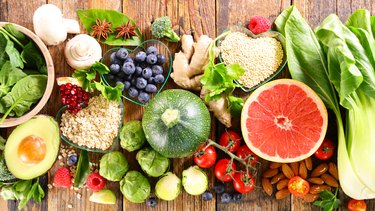
The NIDDK recommends eating a diet high in fiber, which includes fruits, veggies, beans and things like bran cereal. Romano recommends eating a minimum of 3-5 servings of fruits and vegetables a day. When picking which fruits and vegetables to include, let them be a feast for your eyes, too. "Color and variety ensure a wider access to potentially protective nutrients," Romano says.
When it comes to grains, like rice or bread, Romano suggests making at least half of the ones you eat whole grain. Think: brown rice, 100 percent whole wheat or whole grain breads and cereals. Ancient grains are good, too — things like quinoa, amaranth, bulgur and buckwheat.
There are some foods you should work to avoid, too. Red meat, like beef, pork and lamb, as well as processed meats, like deli meat, hot dogs and sausage should all be avoided. Alcohol should be limited, too, she says, to one drink per day for women, and two for men.
Other Polyp Prevention Strategies
The NIDDK also says that maintaining a healthy weight is an important polyp prevention strategy. And smoking is associated with colorectal cancer and should be avoided.
Exercise may also play a role in preventing colon polyps. Romano cites a general recommendation of 150 minutes of moderate aerobic activity and two strength training sessions weekly. Tight for time? A study from June 2012 in BMC Research Notes suggests that even an hour of exercise per week may help prevent colon polyps.
In terms of additional protection, a low dose of aspirin every day has been shown to prevent colon polyps from developing into colon cancer, according to the NIDDK, but you should talk to your doctor to see if that's the right option for you.
If you've already had polyps and want to prevent them from coming back, Harvard Health Publishing recommends much of the same — eat less meat and talk with your doctor about taking aspirin.
With regular screening, diet and exercise, you'll be doing everything you can to reduce your risk of colon polyps and colorectal cancer.
- National Institute of Diabetes and Digestive and Kidney Diseases: “Definition & Facts for Colon Polyps”
- National Institute of Diabetes and Digestive and Kidney Diseases: “Symptoms & Causes of Colon Polyps”
- Centers for Disease Control and Prevention: “Colorectal (Colon) Cancer: What Should I Know About Screening?”
- Alicia A. Romano, MS, RD, LDN, CNSC, specialized clinical dietitian, Tufts Medical Center; spokesperson, Academy of Nutrition and Dietetics, Boston
- National Institute of Diabetes and Digestive and Kidney Diseases: “Eating, Diet, & Nutrition for Colon Polyps”
- BMC Research Notes: “Physical Activity Reduces Risk for Colon Polyps in a Multiethnic Colorectal Cancer Screening Population”
- National Institute of Diabetes and Digestive and Kidney Diseases: “Treatment for Colon Polyps”
- Harvard Health Publishing: “They Found Colon Polyps: Now What?”
Is this an emergency? If you are experiencing serious medical symptoms, please see the National Library of Medicine’s list of signs you need emergency medical attention or call 911.