

























































Fructans are a form of dietary fiber. They consist of linked molecules of the sugar fructose and a lesser number of glucose molecules. Many forms of fructans exist in a variety of vegetables, grains and fruit. Like other forms of dietary fiber, fructans are not digested in your small intestine. Good bacteria in your colon, however, feed on fructans, which may promote colon health.
Onions, Garlic and Leeks
Onions, garlic and leeks are members of the plant family Alliaceae. These pungent, flavorful vegetables are dietary staples worldwide. Onions have a moderately high concentration of fructans with 1.0 to 1.5 g per ounce. Storing onions at room temperature instead of in your refrigerator helps maintain their fructan content. Leek bulbs contain a higher concentration of fructans compared to onions with approximately 1.9 g per ounce. Garlic has nearly triple the amount of fructans compared to leeks with 5.4 g per ounce. Since garlic is used sparingly in most dishes, however, this food is unlikely to be a major source of fructans in your diet.
Artichokes
Artichokes are an excellent source of dietary fructans. The globe artichoke, with its pine cone-like appearance, is the vegetable most commonly recognized as an artichoke in the United States. Globe artichoke leaves contain approximately 1.9 g of fructans per ounce; the hearts contain roughly 3.3 g per ounce. Jerusalem artichokes are in a different plant family than globe artichokes. The edible part of a Jerusalem artichoke is the root, which contains approximately 2.7 g to 4.3 g of fructans per ounce. Jerusalem artichokes harvested in the fall typically contain more fructans than those harvested in the spring.
Asparagus
Including asparagus in your nutrition plan provides a moderate amount of dietary fructans. A 3-oz. serving of asparagus contains 1.5 g of fructans. Including fructans in your diet helps promote the growth of Bifidobacterium and Lactobacillus -- beneficial microflora in your intestine. These species of good bacteria contain enzymes capable of breaking down fructans and using them for food.
Rye, Barley and Wheat
Rye, barley and wheat contain moderate amounts of fructans. Rye contains the highest concentration of fructans with approximately 1.4 g per ounce. Barley and wheat contain 0.8 g and 0.6 g of fructans per ounce, respectively. Although wheat contains a relatively low concentration of fructans compared to other foods, the amount of wheat consumed makes it the leading source of dietary fructans among Americans.
Bananas
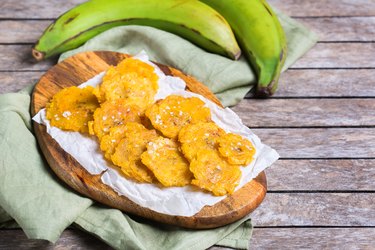
Bananas account for approximately 2 to 3 percent of total dietary fructan consumption among Americans, report Alanna J. Moshfegh, M.S., R.D., and colleagues in a July 1999 article published in the "Journal of Nutrition." Bananas contain approximately 0.4 g of fructans per ounce. Although other fruits, such as blueberries, persimmon and melon, also contain fructans, bananas are a leading dietary source because of their popularity and level of consumption.
References
- "Journal of Clinical Nutrition"; Fiber, Inulin and Oligofructose: Similarities and Differences; Barbara O. Schneeman, Ph.D.; July 1999
- "Science and Technology of Fructans"; Michio Suzuki, Ph.D., Norman Jerry Chatterton, Ph.D.; 1993
- "Chemical and Functional Properties of Food Saccharides"; Piotr Tomasik, Ph.D., D.Sc.; 2004
- "Food Science and Technology Bulletin: Functional Foods"; Glenn R. Gibson, Ph.D.; 2007
- "Journal of Nutrition"; Presence of Inulin and Oligofructose in the Diets of Americans; Alanna J. Moshfegh, M.S., R.D., et al.; July 1999


