














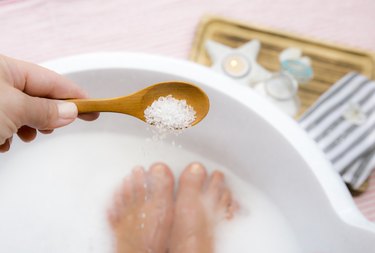














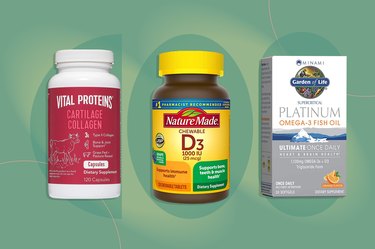









































Plantar fasciitis, also referred to as heel spurs, is inflammation of the plantar fascia, which is a thick band of tissue connecting your heel bone to your toes along the bottom of your foot. The inflammation causes stabbing heel pain that is usually worse in the morning, after long periods of standing or when standing after long periods of sitting. Conventional treatments for plantar fasciitis include corticosteroids, anti-inflammatory drugs, arch supports, night splints and physical therapy. Supplements may also provide relief if you suffer from heel spurs.
Turmeric
With further studies, turmeric may be a supplement useful in the treatment of plantar fasciitis. According to the National Institutes of Health's NCCAM, animal and laboratory studies show that curcumin, found in turmeric, may have anti-inflammatory properties, although these properties have not been confirmed in people. Turmeric is used to treat inflammation as well as other diseases and disorders. It is considered safe, though it may cause digestive disruption in high doses or with long-term use. Consult with your physician before adopting a supplemental regimen for treatment of plantar fasciitis.
Bromelain
Found in pineapples, bromelain is a digestive enzyme that digests protein and may reduce inflammation. In Central and South America, pineapples have been used to treat inflammation for centuries. The University of Maryland Medical Center states that bromelain is most effective to reduce inflammation associated with injury and infection. There are mixed results associated with using bromelain, but it is used more often for inflammation related to muscle injuries, sprains, strains and tendonitis, similar to plantar fasciitis. Although it is available in pineapples, there is not enough bromelain to elicit a medicinal effect. Tablets and capsules are available, but consult your physician before treating your plantar fasciitis with bromelain.
Vitamin C
Vitamin C may help heal plantar fasciitis. The November 1998 issue of "Dynamic Chiropractic" reported several causes of plantar fasciitis, including vitamin C deficient diets. Vitamin C can be taken safely in supplement form or through foods. Citrus fruits that contain a lot of vitamin C include oranges, grapefruits and strawberries. Other foods high in vitamin C are tomatoes, potatoes, broccoli and sweet red pepper. Vitamin C is considered tolerable for adults up to 2,000 mg per day, according to the Linus Pauling Institute.
Natural Anti-inflammatory Supplements
Some other supplements that are being researched for reducing inflammation, including that of plantar fasciitis, are ginger and omega-3s. The University of Maryland Medical Center says that omega-3s help reduce inflammation, while omega-6 fatty acids promote inflammation. Research shows that people who took fish oils, which contain omega-3s, were able to reduce their intake of NSAIDs, non-steroidal anti-inflammatory drugs.Since NSAIDs are a standard treatment for plantar fasciitis, according to MayoClinic.com, omega-3s may reduce your reliance on them. As with all supplements, consult with your physician before starting a new regimen for treatment.
References
- MayoClinic.com; Plantar Fasciitis Definition; March 2011
- MayoClinic.com; Plantar Fasciitis Treatments and Drugs; March 2011
- NCCAM: Turmeric
- University of Maryland Medical Center: Bromelain
- Linus Pauling Institute Micronutrient Information Center; Vitamin C; Jane Higdon; January 2006
- Dynamic Chiropractic; Plantar Fasciitis (Heel Spurs); Darryl Curl; November 1998


