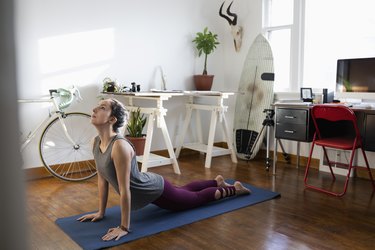
To build muscles, you need to devote time to strength training, right? So, if you want to loosen your muscles and move more freely, you need to spend some time doing special activities for flexibility.
Regularly performing flexibility-focused exercises can help improve your balance, prevent injury and even minimize back pain, according to Harvard Health Publishing.
Video of the Day
Video of the Day
Check out this flexibility activities list for inspiration and new limber-up ideas. Try them out, then use your favorites to give your body at least five minutes of flexibility TLC each and every day.
1. Yoga for Flexibility
Yoga moves your body through different poses or positions that help stretch muscles from head to toe, making it a great activity for flexibility. There are various types of yoga you can try, but all can help improve flexibility, according to Harvard Health Publishing.
A regular yoga practice can improve your range of motion and may even help relieve joint pain by strengthening joint-stabilizing muscles.
2. Pilates for Flexibility
Pilates is one of the best exercises for gaining flexibility. It lets you train several muscle groups at the same time and, because it's a low-impact exercise, it's gentle on your joints, per the Mayo Clinic.
Pilates also involves moving in several planes of motion, as opposed to just forward and backward. Being active in multiple directions helps develop your flexibility and minimize your injury risk.
3. Stretching for Flexibility
Regularly stretching is another way to help build flexibility, both for everyday life and the sports you love. You can meet your sport or workout's flexibility needs by thinking about the motions it involves.
Cyclists, for one, spend a time of time with their hips bent and hip flexors shortened. So they may want to focus on opening their hip flexors.
A runner that's struggling with tight legs may want to prioritize quad or hamstring stretches and exercises to help build a little more flexibility in these muscles.
Cheerleaders and gymnasts should likely focus on improving their back flexibility. Some great back flexibility stretches for cheerleading include the cat-cow stretch and child's pose.
4. Tai Chi for Flexibility
Tai chi is a form of martial arts that uses slow, controlled movements to promote stress relief and encourage flexibility, according to Harvard Health Publishing.
This gentle, low-impact workout also helps build lower-body stability, making it one of the best flexibility activities for older adults or anyone who has trouble balancing. Depending on the speed of your movements, Tai chi can offer some cardio benefits, too.
5. Water Aerobics for Flexibility
When you do them right, water workouts can give you a lot of the same benefits as training on land. Exercise in water is not only great for flexibility but gives you an excellent impact-free workout, per the Mayo Clinic.
Pool aerobics are also a good strength-building exercise — water acts as a natural form of resistance against your muscles.
- Harvard Health Publishing: "Benefits of Flexibility Exercises"
- Harvard Health Publishing: "The Physical Benefits of Yoga"
- Mayo Clinic: "Pilates for Beginners: Explore the Core"
- Harvard Health Publishing: "The Benefits of Tai Chi"
- Mayo Clinic: "Aquatic exercise: Gentle on your Bones, Joints and Muscles"