The most common cause of anemia is iron deficiency. Without adequate iron, your body is unable to produce the hemoglobin that your red blood cells need to transport oxygen. Anemia may also be caused by inadequate vitamin B-12 or folate intake.
The beverages you choose can help correct the problem. Some drinks contain compounds that can exacerbate anemia by blocking iron absorption — coffee, tea, soda and milk, for example — while others enhance absorption or contain a high enough concentration of iron, vitamin B-12 or folate to increase your intake. Do not attempt to self-treat anemia with food and beverages until you've spoken to your doctor.
Video of the Day
Video of the Day
Tip
To improve your blood count, drink more iron-rich prune juice or add drinks high in vitamin C, such as orange juice.
Pour Some Orange Juice
A study published in the "American Journal of Clinical Nutrition" in 2004 found that consuming 63 milligrams of ascorbic acid — more commonly known as vitamin C — with a meal increased the iron absorbed from the food by nearly three-fold. One of the richest beverage sources of vitamin C is orange juice. Each 1-cup serving of fresh orange juice contains 124 milligrams of vitamin C, more than 100 percent of the recommended daily allowance for adults. Drink a glass of orange juice along with meals, especially ones high in nonheme iron, such as beans, iron-fortified cereals or leafy green vegetables. Orange juice is also a good beverage choice if you've become anemic because you're deficient in folate. Each cup of orange juice has 74 micrograms of folate. That's almost 19 percent of an adult's daily requirement.
Fill Up on Carrot Juice
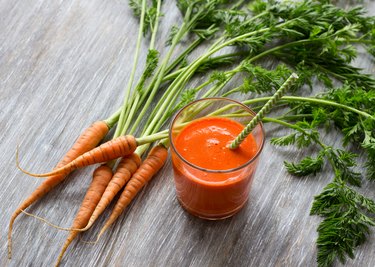
According to the Linus Pauling Institute, a diet that lacks vitamin A-rich foods can worsen iron-deficiency anemia. This may be because vitamin A helps move iron stored in your body to red blood cells. Yellow- and orange-colored fruits and vegetables like carrots are good sources of the carotenoids that convert to vitamin A when ingested. Adult men need 3,000 international units of vitamin A each day; women need 2,333 international units. Drinking 1 cup of carrot juice would supply 45,133 international units, easily fulfilling an adult's requirement.
Incorporate Prune Juice
Prune juice isn't a good source of vitamins A or C, but it is naturally high in iron. Drinking it regularly can help you decrease iron-deficiency anemia symptoms by increasing your body's iron level. Each 1-cup serving of prune juice contains over 3 milligrams of iron. For a man, this amount would supply approximately 38 percent of his 8-milligram recommended daily intake of iron. For women, who should have around 18 milligrams of iron per day, a cup of prune juice would fulfill almost 17 percent of the requirement.
Blend a Tofu Smoothie
Tofu contains about 2 milligrams of iron in every 1/3-cup serving. Although soy products like tofu contain proteins that may inhibit iron absorption, combining them in a smoothie with fruit and juices rich in vitamin C can help counteract the inhibition and allow your body to get more of tofu's iron. Eating Well suggests blending silken tofu, fresh or frozen fruit like berries or peaches, orange juice and a sweetener like honey or sugar, if desired, for a drink that's high in iron and supplies over 200 percent of an adult's daily requirement of vitamin C per serving.
Make Room for Milk
Individuals who develop anemia because they aren't consuming enough vitamin B-12 can get the nutrient through milk. Each 1-cup serving of low-fat milk has 1 micrograms of vitamin B-12, or half of the recommended daily allowance for an adult. Vegans, strict vegetarians and those who are lactose-intolerant can drink plant milk instead. A cup of a typical brand of soy milk may contain as much as 50 percent of your RDA, though the Vegetarian Resource Group cautions to always check the label since the vitamin B-12 content may vary among brands or change over time.
- Cleveland Clinic: Anemia and Iron-Rich Foods
- American Journal of Clinical Nutrition: Erythorbic Acid Is a Potent Enhancer of Nonheme-Iron Absorption
- USDA National Nutrient Database: Orange Juice, Raw
- Linus Pauling Institute: Vitamin A
- Linus Pauling Institute: Iron
- Eating Well: Tofu-Fruit Breakfast Smoothie