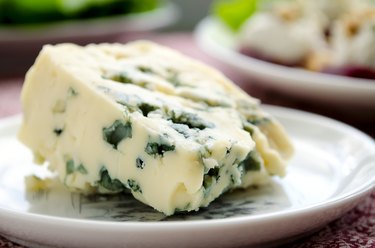
The signature blue veins in blue cheese come from the injection of penicillin culture that results in the signature tangy taste. Included in sauces, salads and served at room temperature with wine, fruit and nuts, blue cheese is a significant cheese in the American diet. Blue cheese varieties include Stilton, Gorgonzola, Rochefort and Maytag blue. The lactose content of cheese is important because 30 to 50 million people in the United States have lactose intolerance, a condition that inhibits their ability to digest lactose-containing foods.
Lactose Intolerance
Video of the Day
Lactose is a milk sugar found in dairy products that some people cannot digest because they lack the enzyme lactase that breaks it down into simple sugars. The lactose continues undigested through the intestinal tract, where it ferments. People in some cultures experience lactose intolerance more than others. Native Americans, Asians and African Americans experience lactose intolerance more often than other cultural groups because dairy is not typically a part of their traditional diet.
Video of the Day
Symptoms
The symptoms resulting from lactose intolerance include stomach upset, flatulence, diarrhea, bloating and intestinal inflammation. Soothing medications may be required. Many people who experience lactose intolerance take preventive medications, avoid consuming foods that contain lactose, or buy lactose-free dairy products.
Blue Cheese and Lactose
Blue cheese is an appropriate choice for someone who must consume only foods that have a low level of lactose. It contains 2 to 4 g of lactose per ounce, which is low when compared other dairy foods. Those with lactose intolerance need to avoid dairy products in the higher range, about 11 g of lactose per ounce.
Warning
A dairy allergy is not the same as lactose intolerance. It results from an allergic reaction to the protein milk products provide. A physician may administer an allergy test to determine the type and severity of dairy allergy to appropriately adjust dietary intake based on the findings.