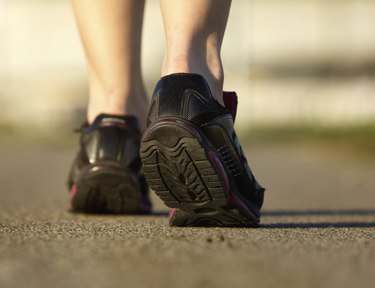
Running is not the only aerobic activity that burns calories and helps you lose weight. Consider other, less strenuous, low-impact activities and lifestyle changes that will help you achieve your goals without putting the strain on your joints and muscles that running does. Check with your health-care provider before beginning an exercise program for the first time or if you have been away from fitness programs for a while, or if you have any chronic health issues.
Diet
Video of the Day
Making positive dietary changes is one of the best ways to help you achieve your weight loss goals and enable you to maintain your goal weight once you reach it. While you may be tempted to try a fad diet promising quick weight loss, experts aiming to lose only 1 or 2 lbs. per week. You can continue to eat foods you enjoy by reducing the sizes of your portions or finding lower-calorie alternatives, such as making healthy pizza with whole wheat crust and low-fat cheese at home instead of ordering delivery. Strive to include several servings of fruits, vegetables, whole grains and lean sources of protein in your diet every day. Discuss your caloric needs with your doctor or a nutritionist so you can devise a plan that encourages you to change the way you eat, rather than adhering to a strict diet for a short time in order to lose weight.
Video of the Day
Low-Impact Exercise
Physical activity is a vital component of any successful weight-loss program. Aim for 150 minutes of moderate-intensity activity per week if you cannot handle more vigorous aerobic exercise, recommends the Weight-control Information Network, a service of the National Institute of Diabetes and Digestive and Kidney Diseases. Low-impact exercises, such as brisk walking, swimming, and cycling on a traditional or stationary bicycle, are gentler on your joints and muscles than running or high-impact sports are. Exercise for at least 10 minutes at a time until your stamina builds and you can engage in longer periods of exercise, recommends the Weight-control Information Network. Always warm up and gently stretch for about five minutes before and after exercising to prevent injury, cautions MayoClinic.com.
Strength Training
Strength training two or more days per week along with low-impact aerobic exercise can help you lose weight since muscle burns more calories than fat. Target your main muscle groups with free weights, machines, resistance bands or exercises that use your own body weight, including exercises such as push-ups, recommends the Weight-control Information Network. Consider the effects of your strength training routine when you weigh yourself during your weight loss journey. Though you may have weeks that you do not see the numbers on the scale go down, you may have lost fat and replaced the lost weight with healthy muscle. Take at least one day off in between strength training sessions to allow your muscles to rebuild and recover.