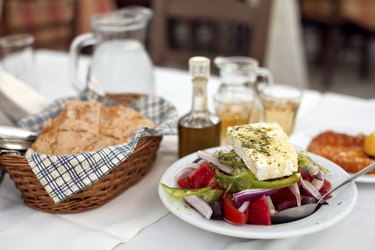
Balsamic vinegar is traditionally produced in the city of Modena, Italy. It is made from a concentrated grape juice that is fermented and aged for at least 10 months to develop its flavor. Balsamic vinegar is also produced domestically in the United States and is aged for a shorter period of time. Cider vinegar is produced through the fermentation of apple cider. The sugars in the cider are broken down by bacteria and yeast to produce alcohol, which is further broken down into vinegar. Balsamic vinegar is often used to make salad dressings, as a flavor enhancer for meat and seafood or drizzled over fresh fruit. Cider vinegar is a sweet and tangy addition to dressings, chutneys, stews and marinades.
Calories and Carbs
Video of the Day
Both balsamic and cider vinegar contain only a small number of calories per serving. Each tablespoon of balsamic vinegar contains 14 calories, while the same amount of cider vinegar contains 3 calories. These calories come from carbohydrates in the form of natural sugars that occur in the fruit juices the vinegars are produced from. Balsamic vinegar contains 3 grams of carbohydrates in each tablespoon serving. Cider vinegar contains less than a gram of carbohydrate per tablespoon.
Video of the Day
Mineral Content
Cider and balsamic vinegar are also minor sources of minerals the body needs to function properly. Each tablespoon of balsamic vinegar contains 18 milligrams of potassium and 4 milligrams each of calcium and sodium. The same amount of cider vinegar contains 11 milligrams of potassium and 1 milligram each of calcium and sodium. According to the Institute of Medicine, people ages 19 to 50 need about 4,700 milligrams of potassium, 1,000 milligrams of calcium and 1,500 milligrams of sodium each day.
Cholesterol Effects
Aside from adding flavor and acidity, balsamic and cider vinegar also have potential health implications. A study published in 2010 in the "Journal of Nutritional Science and Vitaminology" showed that balsamic vinegar lowered the oxidation of LDL cholesterol and formation of foam cells, both of which contribute to atherosclerosis, or hardening of the arteries. In a study published in 2014 in the "Journal of Membrane Biology," female mice fed a high-cholesterol diet with the addition of apple cider vinegar had lower blood lipid levels than female mice fed a high-cholesterol diet without apple cider vinegar.
Blood Sugar Control
Acetic acid, a component of both balsamic and apple cider vinegar, is effective at controlling blood sugar levels and satiety. A study published in 2005 in the "European Journal of Clinical Nutrition" showed that when healthy volunteers consumed vinegar with a bread-based meal, they had a lowered insulin response and increased feeling of satiety up to 120 minutes after consumption. Eating foods that are pickled with vinegar or using a vinegar-based dressing are ways to include acetic acid during mealtime.
- The Vinegar Institute: Today's Vinegar
- Melrose: Organic Apple Cider Vinegar
- USDA National Nutrient Database
- Food and Nutrition Board, Institute of Medicine: Dietary Reference Intakes (DRIs)
- Journal of Nutritional Science and Vitaminology: Inhibititory Effects of Balsamic Vinegar on LDL Oxidation and Lipid Accumulation in THP-1 Macrophages
- Journal of Membrane Biology: Apple Cider Vinegar Modulates Serum Lipid Profile, Erythrocyte, Kidney, and Liver Membrane Oxidative Stress in Ovariectomized Mice Fed High Cholesterol
- European Journal of Clinical Nutrition: Vinegar Supplementation Lowers Glucose and Insulin Responses and Increases Satiety After a Bread Meal in Healthy Subjects
- Le Cordon Bleu: The Many Types of Vinegar and Its Uses