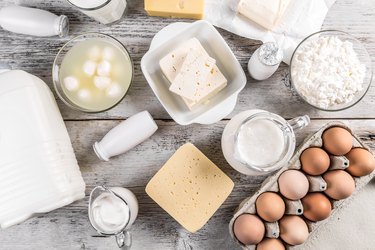
Milk: It's the first thing we drink as babies and has most of the nutrients a growing infant needs. As humans age, we keep drinking milk because it's chock-full of beneficial vitamins and minerals. Like most people, if you're craving milk or other milk products, you'll probably go for cow milk, which is very popular. Goat's and sheep's milk products are also good alternatives.
Why Are You Craving Milk?
Video of the Day
If you're craving milk, ask yourself: are you also craving cheese, ice cream or dairy products in general? Craving dairy products like milk can be a sign of an underlying nutrient deficiency. Cravings can also be related to pregnancy or psychological factors. You could also just be thirsty — milk is 87 percent water, after all.
Video of the Day
If you suspect that you may not be getting enough of a certain nutrient, you may need to make changes in your dietary habits. Milk is well-known for its calcium content. However, it also has a wide range of other vitamins and minerals that can help resolve nutrient deficiencies.
Nutrients in Milk
Longing for a glass of milk isn't a bad thing. With 18 of the 22 essential nutrients, milk is a pretty healthy food to crave. Milk contains a wide range of vitamins: vitamin A, B-complex vitamins (B1, B2, B3, B5, B6, B9, B12), vitamin C, vitamin D, vitamin E and vitamin K. Milk also has calcium, magnesium, phosphorus, potassium and zinc and is rich in protein.
Other types of milk are also healthy. Goat's milk is rich in calcium, magnesium and phosphorus compared to cow's milk. It also has more vitamin A. Goat's milk is easier to digest than cow's milk, making it a good choice for infants and older people, or people with sensitive stomachs. Sheep's milk has more calcium, phosphorus and protein compared to cow's or goat's milk, but less vitamin D than both of them.
Benefits of Consuming Milk Products
Milk products are generally considered healthy food choices, so don't be too worried if you're craving milk. A 2016 article in the journal Food and Nutrition Research looked at the connection between milk-product consumption and quite a few health benefits:
- In children, milk and dairy products have been associated with reduced risk of childhood obesity. Dairy products can also help improve body composition and facilitate weight loss in adults.
- Milk and dairy products are associated with a reduced risk of Type 2 diabetes.
- Milk and dairy products contribute to a reduced risk of cardiovascular disease, including stroke.
- Milk and dairy product consumption improves bone mineral density.
- Milk and dairy products may reduce the risk of various cancers, including bladder cancer, breast cancer, colorectal cancer and gastric cancer.
Goat's milk and sheep's milk also have a lot of health benefits. Goat's milk has been linked to the prevention of allergies, cancer, cardiovascular disease, cancer and diabetes. Sheep's milk is meant to be good for cardiovascular health and the immune system.
Milk and other dairy products, like cheese and yogurt, are generally good for your health. However, if you're craving dairy in general, be aware that not all dairy products are created equal. The BMJ reported in 2014 that nonfermented milk and milk products are less healthy choices that can increase blood pressure, cholesterol and insulin resistance. Eating cheese or other fermented milk products reduces these risks.
What About Plant-Based Milk?
Plant-based milk products have become increasingly popular in recent years. There are many products available, ranging from nut-based products to grain-based products. These milk alternatives can be good for you and also contain a lot of beneficial nutrients. However, the nutrient content of these products varies substantially between products. For instance, coconut milk, oat milk and soy milk aren't really comparable, even if they've all been fortified. According to the Food and Nutrition article, you should assume that, in general and from a nutritional perspective, cow's milk and plant-based milk are completely different products.
- Livestrong.com: Are There Any Side Effects From Drinking Too Much Milk?
- Livestrong.com: Which Type of Yogurt Is Best? The Pros & Cons of 13 Different Kinds
- Livestrong.com: Which Type of Milk (or Nondairy Milk) Is Best? The Pros and Cons of 9 Different Kinds
- Livestrong.com: What Are the Advantages of Coconut Milk Vs. Dairy Milk?
- Livestrong.com: Does Milk Contain Protein?
- BMJ: Milk Intake and Risk of Mortality and Fractures in Women and Men
- Food and Nutrition Research: Milk and Dairy Products: Good or Bad for Human Health? An assessment of the totality of scientific evidence
- Nutrition: Milk Nutritional Composition and its Role in Human Health
- Food New Zealand: Nutritional and Health Properties of New Zealand Sheep Milk
- Milk Facts: Vitamins & Minerals in Milk
- Illinois.edu: Milk Composition: Vitamins