




















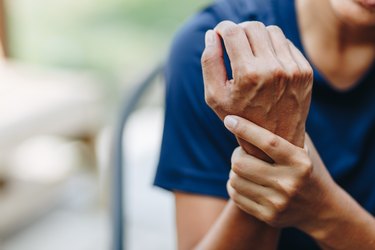
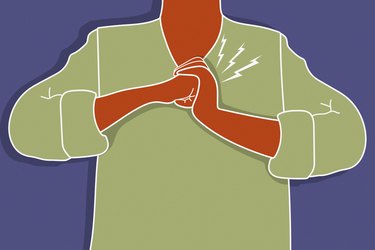




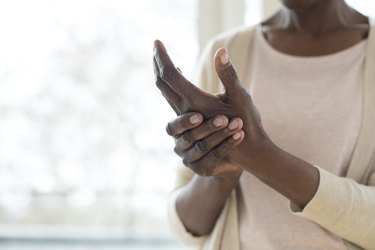





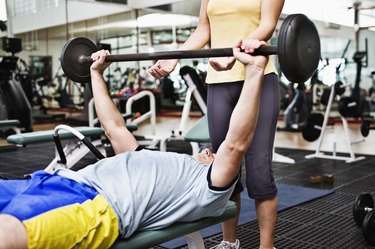











Elbow pain can stem from a variety of causes. If pain arises performing a specific set of motions, such as chinups, you might have injured a muscle, tendon or ligament. The location and extent of your pain will help to identify your injury more clearly. Overuse and improper form can contribute to elbow pain. Talk to your doctor about your concerns. Avoid performing chinups or other exercises that aggravate your condition.
Elbow Anatomy
The elbow is considered a hinge joint, meaning it only flexes in one direction. However, the joint has some rotational ability as well. The joint is comprised of three bones, three ligaments, several tendons and cartilage padding called bursa. Your elbow's flexion and extension motions are powered by your biceps and triceps, while muscles in your forearm assist in rotational movement. Injury to any part of the elbow joint can result in pain and inflammation.
Chinups
When performing a traditional chinup, you work your biceps, several muscles in your shoulders and upper back, as well as your obliques and abdominals. Overuse of these muscles -- that is, performing too many chinups or not resting adequately -- can cause injury and result in pain. Your form will also impact your elbow joint. Too wide or too narrow a grip can put extra stress on the tendons and ligaments that hold muscles and bones in place. Ask a professional trainer to evaluate your form to prevent further injury.
Location of Pain
The location of your pain can help determine what type of injury you sustained. Pain along the outside of your elbow is commonly called "tennis elbow" or lateral epicondylitis. The pain worsens when you extend your arm or wrist and when you press along the outside of your elbow. Golfer's elbow, or medial epicondylitis, is characterized by pain and tenderness on the inside of your joint, worsening when you close your fingers. Gripping for long periods of time or against a force, like when you perform a chinup, may lead to this condition.
Treatment and Prevention
If you experience pain during exercise, stop the exercise or reduce your intensity. If the pain continues or recurs, see your doctor to determine the cause and discuss treatment options. Resting and applying cold compresses can reduce swelling and pain. Avoid chinups until your pain is gone and talk to a professional trainer about your technique. Performing the exercise improperly may have caused your injury.


