




































































Too much of a good thing can be bad for anyone -- especially when the "good thing" is sugar and the "anyone" is your child. Although Americans of all ages are consuming more sugar than ever before in soft drinks and processed foods, children are highly susceptible to sugar's sweet temptation. The cumulative effect of sugar in its many forms -- dextrose, fructose, corn syrup, honey and molasses -- could add up to trouble for you and your family.
Obesity
In 2004, American adolescents were consuming 13 percent of their daily caloric intake from sugar-sweetened beverages such as soft drinks, fruit punch and sports drinks. A 2009 report on the negative impact of "SSBs" on children's health, published by the Robert Wood Johnson Foundation, indicated that the obesity rate for U.S. children ages 6 through 11 had quadrupled in the previous four decades.
Similarly, a 2001 long-term study conducted by the Children's Hospital Boston and the Harvard School of Public Health found that "the odds of becoming obese increased 1.6 times for each additional can or glass of sugar-sweetened soft drink consumed above the daily average."
Tooth Decay
The American Dental Association explains the cause-and-effect relationship of sugar and dental caries, or tooth decay. Bacteria are constantly forming a sticky build-up of plaque on your teeth and gums. If you don't brush your teeth immediately after eating sugar or starch, an acid forms that attacks the tooth enamel. Adults are as vulnerable as children to developing tooth decay from dietary sugars.
Hyperactivity
Anxiety, loss of sleep, restlessness and general hyperactivity have been attributed to sugar and the consumption of soft drinks in children. Although this has yet to be proven by scientific research, it makes sense that refined, processed sugar could impact children's behaviors. The National Institutes of Health explain that refined sugar is quickly absorbed into the bloodstream, resulting in rapid changes in blood glucose levels. These fluctuations could trigger the release of adrenaline, a stimulant hormone.
Other Negative Effects
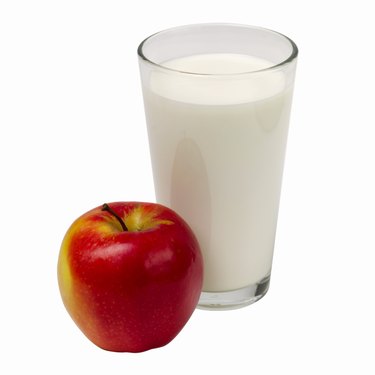
Foods that contain a lot of sugar may taste great, but they probably have little nutritional value. Children who consume high-sugar foods and beverages tend to substitute sweet treats for milk and dairy products, which places them at risk for lower bone mineral density and an increased incidence of bone fractures.
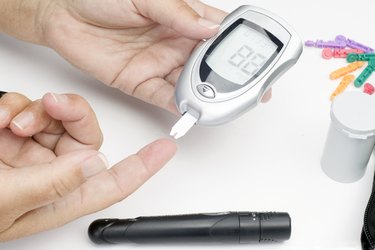
Sweetened soft drinks such as colas often contain the stimulant caffeine, which could cause sleep issues and headaches. Additionally, childhood consumption of excess sugar could be a contributing factor in the development of Type 2 Diabetes in adults.
References
- Robert Wood Johnson Foundation: The Negative Impact of Sugar-Sweetened Beverages on Children's Health; November 2009
- Harvard School of Public Health; Study Finds Increased Consumption of Sugar-Sweetened Beverages Promotes Childhood Obesity; February 15, 2001
- "Journal of the American Dental Association"; Diet and Tooth Decay; April 2002
- National Institutes of Health; Medline Plus; Hyperactivity and Sugar; Neil K. Kaneshiro, MD, MHA; May 12, 2009
- Kids Health.org: Sizing Up Sugar; The Nemours Foundation; 2011


Member Comments