Amylose is a long-chain polysaccharide starch — or simply, a complex carbohydrate found in plants. Amylose is unique because your body only partially digests and absorbs it, giving it the name resistant starch.
Instead of being digested in the small intestine along with other carbs, amylose ferments in the large intestine (the colon) and feeds the gut bacteria there, according to John Hopkins University.
Video of the Day
Video of the Day
There are several potential health benefits of eating foods high in amylose or resistant starch. According to John Hopkins University, some of the potential benefits include:
- More diverse and helpful gut microbiome
- Improved blood sugar control
- Increased feeling of fullness
- More regular bowel movements
- Lower cholesterol
- Decreased risk of colon cancer
The Difference Between Amylose and Amylopectin
Amylose and amylopectin are both found in starch but have different roles. Amylose is a long, straight chain that resists digestion in the small intestine; it then makes its way to the colon where it ferments and feeds the good bacteria, helping improve the gut microbiome.
Amylopectin is a branched-chain carb that's absorbed and digested in the small intestine and used for energy, per a September 2017 review in the Journal of Food Science.
All plants have varying amounts of amylose and/or amylopectin in them, but as a general rule, they contain more amylopectin. Depending on the plant, the starch is made up of 20 to 25 percent amylose and 70 to 75 percent amylopectin, per the John Innes Centre.
While many carby plant foods have high amounts of amylopectin, a few are higher in amylose. Add these starchy amylose foods to your diet to help support gut health.
1. Corn
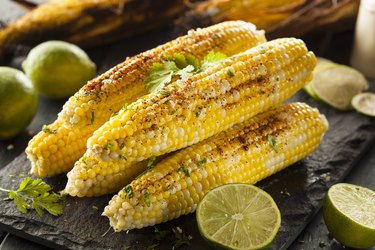
High-amylose corn (also called amylomaize) is a specific breed of corn that's especially high in amylose — it can contain 50 to 94 percent amylose, according to Purdue University.
High-amylose maize can be purchased as a powder to add to baked goods or sprinkled on foods to increase resistant starch in your diet.
2. Rice
Rice is high in resistant starch, but the actual amount of amylose present depends on the type of rice and how it's eaten.
With so many varieties of rice available, it's expected that the amylose content might change with each kind. There are four different categories of rice based on their amylose content, according to an April 2018 study in the International Journal of Pure & Applied Bioscience:
- Waxy: 0 to 2% amylose
- Low: 10 to 20% amylose
- Intermediate: 20 to 25% amylose
- High: Over 25% amylose
Freshly cooked white rice has the lowest amount of amylose while white rice that has been cooked, cooled overnight and then reheated had the highest amount, according to an April 2015 study in Asia Pacific Journal in Clinical Nutrition.
3. Quinoa
Quinoa is high in protein and gluten-free, but it can also be a great source of amylose.
The amount of amylose in quinoa depends on the variety, and the amount can really range. In 13 quinoa samples studied, the amount of amylose ranged from 4.7 percent to 17.3 percent, per a September 2017 study in the Journal of Food Science.
4. Potatoes
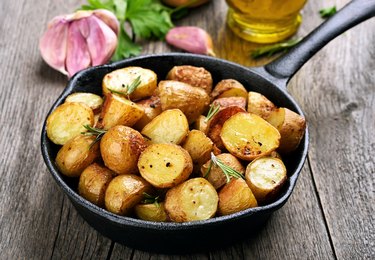
Potatoes harvested early in the season are sold as "baby" potatoes. Besides being cute, these immature spuds have higher amylose content than their bigger siblings.
Potatoes harvested in June had 30 percent amylose, while those harvested in August only had 26 percent, per an October 2016 study in the Journal of the Science of Food and Agriculture.
If you're worried about your blood sugar levels after eating potatoes, try changing the way you prepare them. Eating precooked chilled potatoes resulted in a smaller rise in blood sugar compared to eating the same amount of freshly cooked or pre-cooked and reheated potatoes, per a March 2021 review in Nutrition Bulletin.
5. Beans
Dry beans are 20 to 30 percent amylose, but you won't be eating that much resistant starch once you cook them.
Like other foods, cooking beans decreases the resistant starch down to around 4 to 5 percent of their weight, per the Harvard T.H Chan School of Public Health. Cooling the beans increases the amylose to 5 to 6 percent.
Beans are also a great source of fiber, another non-digestible carbohydrate. Fiber helps to lower cholesterol, regulate blood sugar, relieve constipation and is linked to lowe rates of some cancers, according to the Cleveland Clinic.
6. Lentils
Lentils, like beans, are high in protein as well as carbs including amylose. While the amount of resistant starch in lentils varies depending on the type, cooked lentils that are smaller in size have more amylose than larger lentils, per a February 2020 study in Foods.
Lentils also help fill in other nutrition blanks if following a plant-based diet: A 1/2 cup of cooked lentils is a good source of iron, zinc, thiamin and an excellent source of folate, providing 45 percent of your daily value. Try them in these high-protein lentil recipes.
7. Oats
The amylose in oat starch ranges from 25 to 29 percent but does decrease a bit after cooking, per an April 2021 study in Foods. With its resistant starch and soluble fiber, whole-grain oats can help lower blood sugar and cholesterol levels, according to the Harvard T.H Chan School of Public Health.
Try the healthy carb in these tasty overnight oats recipes.
8. Arrowroot Powder
Arrowroot powder is a nutritious alternative to cornstarch and can be used to thicken foods like jelly, gravy, pudding and other sauces. You can also use arrowroot powder to coat foods before cooking to help with browning.
Besides its many functions in the kitchen, arrowroot powder is also a great source of amylose, as it's made up of 29.4 percent amylose, according to a December 2014 study in the Journal of Food Science and Technology.
9. Green Bananas
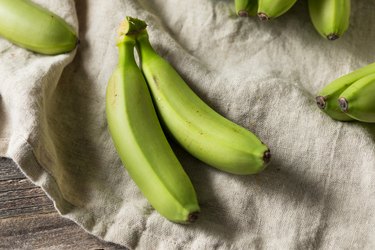
Ripe bananas may taste sweeter, but green bananas have more gut-health benefits. Unripe bananas can have anywhere from 27 to 37 grams of amylose per about 1/2 cup of banana. As the bananas ripen, the amylose content decreases to around14 to 19 grams, per a June 2020 study in the International Journal of Food Properties.
With more starch and less sugar, green bananas are better for your blood sugar levels. The glycemic index (GI) of an underripe green banana is 30, while the GI of an all-yellow ripe banana is 51.
Tip
Green bananas don't taste nearly as delicious as ripe ones — try adding them to a smoothie to enjoy the health benefits without the bitter taste.
- USDA: "The New Wave of Wheat: Increasing Resistant Starch to Improve Health Benefits"
- John Hopkins University: "What is Resistant Starch?"
- Journal of Food Science: "Starch Structure Influences Its Digestibility: A Review"
- John Innes Centre: "How Do Plants Make Starch?"
- Asia Pacific Journal in Clinical Nutrition: "Effect of cooling of cooked white rice on resistant starch content and glycemic response"
- International Journal of Pure and Applied Science: "Study on Amylose Content of Ten Rice Varieties Recommended for Assam"
- Journal of Food Science: "Quinoa Starch Characteristics and Their Correlations with the Texture Profile Analysis (TPA) of Cooked Quinoa"
- Journal of the Science of Food and Agriculture: "Amylose content decreases during tuber development in potato"
- Nutrition Bulletin: "Resistant Starch Production and Glucose Release from Pre‐Prepared Chilled Food: The SPUD Project"
- Clevland Clinic: "Improving Your Health With Fiber"
- Harvard T.H Chan School of Public Health: "Ask the Expert: Legumes and Resistant Starch"
- Foods: "Proximate Analysis and Nutritional Evaluation of Twenty Canadian Lentils by Principal Component and Cluster Analyses"
- USDA: "Cooked Lentils"
- Foods: "Oat-Based Foods: Chemical Constituents, Glycemic Index, and the Effect of Processing"
- Harvard T.H Chan School of Public Health: "Oats"
- Journal of Food Science and Technology: "Physicochemical properties of flours and starches derived from traditional Indonesian tubers and roots"
- International Journal of Food Properties: "Physicochemical characteristics and resistant starch of different varieties of banana from Taiwan"
- THe University of Sydney: "Glycemic Index Search"