




















































Menopause represents a time where a woman's body produces fewer hormones, which causes her to cease experiencing her menstrual cycle. This reduction in hormones not only signal the end of your menstrual cycle, they also can cause you to lose muscle mass and slow your metabolism. This makes changing your eating habits important to maintaining a healthy weight.
Calorie Intake
Your metabolism is the amount of calories your body burns each day performing its daily functions. After menopause, your metabolism slows, meaning you do not require as many calories per day as you once did. Cutting about 200 calories -- about the amount of a snack or daily dessert -- per day is needed to maintain your weight after menopause.
Nutritional Needs
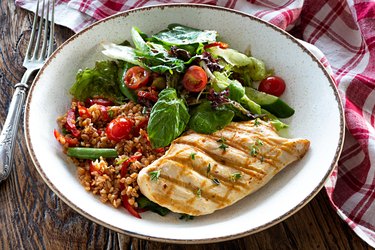
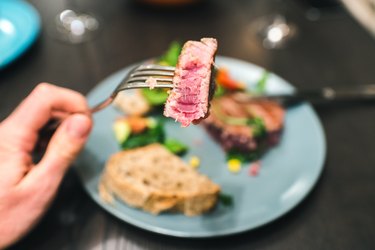
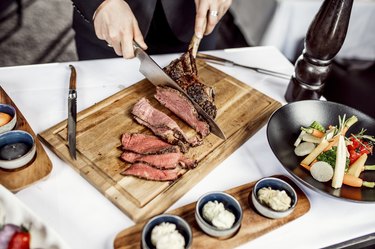
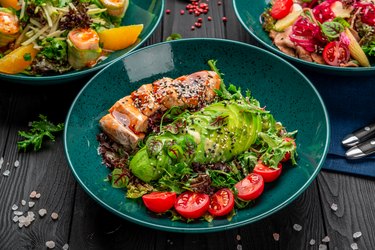
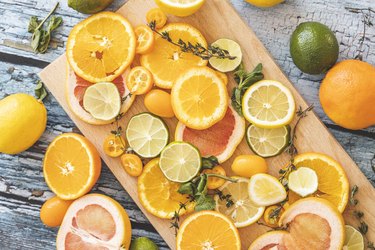
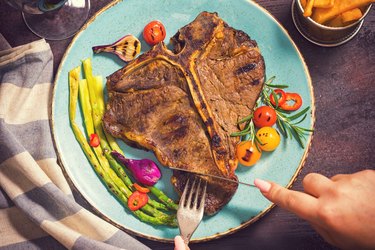
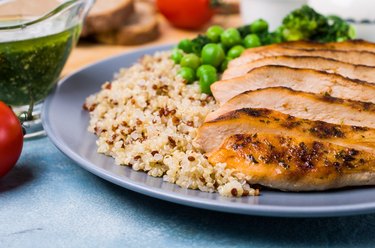
As you work to reduce the amount of calories in your daily diet, start by cutting foods high in saturated fats. This includes fatty cuts of meat, like a porterhouse steak, whole milk, cheese and prepackaged baked goods. Increase your protein intake, which can help you maintain lost muscle mass that naturally occurs due to menopause. Examples include fish, red meat, poultry, eggs, nuts and leafy green vegetables. These foods also are high in iron, which is needed to maintain healthy red blood cells. Increasing your fruits, vegetables and water intake helps to keep you feeling full and are low in calories, which help you maintain a healthy weight.
Foods to Eat
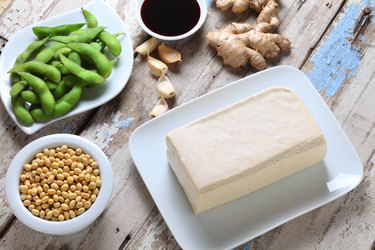
After you have gone through menopause, Dr. Christine Northrup, a physician specializing in health after menopause interviewed on Oprah.com, recommended eating foods that are high in antioxidants or that have estrogen-like effects on your body. This includes foods like soy, black cohosh or licorice root. Foods high in antioxidants, which fight inflammation in your body, include flaxseed, cherries, cranberries, blueberries, grape skins or whole grains. Increasing your intake of calcium, including foods like milk, yogurt, cheese and ice cream, can also help to promote bone health. This is especially important because progressing age is a risk factor for osteoporosis.
Foods to Avoid
Just as foods can help you during menopause, others can affect your blood sugar levels because they are high on the glycemic index. Eating foods high on this index can cause mood swings and headaches. Avoid foods like refined grains -- white bread, white rice, sweets and candy. Northrup also recommends avoiding caffeine, chocolate, peanuts and aspartame, which is known to cause inflammation in the body.


Member Comments