





















































Ovarian cancer caused almost 14,000 deaths in 2010, according to American Cancer Society. Although not the most common reproductive cancer, ovarian cancer has the highest mortality rate, because doctors often don't catch it until it has metastasized and affected other organs. Standard treatment includes surgery and chemotherapy, but recent research suggests that nutrition may play a role in giving people with ovarian cancer a better shot at survival. However, always consult your doctor about changes to your diet, as some foods may interfere with chemotherapy drugs.
Understanding Ovarian Cancer
A woman's reproductive system has two ovaries, each of which produces and stores eggs for fertilization. In ovarian cancer, which occurs most often in post-menopausal women, malignant tumors develop in one or both ovaries. Tumors may start in the outer surface, or epithelium, of the ovaries, in the cells that actually manufacture eggs, or in the cells that produce the hormones estrogen and progesterone. Symptoms, which include low back pain, swelling, pain during sexual intercourse and frequent urination, usually present only when the disease has progressed to a late stage. Women who have never been pregnant, are obese or have a close relative with ovarian, breast or colon cancer are at highest risk.
Nutrition for People with Cancer
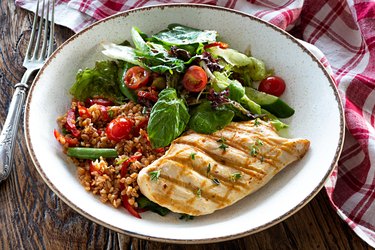
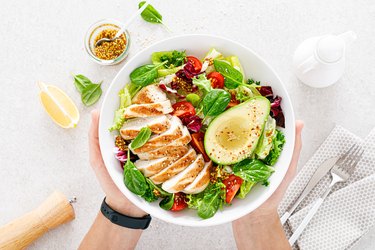
The American Cancer Society stresses good nutrition for all cancer patients, including women with ovarian cancer, before, during and after undergoing treatment. Getting enough protein, healthy fats and carbohydrates along with vitamins and minerals helps give cancer patients the best chance at remission. The Cancer Project, a program of Physicians for Responsible Medicine, recommends a diet low in processed foods and rich in whole foods -- vegetables, fruits, legumes and whole grains -- to strengthen the immune system and fight inflammation. A mostly plant-based diet also supplies ample phytonutrients, natural chemicals that help protect your cells from damage. During cancer treatment, cooked foods are preferable, as microbes and bacteria in raw foods can cause infections in people with reduced immunity.
Recent Research on Ovarian Cancer and Diet
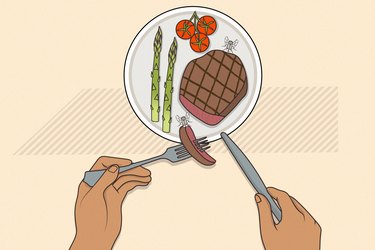
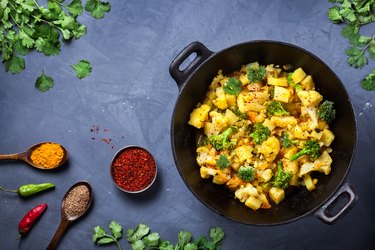
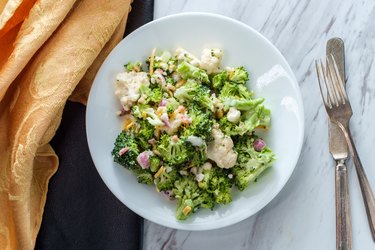
Most research on ovarian cancer and diet has focused on prevention, like a 2007 National Institutes of Health Study that found women who followed a low-fat diet cut their risk for the disease by 40 percent. But a study, published in March 2010 in the "Journal of the American Dietetic Association," indicates that nutrition could also improve a woman's chances of surviving this type of cancer. Women with ovarian cancer survived longer, the study showed, if they ate more fruits and vegetables or just more vegetables, especially yellow and cruciferous varieties, which include broccoli, cauliflower, cabbage and Brussels sprouts. In contrast, consumption of red and cured meats had a link to shorter survival times.
Foods for Ovarian Cancer
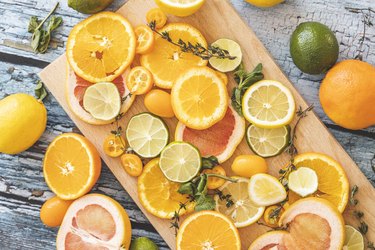
In addition to following a mostly vegetarian diet, The Cancer Project recommends that women with ovarian cancer steer clear of dairy products, since galactose -- a product of the metabolism of lactose, or milk sugar -- may play a role in reproductive cancers. Additionally, Dr. Julia Greer, author of "The Anti-Cancer Cookbook," advises people with ovarian cancer to boost their intakes of black and green tea, broccoli, watercress, spinach, cabbage, carrots, celery, artichokes, citrus fruit and green peppers. Secondarily, she recommends whole grains such as whole wheat, barley, rye, oats, bulgur and millet. Greer states that the phytonutrients in these foods, especially kaempferol, lutein and luteolin, plus the fiber, selenium and B vitamins they supply, may be protective against ovarian cancer.
References
- American Cancer Society; What Is Ovarian Cancer?; October 13, 2010
- American Cancer Society; Benefits of Good Nutrition; August 2, 2010
- "Healthy Eating for Life: Food Choices for Cancer Prevention and Survival"; The Cancer Project; 2004
- MSNBC.com; Low-fat Diet Cuts Risk of Ovarian Cancer; October 9, 2007
- "Journal of the American Dietetic Association"; Prediagnosis Food Patterns Are Associated with Length of Survival from Epithelial Ovarian Cancer; T.A. Dolecek et al.; March 2010
- "The Anti-Cancer Cookbook"; Julia Greer, M.D., MPH; 2008


