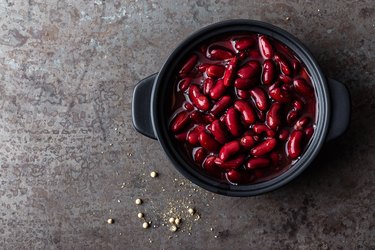
Red beans aren't as commonly consumed as other legumes, such as black beans, chickpeas and lentils, but they're just as healthy. Often called kidney beans, because they're shaped like the organ, red beans are an excellent source of complex carbohydrates, fiber, plant-based protein and many essential vitamins and minerals.
Red beans nutrition can boost the quality of your diet, improving your overall health, aiding weight loss and maintenance, keeping blood sugar steady and lowering your risk of certain cancers.
Video of the Day
Video of the Day
Red Beans Are Rich in Protein
Protein is the primary structural component of your body. It's made of amino acids and is needed for the creation of cells, tissues, organs, bones and skin. Protein plays many other crucial roles in health, functioning as:
- Antibodies to protect the body from infection
- Enzymes to carry out chemical reactions in cells
- Messengers to transmit signals between cells, tissues and organs
- Transportation for atoms and small molecules throughout the body
According to the United States Department of Agriculture, 1 cup of cooked kidney beans contains 15 grams of protein. The current recommended dietary allowance (RDA) for protein is about 0.8 gram per kilogram of body weight. For an adult weighing 150 pounds, that's about 54 grams per day. One cup of kidney beans would provide 28 percent of the RDA.
How much protein you need depends on not only your body weight but how active you are. Because protein helps repair muscle damage and build lean muscle mass, people who exercise — especially those who resistance train regularly — need more protein than those who are less active. The protein in beans will help you reach your goal whether you're sedentary or highly active.
Animal Protein vs. Plant Protein
The nutrition world often debates the quality of protein in animal foods versus the protein in plant foods. This is due to animal protein sources being "complete" and plant sources being "incomplete" proteins. Complete proteins, such as beef, contain all the essential amino acids your body needs. Plant proteins, on the other hand, are typically low in or missing one or more of these amino acids.
However, this doesn't make them inadequate. As long as you're getting these amino acids from other foods throughout the day, you're getting enough of these protein components. If you eat animal products, they provide all your amino acids; if you only eat plant foods, complementary protein sources, such as rice, will fill in any gaps.
Plant proteins have another benefit — they're lower in fat, especially saturated fats. In fact, a cup of red beans contains less than 1 gram of fat and barely a trace of saturated fat. Compare that to a serving of lean red meat, which has 25 grams of fat and 10 grams of saturated fat in a 3-ounce serving. Even lean chicken breast can't beat red beans for a low-fat source of protein with 3 grams of fat and 1 gram of saturated fat in 3 ounces.
Saturated fat increases your risk of heart disease, heart attack and stroke. According to a review in the International Journal of Epidemiology, eating more plant sources of protein, like beans, can reduce your risk of cardiovascular disease.
Red Beans Nutrition Boosts Your Health
In addition to their protein content, red beans health benefits come from their wide array of nutrients that support various physiological functions crucial for health. Red beans are a rich source of five important nutrients:
Dietary fiber: Fiber is the part of plant foods your body can't digest. Fiber moves through your digestive system relatively intact and adds bulk to stool, helping to push it through the digestive tract. A high-fiber diet prevents constipation, and it can improve your heart health because it binds with cholesterol in your digestive tract and carries it out of your body before it can be absorbed.
According to the National Academy of Medicine, you need between 25 and 38 grams of fiber per day. One cup of red beans provides 11.3 grams of fiber, or about 45 percent of a woman's daily needs and 30 percent of a man's daily needs.
Iron: The mineral iron is an essential part of hemoglobin, a blood protein that carries oxygen from the lungs to the body's tissues. Iron also supports metabolism and aids growth, development and cellular functioning, as well as the creation of some hormones.
Red beans contain nonheme iron, the form found in all plant foods. Animal foods contain heme iron, which is more bioavailable and is less affected by other dietary components that can inhibit iron absorption. However, according to the Medical Journal of Australia, people who eat a plant-based diet aren't at any higher risk of iron deficiency than those who eat animal foods.
Red beans provide 5 milligrams of iron per cup, which is more than 20 percent of the RDA for adults.
Magnesium: As a cofactor in more than 300 enzyme systems, magnesium plays an important role in diverse biochemical reactions that synthesize proteins, regulate blood pressure, sustain blood sugar control and support muscle and nerve function. Magnesium also aids energy production and bone development and is necessary for the transportation of potassium and calcium into cells, which is crucial for healthy muscle and heart function.
The RDA for magnesium is between 320 and 420 milligrams per day. One cup of red beans provides 80 milligrams, which is about 20 percent of the RDA.
Phosphorous: Phosphorous is primarily responsible for the formation of teeth and bones. It is also involved in energy production, cell signaling and regulation of the body's pH. Working with the B vitamins, phosphorous supports kidney function, muscle contractions and normal heartbeat.
People need 700 milligrams of phosphorous a day. One cup of red beans provides 251 milligrams or 36 percent of the daily requirement.
Folate: Red beans are an excellent source of folate, a B vitamin that aids DNA production and cell division. Therefore, it's crucial to growth and development, especially of babies in the womb. For this reason, pregnant adults are advised to get extra folate during pregnancy to prevent birth defects. Folate, as with most B vitamins, also plays a major role in energy production.
One cup of red beans contains 230 micrograms of folate, which is 57 percent of the RDA for adults, and 38 percent of the RDA for pregnant people.
Read more: The Healthiest Canned Beans With High Fiber
Beans Help Regulate Blood Sugar
Red beans are high in carbohydrates, with 40 grams per cup. However, these are the good carbs, called complex carbs, that are rich in fiber. Unlike simple carbs — such as those in sweets and refined grain foods — which digest quickly, your body digests complex carbs slowly. This means that the carbs enter your bloodstream over time, instead of all at once.
Carbs that digest quickly lead to a rush of energy, which doesn't last. After eating them, you may feel fatigued soon after. Carbs that digest slowly lead to steady energy levels for hours after your meal. This prevents fatigue, and it keeps you feeling full for longer, so you can control your appetite.
The glycemic index (GI) is a scale used to measure how quickly and how much a food raises your blood sugar. A food's GI can vary, depending on the cooking method, but red beans generally have a very low rating, ranging from 19 to 25. Anything under 55 is considered a low-GI food, meaning it will not significantly affect blood sugar.
Blood sugar control is especially important for diabetics, but everyone can benefit from maintaining steady blood sugar levels. For diabetics, managing blood sugar levels is important for preventing hyperglycemia (high blood sugar) and hypoglycemia (low blood sugar). Both can lead to side effects that can be dangerous to your health over time.
For both diabetics and nondiabetics, maintaining steady blood sugar can have myriad health benefits, including sustainable energy, appetite control and weight loss or maintenance, and stable mood.
Red Beans Can Aid Weight Loss
Red beans health benefits include weight management and weight loss, which can prevent obesity and its related diseases. Fiber and protein are two of the most important elements of satiety or appetite control. A review of research in The American Journal of Clinical Nutrition in 2015 reported that participants in several studies who ate a higher-protein diet lost more weight than those who ate a diet lower in protein.
Carbohydrates get a bad rap when it comes to weight loss, with many popular diets claiming that eating them causes weight gain and stalls weight loss. There's little evidence to support this. In fact, diets higher in complex carbs from beans, whole grains, vegetables, nuts and seeds can control appetite and aid weight loss, primarily because of their high fiber content and low GI scores.
A 16-week, high-carbohydrate, low-fat plant-based diet caused participants in a study published in Nutrients in 2018 to lose weight and improved their body composition and insulin resistance. A 2016 meta-analysis in the The American Journal of Clinical Nutrition found that in 21 studies, diets that included foods known as pulses, such as red beans, led to significant weight loss compared to control groups that didn't eat a diet including pulses. This was true even when the diets were not specifically weight-loss diets restricted in calories.
Red Beans Reduce Cancer Risk
Eating a healthy diet can prevent many conditions, such as obesity, that can increase your risk of cancer. According to the American Institute of Cancer Research, beans contain other important components that can also reduce your risk of cancer, including:
- Saponin and lignans — plant chemicals that may help prevent tumor growth
- Resistant starch — a type of carbohydrate that may protect colon cells and prevent colon cancer
- Antioxidants — chemical compounds in plants that scavenge potential cancer-causing free radicals
The fiber content in red beans also reduces the risk of cancer. According to Mayo Clinic, eating enough fiber can likely reduce your risk of some types of cancer, including colorectal cancer. A research review in Cancer Medicine in 2018 reported associations between high intakes of beans and a lower risk of hormone-receptor-negative breast cancer, a type of breast cancer, among female participants in the San Francisco Bay Area Breast Cancer study.
Including Red Beans in Your Diet
The Dietary Guidelines for Americans 2015-2020 recommends that adults eat 3 cups of beans and other legumes each week. Eating 1 cup of red beans — or any type of beans and other legumes — a few days a week will help you reach that goal.
When you're short on time, buying canned red beans without added sodium can make a quick addition to a salad. A red bean soup with plenty of vegetables makes a satisfying dinner on a chilly evening, and mashed kidney beans with spices can replace traditional refried beans on taco night.
Read more: What Is the Healthiest Bean to Eat?
- Genetics Home Reference: What Are Proteins and What Do They Do?
- USDA: Basic Report: 16328, Beans, Kidney, All Types, Mature Seeds, Cooked, Boiled, With Salt
- National Academy of Medicine: Dietary Reference Intakes: Macronutrients
- University Health News Daily: Plant Protein vs. Animal Protein: Which Is Best for Your Health?
- FDA: Protein
- USDA: Basic Report: 13498, Beef, Ground, 70% Lean Meat / 30% Fat, Raw
- International Journal of Epidemiology: Patterns of Plant and Animal Protein Intake Are Strongly Associated With Cardiovascular Mortality: The Adventist Health Study-2 Cohort
- Mayo Clinic: Dietary Fiber: Essential for a Healthy Diet
- NIH: Iron
- MJA: Iron and Vegetarian Diets
- NIH: Magnesium
- National Academy of Medicine: Dietary Reference Intakes (DRIs): Recommended Dietary Allowances and Adequate Intakes, Vitamins
- Oregon State University: Linus Pauling Institute: Phosphorous
- NIH: Folate
- Diabetes.co.uk: Simple vs Complex Carbs
- University of Sydney: GI Foods
- Mayo Clinic: Glycemic Index Diet: What's Behind the Claims
- WebMD: When Your Blood Sugar Is Too High or Too Low
- Nutrients: A Plant-Based High-Carbohydrate, Low-Fat Diet in Overweight Individuals in a 16-Week Randomized Clinical Trial: The Role of Carbohydrates
- The American Journal of Clinical Nutrition: Effects of Dietary Pulse Consumption on Body Weight: A Systematic Review and Meta-Analysis of Randomized Controlled Trials
- American Institute of Cancer Research: Dry Beans and Peas (Legumes)
- Cancer Medicine: Intake of Bean Fiber, Beans, and Grains and Reduced Risk of Hormone Receptor‐Negative Breast Cancer: The San Francisco Bay Area Breast Cancer Study
- USDA: Dietary Guidelines for Americans 2015-2020
- USDA: Basic Report: 05064, Chicken, Broilers or Fryers, Breast, Meat Only, Cooked, Roasted