


























































Swollen Gums After Eating

Swollen Gums After Eating
Photo Credit Comstock/Comstock/Getty Images

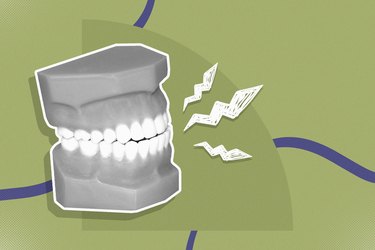
Eating is usually combined with enjoyment and pleasure, but if you notice that your gums swell after eating, you might approach a meal differently. Swollen gums after eating are not normal and need to be looked at by your dentist or doctor. Gum swelling might be a sign of a few allergy-related conditions or it might be the result of a dental complication. To help your doctors determine the cause of the gum swelling, you might need to keep a food log, documenting everything you eat and drink, and how what you consume affects your body.

Food Log

A food log is important because it can help you and your doctor discover the cause of your swollen gums. If you notice that certain foods cause your gums to swell, while others have no effect on your gums, you most likely are experiencing an allergic reaction. If you develop swelling every time you eat, your condition is probably related to a dental complication. Write down every food you eat and any symptoms that develop. Certain symptoms might help your doctor determine which tests need to performed. If at any time while keeping a food log you develop severe stomach pain, facial swelling or shortness of breath, call your doctor immediately.

Food Allergy

Food allergies can cause your gums and other soft tissues to swell shortly after eating. Common foods that can trigger an allergic reaction include wheat, soy, milk, eggs, fish, peanuts and tree nuts, according to MayoClinic.com. Eating foods that you have an allergy towards will cause your immune system to produce various chemicals that can trigger inflammation and irritation in soft tissues. Histamine is one of the primary chemicals released during a food allergy reaction that can cause swelling to occur anywhere in your body. If your gums, lips and tongue swell, you might be experiencing a severe allergic reaction.

Oral Allergy Syndrome

Oral allergy syndrome, or pollen-food syndrome, is an allergic condition that is the result of cross-reactivity between certain food proteins and pollen. This condition will only cause symptoms to develop in your mouth, such as in your gums. When you eat certain fruits, vegetables and nuts, your immune system might identify the proteins in the food as pollen and release histamine in the immediate area. The release in histamine will cause your mouth, throat and tongue to itch. In some cases, this condition can also cause minor swelling in your gums.

Dental Complications

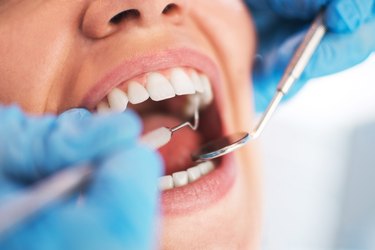
Gum swelling now and then is not an alarming symptom. If you develop chronic gum swelling that will not subside, make an appointment to see your dentist. Most dental complication symptoms will not only be triggered when you eat, but will remain consistent and often get worse. Common dental conditions that can cause gum swelling include malnutrition, gingivitis, a gum infection, pregnancy and sensitivity to an ingredient in your toothpaste.

References

Article reviewed by OmahaTyppo Last updated on: Jun 13, 2011

Must see: Photo Galleries