
If there's one part of the body that most of us would like to be free of excess fat, it's the belly. After all, nicknames like spare tire, muffin top and beer gut aren't exactly terms of endearment.
Spot reduction, or the idea that you can target fat loss from specific areas of the body, is a myth, according to the American Council on Exercise (ACE), so there's no exercise or food that will magically melt away belly fat. But if you're looking to lose belly fat for the long haul, there are a number of research- and expert-backed things you can do.
Don't fall for fads promising lightning-fast weight loss or six-pack abs in just a few days. Here's what really works when it comes to trimming your tummy and keeping visceral fat at bay.
1. Try High-Intensity Interval Training (HIIT)
When you think about exercise for a flatter belly, your mind may immediately go to crunches and other core-targeting moves. But while abdominal exercises can tighten the muscles and make the abdomen look better, these moves won't actually trim down the fat around your waist.
"Not all exercises are created equal when it comes to belly fat," Luiza Petre, MD, a cardiologist and weight-management expert, tells LIVESTRONG.com.
Research, including a September 2019 study published in Mayo Clinic Proceedings, has found that high-intensity interval training (HIIT) is more effective in reducing abdominal fat compared to other types of training.
Researchers noted that people who practiced HIIT not only shaved more inches off their waists but also lost more body fat and gained more lean muscle mass than those who performed other moderate-intensity exercises, including brisk walking and cycling.
Read more: The 5 Best High-Intensity Exercises for Weight Loss
2. Go Mediterranean
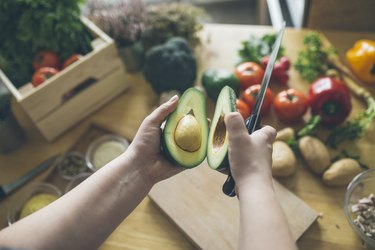
Compared to low-fat diets, Dr. Petre maintains that lower-carb diets are better when it comes to blasting visceral fat. One important study, published August 2019 in the Journal of Hepatology, found that a lower-carbohydrate Mediterranean diet was more effective at reducing belly fat than a diet lower in fat.
We all need fat in our diets. But the type of fat you're eating is important, too. Those following a Mediterranean diet are encouraged to avoid or limit saturated fats — found in foods like butter, lard, full-fat dairy, fatty meats, fried foods and commercial baked goods — and instead stick to unsaturated fats like olive oil, avocado and nuts.
The Mediterranean diet also puts the focus on whole grains over refined carbs, which can help put the kibosh on belly fat. According to Harvard Health Publishing, these refined foods (think: white bread and rice, chips, sweets and sugary drinks) cause sharp spikes in blood sugar and elevate your triglyceride levels, which cause your body to store more fat around the waist.
3. Fuel Up on Fiber
Ilana Muhlstein, RD, dietitian and co-creator of Beachbody's 2B Mindset, is a fan of cruciferous veggies — such as cabbage, arugula, cauliflower and Brussels sprouts — as great belly fat-blasting fuel. "They are low in calories but high in fiber," she explains.
Eating more fiber can help you feel full on less food, which helps with weight loss in general. And eating more soluble fiber — such as the kind found in many veggies but also in flax seeds, oranges, beans and oats — in particular may be key in reducing abdominal fat. One oft-cited study published in the February 2012 issue of Obesity followed more than 1,000 people for five years and found that each 10-gram increase in soluble fiber intake decreased belly fat accumulation by 3.7 percent.
Before you get too caught up in exactly how much fiber to eat each day, Muhlstein says to keep it simple by aiming to fill your plate with a variety of veggies as often as possible.
How Fast Can You Lose Belly Fat?
How quickly you can expect to watch your belly disappear depends on your calorie deficit.
If you want to lose belly fat, you need to lose weight, which means you need to consume fewer calories than you burn. Most people can safely cut about 500 calories each day, which typically leads to between 1/2 and 1 pound of weight loss each week, according to the Mayo Clinic. However, keep in mind that women should not cut calories below 1,200 and men shouldn't fall below 1,500 unless they're under doctor supervision, per Harvard Health Publishing.
If you stick to that schedule, you should start to notice that you're losing belly fat in about two weeks, says Holly Roser, a certified personal trainer and sports nutritionist.
4. Prioritize Sleep
Research has established a link between sleep and visceral fat, Dr. Petre says. Indeed, a May 2014 study in Obesity found that those who sleep a healthy amount of time — defined by researchers as seven to eight hours a day — gained significantly less visceral fat than those who slept too little or too much.
One of the culprits here is cortisol, aka the stress hormone, which your body tends to release when you're short on shut-eye. Cortisol signals your body to store more fat in your belly while also increasing your hunger and negatively affecting your metabolism.
5. Slay Stress
Speaking of cortisol, research has also connected higher stress levels to more belly fat. "High cortisol levels can actually increase your visceral fat, as the hormone is known to increase the amount of fat that clings to your body and magnifies the growth of your fat cells," Dr. Petre says.
Stressful situations are nearly unavoidable in everyday life, but you do have control over your response to them, which can help mitigate the effects of cortisol on your body: Check out eight ways to beat stress-induced belly fat.
6. Make a Commitment
Because there are so many components involved in blasting belly fat, Dr. Petre says that motivation and commitment are key — even when you don't see results right away. A program that focuses on whole foods, fiber and regular exercise along with a de-stress plan will allow you to see a waistline again, she says. "You can push past your genetics and bad habits to get rid of that elastic waistband forever."
Understanding Belly Fat
It's important to understand how belly fat is different from other types of body fat and how that factors in when it comes to weight loss.
Types of Belly Fat
There are two types of belly fat:
- Visceral fat, the "hard" kind that lies deep inside the abdomen and surrounds our organs, is responsible for that protruding, "beer belly" look.
- Subcutaneous fat, or the soft kind you can pinch, resides in the layer beneath the skin's surface.
"As we get older and our hormones change, we tend to deposit more visceral fat, which is very pro-inflammatory and much more dangerous to health than subcutaneous fat," says Dr. Petre.
Tip
Generally, a waist circumference over 35 inches for women and over 40 inches for men indicates excess visceral fat, according to the National Institutes of Health.
Read more: The 6 Big Health Risks of Too Much Belly Fat
How We Lose Belly Fat
Weight loss is a systemic process, which means that energy (read: fat) is burned at an equal rate throughout the body, Dr. Petre says. In other words, your body doesn't burn fat from any one particular area before any other.
"What may seem to be focal weight loss is actually a product of how our fat tissue is distributed," she explains. Women tend to store more fat around the thighs and hips, while men carry more around the waist. So, when weight loss occurs, it's more visible in those areas.
However, there is a difference when it comes to which type of fat goes first. Visceral fat is more readily broken down by the body to use as fuel, per Harvard Health Publishing, so it responds to diet and exercise more efficiently than soft fat on, say, the hips and thighs.