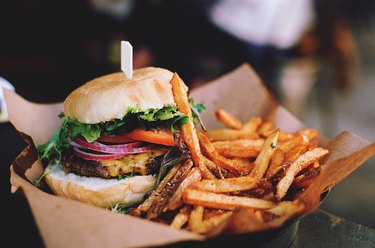
Over time, eating fatty foods can raise triglyceride and cholesterol levels beyond a healthy range, increasing your risk for heart attack, stroke and cardiovascular disease, according to the American Heart Association.
But the impact of a single fatty meal on cholesterol and triglycerides is a little more complicated. Here's what you need to know.
Video of the Day
Video of the Day
Does Food Cause High Cholesterol?
Cholesterol and triglycerides are both fatty substances called lipids, according to the Cleveland Clinic. While both these lipids may have a bad reputation, the body actually needs them to function.
Cholesterol is used to build cell membranes, produce hormones (like estrogen and testosterone) and create bile acids for digestion, according to Harvard Health Publishing. Because cholesterol is so important, the liver actually makes all the cholesterol the body needs.
The body can also get cholesterol from food, known as dietary cholesterol. Until recently, it was believed that dietary cholesterol played a significant role in causing high blood cholesterol. But in a major 2015 report, the USDA Dietary Guidelines Advisory Committee said that saturated fats and carbohydrates actually have a much greater impact.
Though dietary cholesterol may not significantly affect blood cholesterol on its own, many cholesterol-rich foods (namely, animal-based foods such as meats, milk and butter) also have lots of saturated fats, according to the Centers for Disease Control and Prevention. So it's still best to limit or avoid these foods, both for your cholesterol levels and your overall health.
The only exception is eggs. Eggs, specifically the yolks, have a lot of dietary cholesterol but are low in saturated fats.
So, will eating a fatty meal cause high cholesterol? No, not in the moment. But over time, eating a lot of saturated fats and carbohydrates can contribute to high cholesterol.
What Are Triglycerides?
Triglycerides are a type of fat the body creates from food, according to the Cleveland Clinic. Some fatty foods, like butter and oils, already come in the form of triglycerides. The body also converts sugar and alcohol into triglycerides, along with any other excess calories. The body stores triglycerides for later use in the form of body fat.
Eating too many calories can, of course, lead a person to have too much body fat. But it can also cause high blood triglyceride levels. As mentioned, high triglycerides (and cholesterol) are a risk factor for heart attack and stroke.
Can eating a fatty meal raise triglyceride levels too high? The answer depends on your baseline level. Baseline (average) triglyceride levels are measured through a blood test. These are the possible results, per the Cleveland Clinic:
- Normal = under 150 milligrams per deciliter (mg/dL)
- Borderline high = 151- 200 mg/dL
- High = 201- 499 mg/dL
- Very High= 500 mg/dL
Triglyceride Levels After Eating
Robert H. Eckel, MD, professor of medicine emeritus at the University of Colorado, Anschutz Medical Campus, former president of the American Heart Association and president of the American Diabetes Association, spoke with LIVESTRONG.com about how fatty meals affect triglyceride levels.
"For healthy people, triglyceride levels peak three to four hours after a meal and return to normal after six hours. But, for people with higher triglyceride levels [200-500 mg/dL], it may take 10 to 12 hours for their triglyceride levels to return to baseline. If a person has very high triglycerides [over 500 mg/dL], their levels may not even return to baseline in 12 hours," says Dr. Eckel.
In short: Yes, eating a high-fat meal can temporarily affect your triglyceride levels in a meaningful way. This is why fasting for 12 hours prior to a lipid panel, which reveals both cholesterol and triglyceride levels, is typically required, according to the Mayo Clinic.
Does One Meal Matter?
A single fatty meal won't put you at risk for heart disease. Nor is it likely to change your cholesterol levels or test results. But over time, a diet high in saturated fats and carbohydrates can greatly increase your risk.
Other risk factors include obesity, smoking and a lack of exercise, according to the Mayo Clinic. Genetics, older age and conditions like diabetes can also be risk factors.
The best way to manage your risk for high cholesterol and triglycerides — and reduce your risk of heart attack or stroke — is to follow a healthy diet, exercise regularly and to quit smoking.
Discuss your cholesterol with your doctor. In some cases, you may also be prescribed medication to help manage your risk.
- American Heart Association: "HDL (Good), LDL (Bad) Cholesterol and Triglycerides"
- Cleveland Clinic: "Triglycerides"
- Harvard Health Publishing: "Cholesterol"
- USDA: "Scientific Report of the 2015 Dietary Guidelines Advisory Committee"
- Center for Disease Control and Prevention: "Cholesterol Myths and Facts"
- Cleveland Clinic: "Triglycerides & Heart Health"
- Mayo Clinic: "High Cholesterol"
- Mayo Clinic: "Cholesterol Test"
Was this article helpful?
150 Characters Max
0/150
Thank you for sharing!
Thank you for your feedback!
Is this an emergency? If you are experiencing serious medical symptoms, please see the National Library of Medicine’s list of signs you need emergency medical attention or call 911.