










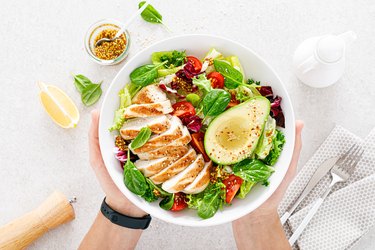




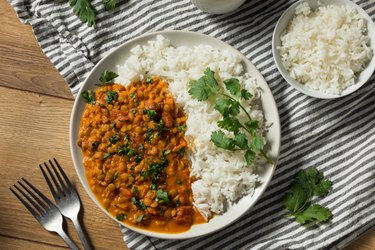




































Choosing a diet plan can be difficult. Diet books and plans vary from low-fat to low-carb to high protein, or some combination. Nutrition experts recommend a balanced diet that includes foods from all food groups. A mixture of lean protein and slow carbs, with fast carbs in moderation, will provide much of the nutrition and energy you need.
Fast Carbs
Low-carb diets give the impression that carbs are unhealthy and should be avoided. However, carbs are an important part of your diet. The body uses carbs for energy. The speed at which your body breaks down a carb into glucose to be used for fuel indicates whether or not it's a "fast" or "slow" carb. Fast carbs are easily and quickly converted into glucose. They are also linked to increased risk of diabetes, heart disease and colorectal cancer. Most diet plans suggest you limit fast carbs that come in the form of sugar and refined foods. Sodas, white bread, chips and processed foods have fast carbs that don't offer any nutritional benefit. Fruits and some sweet vegetables are also fast carbs, but are acceptable if eaten in their fresh, unprocessed form, as their fiber provides health benefits.
Slow Carbs
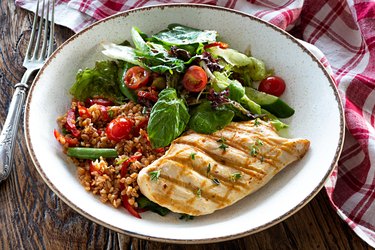
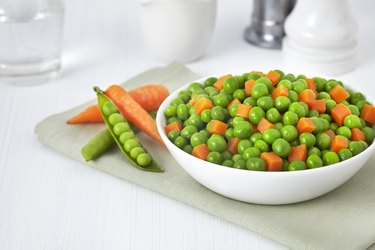
The body takes longer to break down slow carbs into fuel. Slow carbs, often referred to as "good carbs," provide more nutrition and fiber than their faster counterparts. Fiber is important for digestive health and lowers LDL cholesterol, reducing your risk of heart disease. Slow carbs make you feel full, which helps you eat less and control your weight to avoid excess weight-related ailments such as diabetes and heart disease. Slow carb foods include fibrous vegetables, beans and whole grains.
Protein
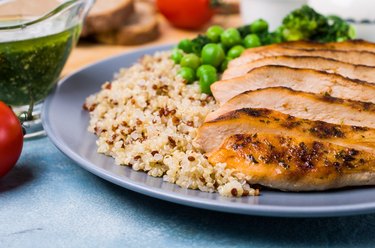
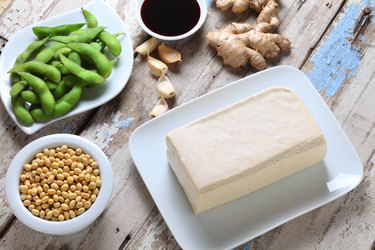
Protein is essential to growth and development, and is found in every cell of your body, helping to build and repair muscles. Like carbs, some protein sources are healthier than others. Red meat protein contains saturated fats that are unhealthy and linked to heart disease. Healthier protein options include poultry, seafood, beans, peas, nuts and seeds. These options are leaner and have healthier unsaturated fats.
Balanced Diet
Knowing what types of food to eat isn't enough to create a healthy diet. You need to know how much to eat as well. The U.S. Department of Agriculture illustrates recommended food ratios using a plate. Approximately 30 percent of your plate should contain vegetables, 30 percent grains, 20 percent protein and 20 percent fruit. It also recommends a serving of dairy such as a glass of low or nonfat milk. When designing your diet, choose lean, fresh and unprocessed foods for the most nutrition.


Member Comments