



































Menopause is a condition in which your menstrual cycle ceases and you are no longer able to get pregnant. It occurs when your fertility hormones, progesterone and estrogen, decrease. It usually happens between age 40 and 60, with 51 being the average age of onset. You can reduce the symptoms of menopause through hormone replacement, medicines, lifestyle changes, diet and exercise. Ask your doctor if medicines or hormone replacement therapy is a good option for you.
Symptoms of Menopause that can be Improved through Diet
Symptoms of menopause include hot flashes, fatigue, night sweats, difficulty sleeping, sadness, mood swings and weight gain. These symptoms can decrease your quality of life and health; however, a balanced diet can improve many of your menopausal symptoms.
What and How Much to Eat to Treat Menopause Symptoms
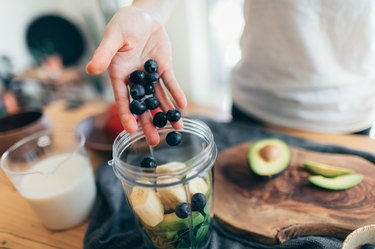
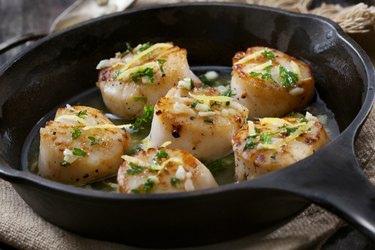
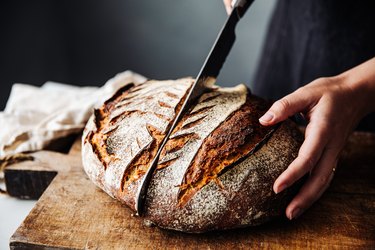
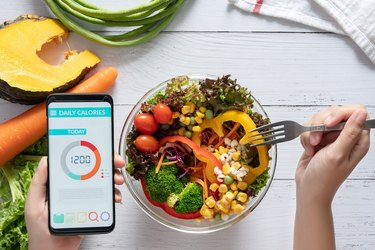
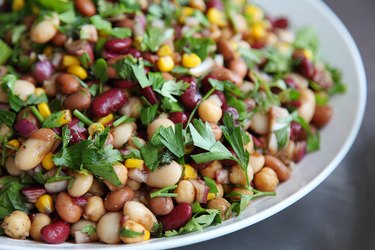
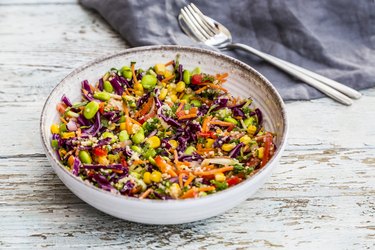
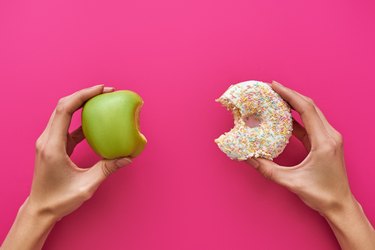
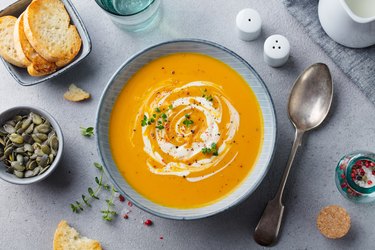
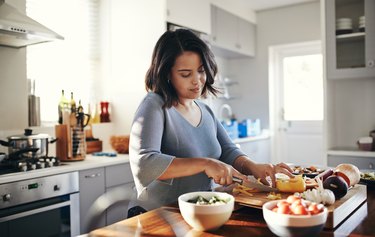
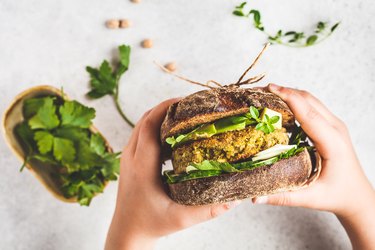
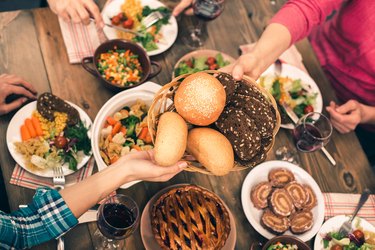
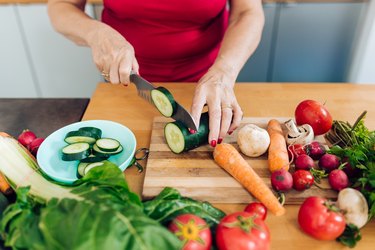
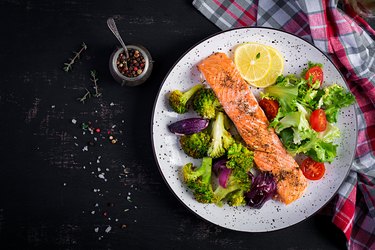
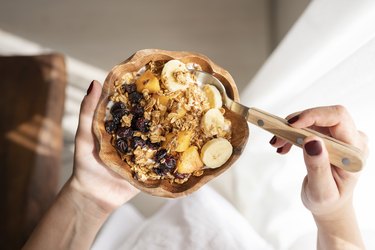
After menopause your body may require 200 to 400 fewer calories; therefore, you may have to decrease your calorie consumption and increase your calorie use through exercise just to maintain your current weight. Decreasing calories and increasing exercise along with a low fat diet can not only prevent weight gain but also decrease the risk of heart disease. Specifically, a diet high in vegetables, lean protein, fruits and whole grains is beneficial for preventing weight gain and heart disease. Add vegetables or fruit, whole grains and lean proteins at most of your meals, and eat more fruits and vegetables for snacks. Other menopausal symptoms, such as difficulty sleeping, sadness, mood swings, fatigue and osteoporosis, can be reduced through this same healthy balanced diet or exercise. Avoid caffeine to improve sleep.
Eating to Reduce the Risk for Osteoporosis after Menopause
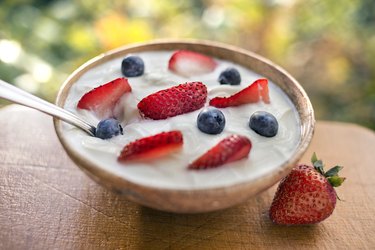
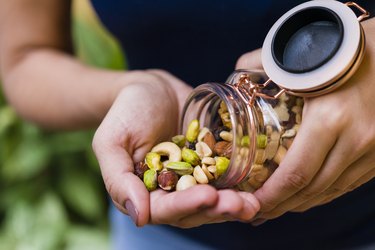
To decrease the risk of osteoporosis, you should consume about 1,200 mg to 1,500 mg of calcium and 800 IUs of vitamin D a day. Calcium-rich foods include milk, yogurt, cheese and nuts. Sunlight is the best source of vitamin D, but vitamin D can also be found in foods like fish and milk. Calcium and vitamin D supplements may be beneficial after menopause. Ask your doctor before taking any calcium or vitamin D supplements.
Diet and Exercise and Hot Flashes
Spicy foods and alcohol can trigger hot flashes in some women. Avoid these foods if you notice they are triggers for you. According to the Mayo Clinic, yoga may decrease hot flashes.


