

























































Although testosterone is the primary male sex hormone, women also have testosterone, and it can be helpful for promoting increased muscle mass. While many testosterone-boosting supplements are available, dietary choices can also increase levels of this hormone. Certain nutrients found in common vegetables may help increase testosterone levels, but you should consult a doctor before altering your diet or taking supplements to address any medical conditions.
Swiss Chard
If you want to increase your testosterone levels, you may wish to eat Swiss chard. Swiss chard is a green, leafy vegetable that is rich in fiber. In addition, Swiss chard is rich in vitamin E, a nutrient that can increase levels of testosterone, according to the June 2011 issue of "Toxicology and Industrial Health."
Olives
Olives are calorie-dense and high in fat, which can make them beneficial for reaching the calorie surplus you need for building muscle. Additionally, research published in the April 2009 edition of the journal "Lipids" found that oil from olives helps boost testosterone production.
Pinto Beans
Pinto beans are rich in carbohydrates and protein, two nutrients that can aid in fueling recovery from workouts. But pinto beans offer other benefits for active women, such as the inclusion of calcium. Calcium promotes bone strength and can also increase testosterone levels, according to research from the December 2008 edition of "Biological Trace Element Research."
Spinach
Spinach provided the cartoon character Popeye with his strength, and due to its rich magnesium content, spinach may also help women increase testosterone levels. A March 2010 study from "Biological Trace Element Research" found that increased magnesium intake promoted increased levels of testosterone.
Green Peas
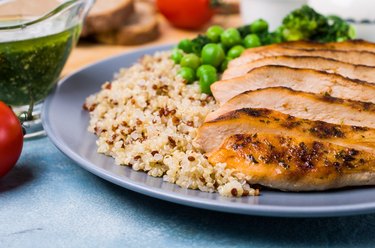
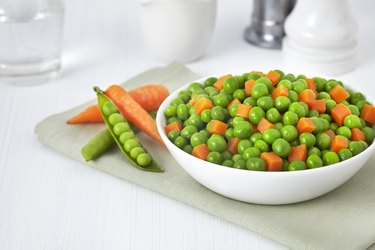
Green peas are also high in carbohydrates and protein, so they can support your active lifestyle. Additionally, green peas offer zinc. Research published in the February-April 2006 issue of "Neuro Endocrinology Letters" found that zinc could promote increases in testosterone and may benefit performance in athletes.
References
- "Toxicology and Industrial Health"; Effects of Vitamin E on Reproductive Hormones and Testis Structure in Chronic Dioxin-Treated Mice; H.P. Yin, et al.; June 2011
- "Lipids"; Influence of Commercial Dietary Oils on Lipid Composition and Testosterone Production in Interstitial Cells Isolated From Rat Testis; G.E. Hurtado de Catalfo, et al.; April 2009
- "Biological Trace Element Research"; Testosterone Levels in Athletes at Rest and Exhaustion: Effects of Calcium Supplementation; V. Cinar, et al.; December 2008
- "Biological Trace Element Research"; Effects of Magnesium Supplementation on Testosterone Levels of Athletes and Sedentary Subjects at Rest and After Exhaustion; V. Cinar, et al.; April 2011
- "Neuro Endocrinology Letters"; The Effect of Exhaustion Exercise on Thyroid Hormones and Testosterone Levels of Elite Athletes Receiving Oral Zinc; M. Kilic, et al.; February-April 2006


