















Lung cancer claims more lives in the United States than the combination of colon, prostrate and breast cancers. Cigarette smoking is its largest single risk factor. Environmental pollutants, radon and asbestos can also be risk factors. Scientists are now looking at fucoidan, a plant chemical found in some seaweed, as a potential anti-cancer drug. Laboratory research points to fucoidan's activity against lung cancer, although human clinical studies are still needed.
Lung Cancer
Lung cancer often has a poor prognosis, with 60 percent of patients dying within a year of diagnosis, according to PubMed Health, a publication of the National Institutes of Health. Non-small cell lung cancer is the by far the most common type, with about 80 percent of cases falling into this category. Small cell lung cancer accounts the other 20 percent of cases. In the early stages of this disease, you may not notice any symptoms. As the disease progresses, you may lose your appetite, experience shortness of breath and wheezing, and become easily fatigued. Conventional therapy usually includes surgery, chemotherapy and radiation.
Fucoidan
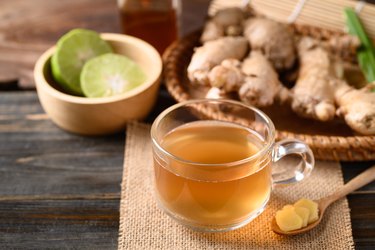
Many types of brown seaweed such as kombu, bladderwrack, hijiki and wakame contain fucoidan. Fucoidan is a polysaccharide, a complex sugar molecule, that resides within their cell walls. Brown seaweed is a traditional food eaten in the world's coastal regions. Frequently cultivated as a food, it is also used to solidify commercially prepared foods including pudding, yogurt and ice cream.
Clinical Action
Laboratory research studies reveal that fucoidan can kill viruses, slow tumor growth and stimulate and balance the immune system. It accomplishes these actions by interfering with cancer cell proliferation and by promoting immune cell activity, according to the Memorial Sloan-Kettering Cancer Center. In other research, fucoidan exhibited a host of other actions, including protecting cells from radiation and combating ulcers. Traditionally, fucoidan-rich seaweeds have been used to treat high blood pressure, bacterial and viral infections and inflammatory conditions.
Scientific Studies
An article published in the March 2011 edition of "Phytotherapy Research" reported on test-tube experiments designed to understand fucoidan's anti-cancer mechanisms. Researchers treated human lung cancer cells with fucoidan. The fucoidan prevented some cancer cell proliferation and also showed an ability to set in motion the programmed death of cancer cells. In another study from the forthcoming October 2011 issue of "International Journal of Biological Macromolecules," fucoidan impaired the functionality of lung cancer cells. It also improved the activity of white blood cells called natural killer or NK cells. At any time, about 2 billion NK cells inhabit the body and are on the front line of immune defense.
References
- PubMed Health: Lung Cancer
- "International Journal of Biological Macromolecules"; Fucoidan from Sargassum Sp. and Fucus Vesiculosus Reduces Cell Viability of Lung Carcinoma and Melanoma Cells in Vitro and Activates Natural Killer Cells in Mice in Vivo; M.T. Ale, et al.; October 2011
- Memorial Sloan-Kettering Cancer Center: Fucoidan
- "Phytotherapy Research"; Fucoidan from Undaria Pinnatifida Induces Apoptosis in A549 Human Lung Carcinoma Cells; H.J. Boo, et al.; March 2011