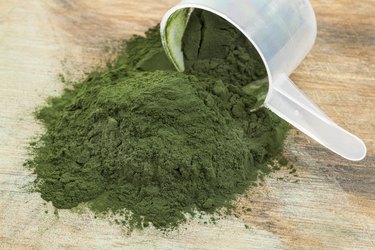
Spirulina is a type of blue-green algae widely available in health-food stores as a dietary supplement. With a mineral-rich content, spirulina is high in calcium, iron, magnesium, potassium and zinc. It contains varying levels of iodine also. Some manufacturers market spirulina for thyroid support due to its iodine content. If you're considering taking spirulina specifically to benefit from its iodine content, there are some safety concerns for you to consider.
Iodine and Thyroid Function
Video of the Day
Your body needs iodine in small amounts to function properly. It serves as an essential component of thyroid hormones. The recommended dietary allowance is 150 micrograms per day for adults. The typical American diet supplies enough iodine, and too much can have an adverse effect on thyroid function. The iodine content of algae varies widely, but it may contain more than 4,500 micrograms, according to the Linus Pauling Institute.
Video of the Day
Risks Outweigh Benefits
Excess iodine is linked to thyroid cancer and hyperthyroidism, which is when your thyroid produces too much hormone. What's more, some spirulina products can be contaminated with toxic substances, according to New York University Langone Medical Center. Germany's consumer protection agency took steps in 2001 to warn its consumers about the health risks of iodine-containing algae supplements. The U.S. Food and Drug Administration has yet to weigh in.