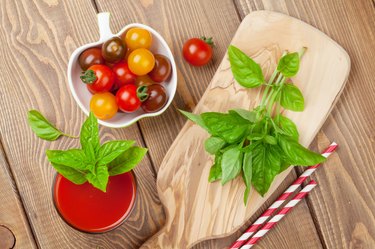
Weight gain and difficulty losing weight are big concerns for those with hypothyroidism. When thyroid hormones are low, metabolism slows down, causing weight gain. Diet plays an important role in helping you manage the disease. While you may be good at controlling what you eat, it's also important to think about what you drink. Healthy drinks for people with hypothyroid should be low in calories and rich in nutrients.
Stay Hydrated With Water
Video of the Day
Water is the healthiest drink for someone with hypothyroidism. It's thirst-quenching and calorie-free. Making water your beverage of choice may also help with weight loss. A 2008 study published in "Obesity" found that drinking water may help overweight women lose weight. While this study was not specific for people with hypothyroidism, it is theorized that drinking water may help you feel full so that you eat less. Individual water needs vary and depend on gender, body size, activity and environment. Clemson University Extension recommends 1 quart of water for every 50 pounds of body weight, or 3 quarts for a 150-pound person.
Video of the Day
Milk for Vitamin D
Vitamin D deficiency is associated with Hashimoto's disease, an autoimmune disorder and the most common cause of hypothyroidism. Including vitamin D-fortified nonfat milk in your daily regimen can help up your intake. While your body can make its own vitamin D from exposure to the sun, adults need 600 to 800 international units a day. One cup of fortified nonfat milk has 120 international units of vitamin D.
Nutrient-Rich Vegetable Juice
Vegetable juice is rich in antioxidants and B vitamins, making it another healthy drink choice for people with hypothyroidism. Antioxidants, including vitamins A and C, may protect your thyroid from free radicals, which are substances that damage cells. The B vitamins in the juice assist with the manufacturing of thyroid hormone and help keep your thyroid healthy. One cup of low-sodium vegetable juice contains 48 calories and meets 36 percent of your daily value for vitamin A and 230 percent of your daily value for vitamin C. The juice also contains a variety of B vitamins, including thiamin, riboflavin, niacin, pantothenic acid, vitamin B-6 and folate.
Beverages to Drink With Caution
You may need to be careful about drinking cranberry juice and soy milk with hypothyroidism. Cranberry juice is high in iodine. Too much or too little iodine in the diet can cause thyroid disease or exacerbate symptoms. Soy milk contains goitrogens, chemicals that interfere with the production of thyroid hormones. Dietitian Sheila Dean recommends that people with hypothyroidism use soy products, including soy milk, in moderation. Talk to your doctor about whether it's safe for you to include cranberry juice or soy milk in your diet.
- Today's Dietitian: Thyroid Disease and Diet
- Cancer Center of America: Nutrition for Thyroid Health
- Obesity: Drinking Water Is Associated With Weight Loss in Overweight Dieting Women Independent of Diet and Activity
- Clemson Cooperative Extension: Fluid Needs
- Linus Pauling Institute: Vitamin D
- USDA National Nutrient Database: Milk, Nonfat, Fluid, With Added Nonfat Milk Solids, Vitamin A and Vitamin D
- Health-Alicious-Ness.com: Vegetable Juice Cocktail Low Sodium Canned
- Harvard School of Public Health: Antioxidants
- Memorial Sloan Kettering Cancer Center: Low-Iodine Diet