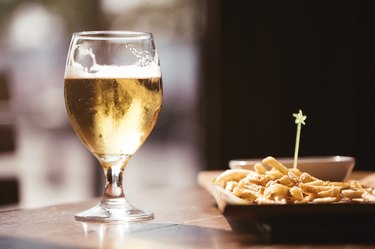
Switching to light beer is a good way to cut calories when you're trying to lose weight. Unlike regular beer, light beer does contain a miniscule amount of sugar -- less than 1 gram -- which may have something to do with how it's made. However, when it comes to weight control, it's the total calories in the beer that count.
About Light Beer
Video of the Day
Light beer is brewed using a low-sugar extract made from grain, according to the German Beer Institute, which allows for less fermentation and a lower production of alcohol. Alcohol is a source of calories, with 7 calories per gram. By comparison, 1 gram of carbs or protein has 4 calories, while 1 gram of fat has 9 calories. Light beers are lower in calories than regular beer because they contain less alcohol, with a range of 3 to 4 percent, while regular beer is anywhere from 5 to 10 percent alcohol.
Video of the Day
Sugar in Light Beer
One 12-ounce can of light beer has 0.3 gram of sugar. The same serving of regular beer has zero grams of sugar. The fermentation process of the low-sugar extract used to make light beer may explain why light beer has more sugar than regular beer. While some sugar is in light beer, it's not much, and it's not added sugar.
It's not so much the sugar you should be worried about in light beer, but the calories. Alcohol calories are empty calories, which means they offer no nutritional value. The 2015 Dietary Guidelines for Americans say that empty calories from alcohol, added sugar and saturated fat, should be limited to about 10 percent of your total calories. So, if you normally eat 1,800 calories a day, a 12-ounce can of light beer with 100 calories uses up 55 percent of your discretionary calories, from alcohol and a teeny bit of sugar.
Light Beer and Blood Sugar
Light beer isn't a major source of sugar, but it does affect blood sugar. When your liver is processing the alcohol from your can of light beer, it stops releasing sugar into your bloodstream, causing a drop in blood sugar. The decrease in blood sugar may be the reason you're ravenous after drinking.
The low-blood sugar also impairs reflexes and coordination, so you shouldn't drive or operate any heavy machinery when drinking and experiencing low blood sugar. Eating before, during and after drinking may help prevent a decrease in blood sugar. Choose a mix of foods containing carbs, protein and fat, such as grilled chicken and brown rice or shrimp nachos.
Light Beer and Weight Control
Light beer is low in calories, with 90 to 110 calories per 12-ounce serving depending on the beer. And while it's OK to drink in moderation -- 12 ounces of light beer a day for women and 24 ounces daily for men -- it may not help you manage your weight. In addition to lowering blood sugar and making you hungry, alcohol metabolism also delays fat metabolism. That's because when alcohol is in your bloodstream, the liver puts fatty acid metabolism on hold and breaks down the alcohol first. In essence, your body chooses to use the calories from alcohol for energy instead of those from fat, leaving the fat for later use. And when you're trying to lose weight, you want to burn the fat first, above anything else.
- German Beer Institute: Leightbier
- U.S. Department of Agriculture: Nutrient Database: Alcoholic Beverage, Light Beer
- U.S. Department of Agriculture: Nutrient Database: Alcoholic Beverage, Beer
- Realbeer.com: Calories, Carbs and Alcohol
- University of Georgia: Alcohol Facts
- Office of Disease Prevention and Health Promotion: Dietary Guidelines 2015 - 2020: Appendix 3. USDA Food Patterns: Healthy U.S.-Style Eating Pattern
- Columbia Health: Hypoglycemia and Alcohol