Mucus helps keep your body healthy. But if you notice excess phlegm, an underlying condition may be to blame — and your diet could have something to do with it. So, why do you get phlegm after eating certain foods? And which foods are common offenders — for instance, does cheese cause mucus?
First things first, it's important to note that some amount of mucus is crucial for your wellbeing. This substance plays a role in lining and protecting your tissues, moisturizing and even trapping things like dust, pollen and mold, according to the Cleveland Clinic. In fact, your body normally produces about one liter of mucus a day.
Video of the Day
Video of the Day
But you probably don't think about it unless you're producing too much, which is often the case when your body is fighting off a cold or flu, per the Mayo Clinic. This issue is usually temporary and goes away quickly. But if you notice extra phlegm after eating, it may be because you ate mucus-producing foods.
To help you get to the bottom of excess mucus after munching, here's a list of foods that cause phlegm after eating.
Tip
Other conditions like chronic bronchitis and asthma can cause excess mucus in the longer term. Similarly, cystic fibrosis is a genetic disorder that causes thick mucus to build up in the lungs, according to the Mayo Clinic. Irritable bowel syndrome and certain infections may also cause mucus to appear in your stool, per the Mayo Clinic.
1. Processed Foods
If you often experience phlegm when eating, processed foods may be to blame. According to June 2018 research in Microorganisms, common food additives in processed products (like sweeteners, preservatives and thickeners) can meddle with your intestinal mucus.
These additives can lead to both under- and over-production of mucus, per the study. But all the same, it's not doing your gut health any favors.
Here are some processed foods to cut back on if you're coughing mucus after eating (or in other scenarios, like if you experience phlegm after exercise):
- Candy
- Soda
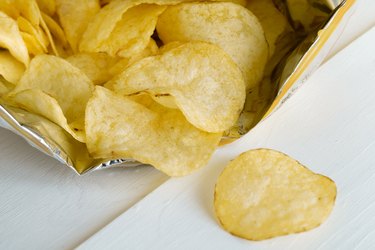
- Chips
- Fried foods
- Packaged baked goods
- Processed meats like sausage and bacon
2. High-Histamine Foods
Foods that are a natural source of histamine may also cause a reaction that increases phlegm production, according to an April 2018 report in the Annals of Dermatology. That said, it's usually only people with a histamine sensitivity or intolerance that will notice symptoms after eating high-histamine foods, per April 2021 research in Nutrients.
Here's what histamine-rich foods can cause phlegm after eating:
- Tuna
- Mackerel
- Pork
- Chicken
- Spinach
- Fermented products like alcohol, yogurt and sauerkraut
- Mayonnaise
- Ketchup
- Citrus fruits like lemons and oranges
- Strawberries
- Tomatoes
- Chocolate
Tip
If you're experiencing excess mucus production, keep a food diary and monitor your symptoms, according to Harvard Health Publishing. This may help you identify trigger foods, and can be helpful to show your doctor to determine if an underlying condition is at play.
3. Food Allergens
A histamine response due to an allergy may also cause mucus hypersecretion, according to an April 2016 study in the FASEB Journal.
In other words, the reason why you get phlegm after eating certain foods may be because you're allergic to what you ate. Here are the most common food allergens to look out for:
- Milk
- Eggs
- Soy
- Fish
- Shellfish
- Peanuts
- Tree nuts
- Wheat
- Sesame
Tip
To see if a food allergy and the subsequent histamine reaction is the cause of your problem, talk to your doctor about being tested.
4. Foods That Cause Reflux
Acid reflux is a common reason why you get phlegm after eating. Indeed, excessive mucus is a symptom of the condition, according to University of Michigan Health.
So if you regularly deal with extra phlegm after mealtimes, it may be best to limit or avoid foods that trigger acid reflux, including:
- Fried and fast foods
- Fatty meats like sausage and bacon
- Spicy foods
- Tomatoes
- Citrus fruits like lemons and oranges
- Alliums like garlic, leeks and onions
- Chocolate
- Peppermint
- Caffeinated drinks like coffee or tea
- Carbonated beverages
- Alcohol

Does Dairy Cause Mucus?
A common belief is that dairy causes mucus buildup, which is why you may have wondered if cheese or milk cause mucus. But according to a July 2018 study in the BMJ, there's no evidence that milk creates mucus secretion.
So, why does milk seemingly increase mucus production? Per the BMJ, it's more of an illusion — the creamy, thick texture of dairy can make it feel like milk does cause phlegm. If that's the case for you, then avoid milk, especially if you have a cold.
Another common assumption is that a dairy allergy causes mucus, but per the Australasian Society of Clinical Immunology and Allergy (ASCIA), this isn't the case. The most common symptoms of a dairy allergy include hives, throat and/or tongue swelling and a drop in blood pressure, not mucus production.
Furthermore, milk or dairy doesn't affect lung capacity in those who have asthma. Per the ASCIA, some people with asthma may cough after drinking cold beverages like milk, but this is likely from the cold irritating the airways, not because of a link between dairy and mucus.
The Best Milk to Reduce Mucus
There's no one type of milk that's recommended for an anti-mucus diet. But if drinking dairy creates the sensation of excess phlegm, it may be better to opt for a beverage or milk substitute that isn't as thick, and thus doesn't coat your throat, per the Mayo Clinic.
- Cleveland Clinic: "Mucus and Phlegm: What to Do If You Have Too Much"
- BMJ: "Milk, Mucus and Myths"
- Australasian Society of Clinical Immunology and Allergy: "Milk, Mucus and Cough"
- Microorganisms: "Mucus: An Underestimated Gut Target for Environmental Pollutants and Food Additives"
- FASEB Journal: "Histamine Stimulates Mucus Secretion Through IL-4 Induced TMEM16A in Human Nasal Epithelium"
- Annals of Dermatology: "A Histamine-Free Diet Is Helpful for Treatment of Adult Patients With Chronic Spontaneous Urticaria"
- Mayo Clinic: "Mucus in Stool: A Concern?"
- Mayo Clinic: "Cold symptoms: Does drinking milk increase phlegm?"
- Nutrients: "Histamine Intolerance Originates in the Gut"
- University of Michigan Health: "Laryngopharyngeal Reflux"
- Harvard Health Publishing: "Keep a food diary to track allergies or intolerances"