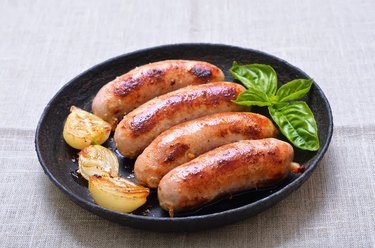
Whether it's chorizo in Spain, bratwurst in Germany or Cajun andouille sausages in Louisiana, just about every culture has its own signature sausage. Although sausages can have a lot of nutritional variation, they are traditionally made from some sort of ground protein mixed with fat and spices. This makes them ideal for people following low-carbohydrate diets and easy to incorporate into many meals.
Tip
Yes, you should be able to include sausage on your low-carb diet. But be sure to read the product label to find varieties with the least number of carbs.
Video of the Day
Video of the Day
Sausages Around the World
A variety of sausages are commonly consumed worldwide. Even hot dogs are technically considered a type of sausage. The primary ingredient in most sausages is ground or processed meat, though vegan and vegetarian sausages exist too. Some examples of sausages include:
- Bloedworst: a Belgian and Dutch sausage made primarily from animal blood
- Bratwurst: a German sausage usually made from pork or beef
- Chipolata: a thin sausage often served as a breakfast food
- Chorizo: a Spanish pork sausage known for its red color
- Frankfurters (or Vienna sausage)
- Haggis: a sausage made of sheep offal that's popular in the United Kingdom
- Salami: fermented, air-dried beef or pork sausage
- Saucisson: a dry-cured sausage that is most often found in France
- Skilandis: a Lithuanian sausage made of minced meat and bacon in pig's stomach
Sausages can be made using just about any type of meat or meat product. Along with these ingredients, sausages traditionally contain herbs and vegetables, like thyme, rosemary, oregano, garlic and onion. They're also typically high in fat, which keeps them moist as you cook them in their casings. Sausages often contain binders as well.
Sausage Nutrition Facts
Sausages can be made out of essentially any protein. According to the Food and Agriculture Organization of the United Nations, beef, pork and veal are the main materials used to make sausage products. However, poultry, mutton and other meats, such as organ meats, are also used. Sausage is even made from game animals, like deer.
The amount of meat in your sausage depends on its type, but many are about 75 percent meat. The remainder should be fat and other ingredients, like eggs, binders and spices. This balance helps to create a moist and flavorful sausage. However, these ingredients vary widely, and the United States Department of Agriculture regulates sausage contents based on their labels. For instance:
- "Fresh Pork Sausages" can contain only pork with a fat content limit of 50 percent.
"Fresh Beef Sausages" can
contain only beef with a fat content limit of
30 percent.
"Breakfast Sausages" can be made of any meat or meat product,
with a fat content limit of 50 percent.
"Italian Sausage Products" can be made of any meat,
with a fat content limit of 35 percent. They can also contain a variety of additional ingredients, like spices and vegetables.
This means that, on average, your sausage must have a minimum of 70 percent meat if it is beef or 50 percent meat if it is pork. Since the two main ingredients in sausages are meat and fat, this essentially means that there are very few carbs in sausages.
Carbs in Sausages
Any carbs in sausages made from meat products come from additional ingredients, like spices, binders and produce. While a bit of seasoning is unlikely to increase overall carb content, many sausages have small amounts of natural flavorings, like fruits, vegetables and even cheese. This can increase their carb content, but fortunately not by much: A pork, beef and cheddar cheese sausage still has only 2.1 grams of carbohydrates per 100 grams.
The main factor likely to increase the carbs in sausages is the use of binders. Binders give sausages their consistency and prevent them from becoming crumbly. Binders in homemade sausages are often breadcrumbs — obviously, a major source of carbs. But they may also include ingredients like potato flour, lentil flour, soy, vital wheat gluten or even corn syrup.
Whether or not these ingredients impact the carbohydrate content of your sausages depends entirely on the ingredient. Vital wheat gluten is mainly protein, for instance, and could be considered a nutritious, low-carb binder. In contrast, light corn syrup has virtually no nutrients and is high in carbohydrates, with 16.9 grams of carbohydrates per tablespoon.
While sausages are generally considered to be low-carb foods, ingredients like these mean that you may want to be cautious about adding sausage products to your low-carb diet. On the other hand, if you're making your own sausages at home, you can avoid such ingredients and create products with the protein, fat and carbohydrate ratios that work best for you.
Read more: 10 Low-Carb Breakfasts That Will Fill You Up
Low-Carb Diets and Sausages
Low-carbohydrate diets often mandate the consumption of specific ratios of foods. Keto diet rules typically ask people to consume no more than 20 grams of carbohydrates per day. Instead of carbohydrates, people on ketogenic diets primarily consume fat, which makes up 70 to 80 percent of their total diet, with the rest coming from protein.
Eating a lot of fat might sound easy initially, but it can be very challenging if you have so few carbs available to you. However, since you're allowed more protein than carbs, one strategy is to integrate meats that are high in fat into your diet.
Foods like sausages, which can have a 50-50 ratio of fat to protein, are ideal for low-carbohydrate and ketogenic diets. The downside to high-fat meat products is that they're also rich in saturated fat.
Saturated Fat in Sausages
If you're following a low-carb or ketogenic diet and are eating lots of fat every day, you should make sure that you're consuming fat from a range of sources, as too much saturated fat can be bad for your health. According to the American Heart Association, this means that most people should consume just 13 grams of saturated fat per day.
One hundred grams of pork, beef and cheddar cheese sausages contain 9.5 grams of saturated fat, which is the majority of a day's recommended saturated fat intake. Many sausages supply about this amount of saturated fat. Fortunately, there are alternatives — sausages are now being made with products like fish oil and emulsified vegetable oil, which can replace saturated fat content with heart-healthy fats that are better for you.
- Meat Science: Effects of Replacing Pork Backfat With Emulsified Vegetable Oil on Fatty Acid Composition and Quality of UK-Style Sausages
- Meat Science: Low-Fat Meat Sausages With Fish Oil: Optimization of Milk Proteins and Carrageenan Contents Using Response Surface Methodology
- American Heart Association: Saturated Fat
- Journal of Clinical Neurology: Efficacy of and Patient Compliance With a Ketogenic Diet in Adults With Intractable Epilepsy: A Meta-Analysis
- SELFNutritionData: Syrups, Corn, Light
- SELFNutritionData: Vital Wheat Gluten
- SELFNutritionData: Sausage, Pork and Beef, with Cheddar Cheese, Smoked
- United States Department of Agriculture: Food Safety and Inspection Service: Sausages and Food Safety
- Washington Post: I Know How the Sausage Gets Made — and You Can, Too
- Food and Agriculture Organization of the United Nations: Sausage Raw Materials