














































Soya Vs. Soy Lecithin

Soya Vs. Soy Lecithin
Photo Credit Jupiterimages/liquidlibrary/Getty Images

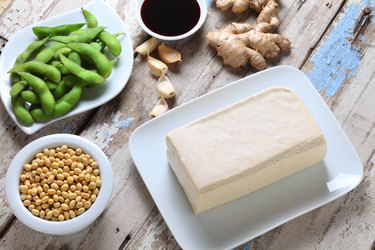
While soy lecithin is derived from soya, there are some key differences that set them apart. Soya is the beans retrieved from pod of the soya plant. Once harvested, the soya is turned into a myriad of food products such as oil, tofu and milk. These products usually require some type of processing, but the properties of the soya bean remain largely unchanged. Soy lecithin is a waste product left after producing soya oil. Lecithin is a collection of several phospholipids that have both health and industrial uses.

Protein

Soya contains a large fraction of protein that is mostly removed from soy lecithin. Protein from soya is considered one of the few "complete proteins" that comes from a source other than meat, fish or dairy. A complete protein is one where all of the essential amino acids necessary for biological function are present. For a protein to be considered complete, it must also have those amino acids in the correct proportions. Because soy lecithin is extracted from the processed oil of the soya bean's shell, it contains little of this protein.

Antioxidants

Soya beans and its products contain several different antioxidants that soy lecithin does not. Antioxidants are compounds that stop the oxidation of other molecules. When oxidation takes place within the body, it can release damaging free radicals. These free radicals can cause runaway reactions within the body that may result in cells becoming damaged. They can incur so much damage from these free radicals that it may kill the cell or damage their DNA, possibly causing cancer. Studies show that a sufficient level of antioxidants reduces the risk of heart disease and other conditions.

Choline

While it may lack antioxidants and protein, soy lecithin does contain a substance known as choline. Choline is a micronutrient that has been designated as an essential nutrient. Choline also plays a major role in the formation of cell walls. Without the phospholipids created with the help of choline, the walls would not be able to become loose enough for other nutrients to pass through. This nutrient is vital for lipid-cholesterol metabolism in the cell, in addition to many other functions. Choline is also thought to play a role in preventing cardiovascular disease, cancer and Alzheimer's disease.

Soy Allergies

One of soy lecithin's main differences is how people with soy allergies react to it. Most people with soy allergies show a reaction when exposed to different forms of soy. Because soy lecithin is a processed byproduct of the soya bean, the hot solvent used to extract it typically removes the compounds that trigger the allergic reaction. While it is possible for it to contain some leftover soy protein, soy lecithin is considered safe for people with soy allergies to consume.

References

Article reviewed by Tad Cronn Last updated on: Jul 28, 2011

Must see: Photo Galleries

Member Comments