

































































Probiotics, or "friendly bacteria," are harmless microbes that help to aid digestion, enhance immunity and prevent certain diseases. Probiotics naturally dwelling in the human colon often die during antibiotic treatment, leaving the body prone to digestive upsets and opportunistic infections. Supplements and foods containing probiotics may prevent many of the side effects associated with antibiotics. Lactobacillus GG, a patented strain of Lactobacillus rhamnosus, is the most widely used and researched form for people taking antibiotics.
History
Lactobacillus GG occurs naturally in the human digestive tract. The bacterium was first identified and isolated by Sherwood Gorbach and Barry Golden during the 1980s. The two scientists patented the formula and gave the stain the name "GG" to reflect their own surnames. The patented product is now sold under the trade name Culturelle. Other forms of Lactobacillus rhamnosus--along with related species such as L. acidophilus--are used in the production of yogurt and other cultured foods.
Function
Lactobacillus GG works in several ways to prevent the side effects associated with antibiotics. According to the University of Maryland Medical Center, Lactobacilllus bacteria supplements can help to replace the naturally occurring "friendly" bacteria lost to antibiotic therapy. The UMMC reports that Lactobacillus GG and S. boulardi appear to be particularly valuable in this capacity. The bacteria might also help to balance the body's biochemistry to prevent yeast infections, which often occur as a result of antibiotic treatment.
Evidence
Mixed but encouraging scientific evidence supports the use of Lactobacillus GG as an adjunct to antibiotic therapy. According to the National Institutes of Health, several studies demonstrate that Lactobacillus GG prevents diarrhea in children taking antibiotics. Less compelling evidence supports its use as a preventative for antibiotic-related candidiasis, or yeast infection. Due to scant overall evidence, the NIH regards Lactobacillus GG as "possibly effective" for preventing antibiotic-related diarrhea and "possibly ineffective" for the prevention of vaginal yeast infections.
Safety
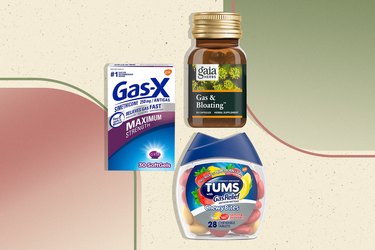
In general, probiotic supplements are safe and associated with few side effects, according to the University of Maryland Medical Center. The National Institutes of Health lists mild gas or bloating among the most common side effects of Lactobacillus supplements. The NIH notes that Lactobacillus GG has been studied in pregnant and nursing women, and appears to be safe. However, people with weakened immune systems due to HIV or immunosuppressants should avoid probiotic supplements except under a health care provider's guidance. People with medical conditions should always consult qualified practitioners before taking any medicinal supplement.


