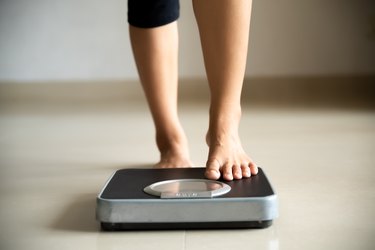
Many manufacturers of cortisol blockers have made claims that their product can promote weight loss b reducing the levels of cortisol in your body. Your body releases cortisol when you are under a great deal of stress. Some evidence links the stress hormone, cortisol, to weight gain.
Cortisol Inhibitors for Weight Loss
Video of the Day
You may have heard claims that cortisol blockers or cortisol inhibitors can help you lose weight. These claims are based on some evidence which suggests that increased stress levels can lead to, or contribute to, weight gain. For example, a study published in February 2017 in the journal Obesity looked at the cortisol levels of over 2,500 men and women over the age of 50. They found that exposure to elevated levels of cortisol over time is associated with higher body weight and obesity.
Video of the Day
However, according to Katherine Zeratsky, R.D., L.D. of the Mayo Clinic, there is little to no evidence that the use of cortisol inhibitors can contribute to weight loss. In fact, she pointed out that the Federal Trade Commission (FTC) cited manufactures of cortisol blockers for making false or over-exaggerated claims about the effect cortisol inhibitors have on weight loss.
The FTC filed a complaint against the manufacturers of CortiSlim and CortiStress in 2004. The complaint required that the manufacturers refund customers for making false claims about their products' effectiveness.
If you are interested in weight loss, the Centers for Disease Control and Prevention (CDC) recommends regular exercise, balanced eating and limiting the number of calories consumed to what your body actually needs. But if you are curious about using a cortisol blocker for weight loss, make sure you look into the manufacturer's claims before buying. Chances are, if they sound too good to be true, they probably are.
Read More: What Drugs Lower High Cortisol Levels?
Natural Stress and Weight Management
If you are interested in weight and stress management, there are a number of natural steps you can take to help manage both. The following are some general tips to help get started:
- Get enough sleep. According to a study published in November 2015 in the journal Sleep Science, adequate sleep each night can positively effect both stress levels and weight management.
- Get regular, moderate exercise geared to relieve your stress.
- Eat a balanced diet.
If you are looking to reduce cortisol levels naturally, you can also try taking steps such as:
- Practice relaxing.
- Schedule time to have fun.
- Maintain healthy relationships.
- Take care of a pet.
Finally, there are some specific foods that reduce cortisol levels in your body. Some of the foods that may help include:
Dark chocolate, according to research published in June 2014 in the Journal of the American College of Cardiology.
Green and black teas, according to a small, older study of 75 adult males published in January 2007 in Psychopharmacology journal.
Bananas and pears can lower cortisol levels according to research published in December 2015 in the Journal of Proteome Research.
Water can help keep the body hydrated, which can help reduce the effects of dehydration that can put physical stress on the body.
Prebiotics and probiotics. A study of 45 men and women in May 2015 in Psychopharmacology journal showed how they can reduce cortisol levels in healthy volunteers. More research is needed on human subjects though.
Before starting a new diet or exercise program, you should speak to your doctor. Your doctor can provide recommendations based on your individual health needs.
- Obesity: "Hair cortisol and adiposity in a population‐based sample of 2,527 men and women aged 54 to 87 years"
- Mayo Clinic: "Can cortisol blockers help me lose weight?"
- CDC: "Healthy Weight"
- FTC: "FTC Targets Products Claiming to Affect the Stress Hormone Cortisol"
- Sleep Science: "Interactions Between Sleep, Stress, and Metabolism: From Physiological to Pathological Conditions"
- Journal of the American College of Cardiology: "Dark Chocolate Intake Buffers Stress Reactivity in Humans"
- Psychopharmacology: "The Effects of Tea on Psychophysiological Stress Responsivity and Post-Stress Recovery: A Randomised Double-Blind Trial"
- Journal of Proteome Research: "Metabolomics-Based Analysis of Banana and Pear Ingestion on Exercise Performance and Recovery"
- Psychopharmacology: "Prebiotic Intake Reduces the Waking Cortisol Response and Alters Emotional Bias in Healthy Volunteers"