
Any well-stocked kitchen will have a bottle of apple cider vinegar (ACV), which is made from fermented apples. The acidic liquid makes for a great condiment, sure, but experiencing benefits with apple cider vinegar can go beyond dressing a salad.
Still, you should be wary of the hype surrounding ACV, which is often touted as a cure-all for an overwhelming number of conditions (acne, infections and cancer, to name a few). For the majority of these claims, there's only anecdotal evidence to support them.
Video of the Day
Video of the Day
That said, in some cases, there is research — often preliminary lab or animal studies, but sometimes studies in humans — that helps support or refute claims of certain ACV benefits.
Here, we'll take a look at some of the possible health benefits of apple cider vinegar, as well as some unsupported claims and risks of ACV.
Potential Health Benefits of ACV
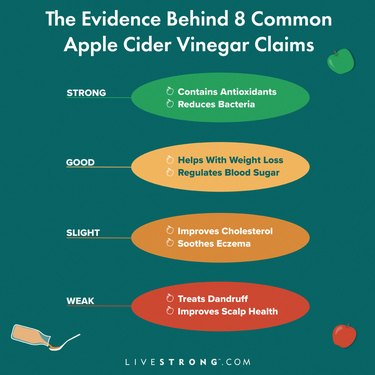
There's evidence to back up these benefits of apple cider vinegar:
1. It May Contain Antioxidants
Good EvidenceLike other vinegars made using fruit, raw, unfiltered apple cider vinegar contains polyphenols — a type of antioxidant — according to a March 2019 article in Antioxidants.
Antioxidants help keep cells healthy and also eliminate free radicals, which can damage cells and cause chronic disease, according to the Harvard T.H. Chan School of Public Health.
Apples are known to be a source of many antioxidants, including quercetin, catechin, phloridzin and chlorogenic acid, per a May 2004 paper in Nutrition Journal. The paper's authors note that apples are associated with a reduced risk of many chronic diseases, including cancer, heart disease and asthma.
That said, the fermentation process that turns these apples into ACV may result in a loss of antioxidant phenolic compounds, according to an October 2016 study in the Internal Journal of Molecular Sciences.
2. It Reduces Bacteria on Food
Good EvidenceIf you're concerned about bacteria on your food, rinsing it with a vinegar-and-water solution can be helpful.
Vinegar contains acetic acid, which has both antifungal and antibacterial properties, per the National Center for Biotechnology Information.
In one lab experiment, researchers rinsed arugula and scallions with vinegar and found that it reduced the presence of Salmonella cells, which had been placed on the veggies. The most effective way to remove the Salmonella was to use a one-to-one mixture of lemon and vinegar, according to February 2005 results in the International Journal of Food Microbiology. (Note that this study looked at vinegar in general, though, not specifically apple cider vinegar.)
However, little research has been done to show vinegar's effect on bacteria in other arenas, let alone its effect on bacterial infections in the body. Plus, neither vinegar nor lemon is necessarily better than plain old H2O when it comes to cleaning produce, per the Centers for Disease Control and Prevention (CDC).
And, despite any antibacterial properties of vinegar, it's not approved for disinfection purposes in health care situations because it's only effective against some (but not all) bacteria, according to the CDC.
3. It Might Help With Weight Loss
Some Evidence
Apple cider vinegar is often considered a weight-loss aid, but there's limited research around this in humans. A few studies have shown promise, though.
For example, taking 1/2 to 1 ounce of apple vinegar mixed into about 2 cups of water daily helped adults with obesity lose weight over the course of 12 weeks in a randomized, placebo-controlled trial, per still-relevant August 2009 results in Bioscience, Biotechnology and Biochemistry.
They drank half the mixture after breakfast and the other half after dinner. The participants were separated into three groups: one that got a lower dose of ACV (1/2 ounce), one that got a higher dose (1 ounce) and one that didn't get any ACV at all. Body weight, BMI and body fat ratios were significantly lower in the ACV groups at the end of the trial.
In another small randomized clinical trial, people with overweight or obesity who followed a restricted-calorie diet and took about 1 1/2 tablespoons of apple cider vinegar daily for 12 weeks lost more weight than those who only followed the restricted-calorie diet and didn't drink ACV.
The vinegar group also lost more visceral (belly) fat, lowered their BMI and hip circumference and reduced their appetite, according to findings in the April 2018 Journal of Functional Foods.
The reason ACV reduces appetite could be that it helps you feel full, per a May 2014 Journal of Food Science paper. But more information is needed to understand what mechanism is at work. It's possible that drinking apple cider vinegar simply makes people feel nauseated, making food less tempting, according to an August 2013 International Journal of Obesity study.
It's important to note that both the Cleveland Clinic and Mayo Clinic deem ACV unlikely to be a successful method for weight loss on its own.
Still, including ACV in your diet is unlikely to hinder your weight-loss efforts. Nutritionally speaking, apple cider vinegar contains only trace calories — 1 tablespoon has 3 calories, no fat or protein and minuscule amounts of carbohydrates (0.1 grams), per the USDA. It doesn't contain any vitamins or minerals, although there is a small amount of potassium in ACV, according to the USDA.
4. It May Help Regulate Blood Sugar
Some EvidenceAmong the purported benefits of drinking apple cider vinegar, its effect on diabetes and blood sugar control is one of the most studied.
Blood sugar (aka glucose) is a source of energy for your body, according to the U.S. National Library of Medicine. Diabetes occurs when blood sugar levels are too high.
There's some evidence that links apple cider vinegar and fewer blood sugar spikes, but research has not found a proven cause-and-effect relationship. (And no, ACV doesn't raise or lower your blood sugar.) Having ACV at mealtime may help improve insulin sensitivity, according to Northwell Health.
For example, in a 12-week pilot study with 14 participants, adults at risk for type 2 diabetes who drank 750 milligrams (less than a full eyedropper's worth) of vinegar at mealtime had lower fasting blood sugar levels than those who took a control pill, per October 2013 results in the Journal of Functional Foods.
This was a very small study, though, and it looked at the effects of vinegar in general, not the benefits of apple cider vinegar specifically.
In another small study with 29 people, those who drank a mixture of apple cider vinegar, water and saccharine (an artificial sweetener) before a high-carb meal had steadier blood sugar levels after eating than those who had a placebo drink, according to January 2004 findings in Diabetes Care.
Keep in mind these studies are all quite small, involving handfuls — not hundreds — of participants. As a result, larger studies are needed to determine apple cider vinegar's health benefits before any recommendation can be made for or against it, according to May 2018 research in the Journal of Evidence-Based Integrative Medicine.
So while there may be some link between taking ACV (before, during or after eating) and steadier blood sugar for people with diabetes, it's not a replacement for medications, per UChicago Medicine.
5. It Could Help Improve Your Cholesterol
Limited EvidenceYour risk of heart disease is higher when you have high cholesterol and high triglyceride levels (both part of what's known as your lipid profile), per the American Heart Association. But taking apple cider vinegar may lead to positive changes in these numbers.
In a small study looking at rats with and without diabetes, having food that contained apple cider vinegar led to lower triglycerides and LDL cholesterol, and higher HDL ("good") cholesterol, according to December 2008 research in the Pakistan Journal of Biological Sciences.
That's not the best measure of things, though, because rats are obviously not humans. Plus, the study was small, and it was conducted more than a decade ago.
But more recently, in the small randomized clinical trial in the April 2018 issue of the Journal of Functional Foods mentioned above, researchers found that the people who were on a reduced-calorie diet and also took about 1 1/2 tablespoons of apple cider vinegar daily had lower triglycerides and overall cholesterol, and increased HDL, compared to the people who followed a reduced-calorie diet without ACV.
While these studies are promising, more research is needed to confirm whether apple cider vinegar is good for you and your heart and can help prevent heart disease, including congestive heart failure.
6. It Could Act as a Potential Treatment for Eczema
Limited Evidence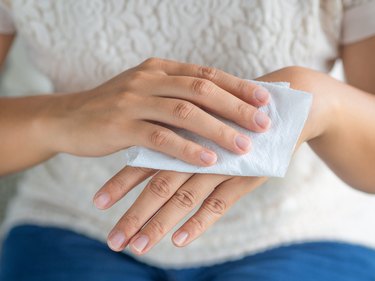
Eczema, or atopic dermatitis, leads to dry, itchy skin.
There's some evidence that apple cider vinegar may be an effective home remedy for eczema. The acidic liquid could help balance the skin's pH levels, per Flushing Hospital Medical Center. That's important, because people with eczema tend to have a higher skin pH level (meaning it's more basic, or alkaline), per a May 2015 article in the Journal of Clinical Medicine.
In a December 2016 study in the Annals of Dermatology, mice with eczema were treated with various skin creams, including several made with vinegar. The researchers found that the mice treated with these acidic creams had fewer eczema lesions than mice treated with a neutral cream.
The researchers used vinegar, though, and not apple cider vinegar specifically. And there have not been similar studies in humans, so we don't know if vinegar would have the same effect in people with eczema.
Talk to your health care provider before using ACV for rash or eczema treatment. Also, consider trying a small patch of skin before treating larger areas, per the National Eczema Association, because there's always a chance that products like ACV could cause a skin rash.
You can dampen cotton fabric with a one-to-one solution of ACV and warm water and apply it directly to your skin for several hours, according to the National Eczema Association.
Or, try an apple cider vinegar bath — add 1/8 to 1/4 cup of apple cider vinegar to the water in a full-sized tub, per Sutter Health. This may help prevent infections.
7. It May Treat Dandruff and Improve Scalp Health
Limited EvidenceStep aside, mayonnaise and avocado: Unfiltered apple cider vinegar for hair is another popular remedy from the kitchen.
Although there's no scientific evidence to back up ACV's much-lauded dandruff-fighting abilities, it makes sense that ACV could help, because it has antimicrobial properties (meaning that it kills microorganisms or stops their growth), according to a March 2016 study in Natural Product Research. These properties may help it ward off the yeast behind dandruff.
Using ACV on your hair also balances your hair's pH, which could lead to smoother strands (aka less frizz), while also relieving the irritation and itchiness associated with dandruff, per the UC Berkeley School of Public Health.
While you can adjust the ratio of vinegar to water, a good starting point for an ACV rinse is to combine 1/2 cup apple cider vinegar to 1 1/2 cups water, according to UC Berkeley.
Be Cautious About ACV Hype

While there are health benefits to apple cider vinegar, there are also many claims with scant or nonexistent scientific evidence to back them up. In some cases, using ACV for these health conditions or concerns might simply be a waste of the liquid and your time, but in other cases, there could even be dangers as a result.
Take a look at these 23 claims that lack scientific support:
- Acid reflux: While some people swear by apple cider vinegar and baking soda for acid reflux, there's no scientific evidence to support this home remedy, according to Harvard Health Publishing. There's limited risk to taking apple cider vinegar for GERD, per the Cleveland Clinic — just be aware that there's also no reason to believe that apple cider vinegar for heartburn is effective.
- Acne: Because a type of bacteria known as Propionibacterium acnes contributes to acne, there's reason to think an antibacterial agent will be helpful. But placing ACV directly on your skin can be harmful, potentially causing chemical burns, according to an October 2012 letter to the editor in the Journal of the American Academy of Dermatology, which details a case where that happened to a young boy. But in a small study, which aimed to find out if ACV could improve the skin barrier, most participants experienced skin irritation from the diluted ACV soak, per July 2019 findings in Pediatric Dermatology.
- Anemia: There's some buzz around ACV and anemia, both as a treatment and a cause, but there's no research to show that the vinegar affects red blood cells.
- Bad breath: Claims of treating halitosis, or bad breath, with apple cider vinegar are not supported by current research. Because the acid level of the vinegar could damage the enamel in teeth if not rinsed away, using vinegar to treat bad breath could do more harm than good.
- Cataracts: There is no evidence that apple cider vinegar can treat or prevent cataracts, which occur when protein cells clump together and form a cloudy, hard lens that alters vision. Once free radicals damage the proteins that make up your lens, products such as supplements and food cannot repair or reverse damage. An antioxidant-rich diet does help maintain eye health and may reduce the risk of cataracts developing, according to the Mayo Clinic. So it's possible that having apple cider vinegar — which contains antioxidants — may have some beneficial effect on eye health, but there's no evidence to back up that ACV on its own would help cataracts. The only way to remove a cataract is surgery, according to the National Eye Institute.
- Detox aid: You'll find any number of detox recipes that feature apple cider vinegar online. But there's no evidence detox diets are successful at their mission of removing toxins, per the Mayo Clinic. In general, your body has a "robust self-cleaning" system, per Harvard Health Publishing.
- Fatigue: Some of the bioactive compounds that are found in vinegar may help fight fatigue, according to a January 2020 Journal of Functional Foods article. But understanding how those — and other functions — of vinegar work requires more research. There's no scientific support for the notion that a swig of ACV will reduce fatigue and leave you feeling alert.
- Fungal skin infections: Tinea is a particularly common fungus that affects many areas on the body, including the nails, feet, scalp and skin. It's referred to as athlete's foot when it appears on the feet, jock itch when it's found on the groin and ringworm when it appears elsewhere on the body, according to the Nemours Foundation. Do not use ACV to treat ringworm, as it can lead to sores and scarring, per the Cleveland Clinic.
- Hair loss: Some people use apple cider vinegar for hair growth, believing it stimulates better circulation to your hair follicles, but there are no credible studies to support these claims. In other words, ACV for baldness or alopecia isn't your best bet.
- Kidney infection: There is no evidence that drinking apple cider vinegar for a kidney infection or kidney pain is effective. There's also no evidence that apple cider vinegar is good for the kidneys in general.
- Menopause: Hot flashes are common during this stage of life. When it comes to hot flashes remedies, apple cider vinegar is a popular one, but there's no real evidence to support it.
- Muscle cramps: You'll sometimes hear claims that drinking apple cider vinegar before workouts can prevent muscle cramps, according to Gundersen Health System, but this is one of the many over-hyped claims about ACV.
- Oral thrush: Yeast infections in the mouth are known as oral thrush and caused by a fungus known as Candida albicans, according to the Mayo Clinic. Oral thrush causes white, creamy-looking lesions or sores in your mouth, usually on the inner cheeks or tongue, although it can spread to the gums, tonsils or roof of the mouth. It can be very painful, cause bleeding and problems swallowing, chewing and eating. There's some potential for ACV helping as a treatment for mouth infections. In a lab study, ACV restricted the growth of Candida albicans, per January 2018 results in Scientific Reports. Similarly, ACV showed antifungal properties against Candida spp, which causes denture stomatitis, an infection in people who wear dentures, according to a June 2015 test tube study in the Journal of Prosthodontics. More research — beyond lab studies — is needed to confirm if an apple cider vinegar mouthwash has these antifungal effects in people. The same goes for apple cider vinegar for mouth sores and ulcers.
- Other digestive issues: Another common claim is that apple cider vinegar is a digestive aid that can help ease gas and bloating. There's no scientific evidence to back up the idea that apple cider vinegar helps digestion or has digestive enzymes.
- Plantar fasciitis: Although this painful foot condition is marked by inflammation, there's no evidence whatsoever that bathing your feet in ACV can treat plantar fasciitis.
- Sinus infections: While some recommend preventing sinus infections by adding vinegar to a vaporizer, there's no evidence to support that this would have any preventive effect, nor would it treat a sinus infection.
- Sore throat: You'll often see claims around apple cider vinegar for a sore throat. In particular, there are sometimes recommendations to do an apple cider vinegar gargle. This purported benefit is simply not supported by research, per Providence St. Joseph Health. It's possible that people believe that ACV will help because of its antibacterial properties, but these won't have a healing effect on a sore throat, according to the Cleveland Clinic. If you're seeking at-home remedies for a sore throat, gargling with salt water, drinking warm beverages (like tea with honey) and having a steamy shower are more effective options, according to the Cleveland Clinic.
- Sugar cravings: It's possible that apple cider vinegar could help curb sugar cravings, but that would likely be because the liquid is so unappealing to drink.
- Urinary tract infections: A lab study did show that ACV acts against E. coli (which can cause some UTIs), according to January 2018 results in Scientific Reports. That does not mean, however, that the vinegar is a remedy for a urinary tract infection. In fact, what you eat or drink likely does not play a role in preventing or treating UTIs, per the National Institute of Diabetes and Digestive and Kidney Diseases. And douching (with apple cider vinegar or any other substance) is not recommended, per the Office on Women's Health.
- Vaginal yeast infections: Soaking in a water and apple cider vinegar bath is a popular home remedy for yeast infections. But this tactic is best avoided, according to the Cleveland Clinic. It's not really known if this will help shift a person's vaginal pH to create inhospitable conditions, and it could lead to irritation. There are no benefits to douching with apple cider vinegar, as it can cause infections, according to the Cleveland Clinic.
- Warts: There might be some merit to using apple cider vinegar — along with other home remedies, like strategic duct tape placement — to remove unsightly warts, per UW Medicine. The acid in the vinegar may destroy the wart tissue, according to a May 2006 article in Medscape General Medicine. Another form of acid — salicylic acid — is a known at-home remedy, per the Cleveland Clinic; apple cider vinegar likely works in the same way. Applying ACV to a wart may irritate the skin, prompting inflammation and an immune response that helps fight off the infection that led to the wart, according to UW Medicine. But there's no evidence available that ACV is a successful way to treat warts, according to a January 2012 study in Virology Journal, which found that not only did ACV fail to remove a wart, but it also caused moderate to severe damage to the skin.
- Wounds: There's been chatter around apple cider vinegar for wound healing for centuries, dating back to 400 BC, per the Flushing Hospital Medical Center. That long history doesn't mean it's the best option, though. It's best not to use apple cider vinegar for cuts or open wounds. It won't stop infection-causing bacteria in wounds and can also sting, according to the National Capital Poison Center (NCPC).
- Constipation: Some say that taking ACV for constipation can help promote bowel movements, but there's no evidence to support these claims.
- Asthma: There are claims that ACV is a natural remedy for asthma. It's rumored to be a natural cure for asthma because of its potential anti-infection properties, which may provide natural asthma relief by keeping inflammation at bay. But there are no conclusive studies that suggest that vinegar causes relief from asthma. Instead, try other natural asthma remedies like acupuncture or breathing exercises, which may be more effective remedies for asthma, per the Mayo Clinic.
What About Apple Cider Vinegar Pills?
One of the main advantages of taking apple cider vinegar pills instead of drinking the vinegar directly is that you don't have to deal with the taste. Some brands add additional vitamins, minerals and amino acids, too.
But keep in mind that there's no research around the benefits of ACV pills specifically, and it's not known whether the pills have the same properties as liquid ACV.
Potential Side Effects of ACV
It's one thing to include ACV in a salad dressing. It's another to drink it straight (or even diluted with water) or to apply it to your skin. There are some risks of apple cider vinegar, including:
- Damage to enamel: The acid in apple cider vinegar may lead to the erosion of tooth enamel, according to the American Dental Association. The organization recommends against using vinegar as a teeth-whitener.
- Throat irritation: The acidity of ACV can also lead to throat irritation if you drink a lot of it or consume it frequently, per the Mayo Clinic.
- Low potassium levels: Taking ACV has the potential to lower potassium levels, according to Northwell Health. That can also happen as the result of interactions with supplements or medications, per the Mayo Clinic.
- Skin irritation: Placing apple cider vinegar directly on the skin can lead to burns, per the NCPC. And, as seen above, it can also cause irritation when applied directly to the skin.
How to Take Apple Cider Vinegar
When it comes to an apple cider vinegar "dosage," people typically opt for around 1 to 2 tablespoons of apple cider vinegar, generally mixed with 8 ounces of water.
Science-backed guidance on how to take a daily apple cider vinegar dosage isn't readily available, so follow these commonsense strategies:
- Dilute with water: This can make it more palatable if you're drinking it. If you're applying the substance directly to your skin, diluting it can help prevent skin irritation.
- Test it out: If you're placing apple cider vinegar on your skin, try doing a patch test before using it on wide swaths of skin. Stop if your skin becomes irritated.
- Rinse your mouth: To avoid damage to your enamel, consider rinsing with water after gargling with ACV.
What's more, per the University of Washington, you shouldn't take more than two tablespoons of ACV per day. This can help you avoid potential side effects.
And if you experience digestive side effects — or any other side effects — stop taking apple cider vinegar.
Apple Cider Vinegar Brands

There are many brands of apple cider vinegar out there.
Raw, unfiltered apple cider vinegar still contains parts of the "mother," a stringy mass of yeast and live bacteria left over from the fermenting process, according to UChicago Medicine.
Because it's fermented, apple cider vinegar is a source of probiotics (aka "good for you" bacteria). Despite manufacturer claims, there's no evidence available that the presence of the mother means more probiotic bacteria.
Some of the common brands of ACV you may find are:
- Aspall Organic Cyder Vinegar: The Aspall Hall Farm has been owned and managed by the Chevallier family since 1702, and they have made cider since 1725. Aspall has its own acetifiers (temperature-controlled tanks), which is what makes this cider vinegar unique.
- Bragg Apple Cider Vinegar: Bragg makes an organic, unpasteurized vinegar. It looks cloudier than standard vinegars because it hasn't been filtered and contains an enzyme-rich substance called pectin, that's referred to as the "mother," per Bragg.
- U.S. National Library of Medicine: "Blood Sugar"
- Journal of Functional Foods: "Vinegar ingestion at mealtime reduced fasting blood glucose concentrations in healthy adults at risk for type 2 diabetes"
- Diabetes Care: "Vinegar Improves Insulin Sensitivity to a High-Carbohydrate Meal in Subjects With Insulin Resistance or Type 2 Diabetes"
- Northwell Health: "What are the benefits of apple cider vinegar?"
- UChicago Medicine: "Debunking the health benefits of apple cider vinegar"
- Bioscience, Biotechnology and Biochemistry: "Vinegar Intake Reduces Body Weight and Serum Triglyceride Levels in Obese Japanese Subjects"
- Journal of Functional Foods: "Beneficial effects of Apple Cider Vinegar on weight management, Visceral Adiposity Index and lipid profile in overweight or obese subjects receiving restricted calorie diet: A randomized clinical trial"
- Journal of Food Science: "Functional Properties of Vinegar"
- International Journal of Obesity: "Influence of the tolerability of vinegar as an oral source of short-chain fatty acids on appetite control and food intake"
- Cleveland Clinic: "Can Apple Cider Vinegar Help With Weight Loss?"
- Mayo Clinic: "Drinking apple cider vinegar for weight loss seems far-fetched. Does it work?"
- American Heart Association: "Cholesterol 101: An introduction"
- Pakistan Journal of Biological Sciences: "Apple cider vinegar attenuates lipid profile in normal and diabetic rats."
- National Center for Biotechnology Information: "Acetic acid"
- International Journal of Food Microbiology: "Effectiveness of household natural sanitizers in the elimination of Salmonella typhimurium on rocket (Eruca sativa Miller) and spring onion (Allium cepa L.)"
- Centers for Disease Control and Prevention: "Lettuce, Other Leafy Greens, and Food Safety"
- CDC: "Disinfection of Healthcare Equipment"
- Antioxidants: "Antioxidant Activities, Phenolic Profiles, and Organic Acid Contents of Fruit Vinegars"
- Harvard T.H. Chan School of Public Health: "Antioxidants"
- Nutrition Journal: "Apple phytochemicals and their health benefits"
- Internal Journal of Molecular Sciences: "Fruit Antioxidants during Vinegar Processing: Changes in Content and in Vitro Bio-Accessibility"
- Flushing Hospital Medical Center: "Home Remedy: Apple Cider Vinegar for Eczema"
- Journal of Clinical Medicine: "The Importance of Acidification in Atopic Eczema: An Underexplored Avenue for Treatment"
- National Eczema Association: "Get the Facts: Apple Cider Vinegar"
- Sutter Health: "Soothing Your Child's Eczema"
- Natural Product Research: "Authenticating apple cider vinegar's home remedy claims: antibacterial, antifungal, antiviral properties and cytotoxicity aspect"
- UC Berkeley School of Public Health: "Do It Yourself Beauty Recipes"
- Gundersen Health System: "What you need to know about apple cider vinegar"
- Mayo Clinic: "Do detox diets offer any health benefits?"
- Harvard Health Publishing: "The dubious practice of detox"
- Nemours Foundation: "Ringworm"
- Cleveland Clinic: "How to Cure Ringworm"
- Journal of Functional Foods: "Nutrients and bioactive components from vinegar: A fermented and functional food"
- Scientific Reports: "Antimicrobial activity of apple cider vinegar against Escherichia coli, Staphylococcus aureus and Candida albicans; downregulating cytokine and microbial protein expression"
- National Institute of Diabetes and Digestive and Kidney Diseases: "Bladder Infection (Urinary Tract Infection—UTI) in Adults"
- Office of Women's Health: "Douching"
- Mayo Clinic: "Cataracts"
- National Eye Institute: "Cataracts"
- Flushing Hospital Medical Center: "Wound healing Through the Ages"
- National Capital Poison Center: "Vinegar"
- Journal of the American Academy of Dermatology: "Chemical burn from topical apple cider vinegar"
- Pediatric Dermatology: "Apple cider vinegar soaks [0.5%] as a treatment for atopic dermatitis do not improve skin barrier integrity"
- Providence St. Joseph Health: "Apple cider vinegar: Wishful thinking does not a health elixir make"
- Cleveland Clinic: "Sore Throat Remedies That Actually Work"
- Harvard Health Publishing: "Apple cider vinegar… for heartburn?"
- Cleveland Clinic: "Is Apple Cider Vinegar Good for Acid Reflux?"
- Mayo Clinic: "Oral Thrush"
- Journal of Prosthodontics: "Antifungal Activity of Apple Cider Vinegar on Candida Species Involved in Denture Stomatitis"
- Cleveland Clinic: "Do Home Remedies Actually Work for Yeast Infections?"
- UW Medicine: "Can You Remove a Plantar Wart on Your Own?"
- Medscape General Medicine: "Vinegar: Medicinal Uses and Antiglycemic Effect"
- Cleveland Clinic: "3 At Home Wart Remedies (That Actually Work!)"
- Virology Journal: "Topical vitamin A treatment of recalcitrant common warts"
- American Dental Association: "Natural Teeth Whitening: Fact vs. Fiction"
- Aspall Hall Farm: "Vinegar Production"
- Bragg
- Journal of Evidence-Based Integrative Medicine: "Diabetes Control: Is Vinegar a Promising Candidate to Help Achieve Targets?"
- University of Washington: "Beyond the Hype: Apple Cider Vinegar as an Alternative Therapy"
- Mayo Clinic: "Asthma treatment: Do complementary and alternative approaches work?"
- USDA: "Apple Cider Vinegar"
- Annals of Dermatology: "Application of Topical Acids Improves Atopic Dermatitis in Murine Model by Enhancement of Skin Barrier Functions Regardless of the Origin of Acids"
- Mayo Clinic: "Is colon cleansing a good way to eliminate toxins from your body?"
Is this an emergency? If you are experiencing serious medical symptoms, please see the National Library of Medicine’s list of signs you need emergency medical attention or call 911.