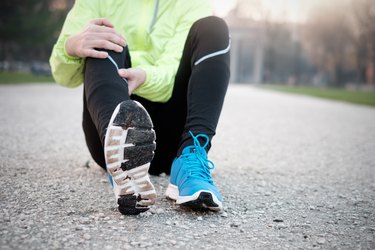
There's nothing like a muscle cramp after a workout to make you feel like you're being punished for exercising. That sudden, intense tightening and pain? No, thank you. It's even worse when it pops up in the middle of the night.
Unfortunately, muscle cramps from exercise will often strike unexpectedly — but there are some things you can do to reduce the chance that you'll be blessed with one after a tough workout.
Video of the Day
Video of the Day
"Muscle cramps are painful involuntary contractions," Larry Nolan, DO, primary care sports medicine physician and clinical assistant professor of family and community medicine at The Ohio State University Wexner Medical Center, tells LIVESTRONG.com. "They are basically prolonged spasms, usually of skeletal muscle, that are often associated with exertion."
Muscle cramps can happen unrelated to exercise, but usually, they tend to occur during or after a workout, Dr. Nolan says.
"One thing about muscle cramping is it's pretty unpredictable," Neel Pancholi, MD, sports medicine and orthopedic specialist at Northwestern Medicine Palos Hospital, says. "There are certain things that make you a little more likely to have one, but you can't know you're going to cramp on any one day."
Here, Drs. Pancholi and Nolan explain theories behind why muscles cramps happen after exercise, and share their best tips for reducing the chance you'll be saddled with one after your next sweat sesh.
What Causes a Muscle Cramp After a Workout?
Experts haven't officially pinpointed the main cause of muscle cramps, but there are two main theories for what causes muscle cramps during or after a workout, Dr. Pancholi says.
The first, which has been around for a long time, is that it's a result of dehydration and specifically, an electrolyte imbalance. "Electrolytes are various salts, like sodium chloride and potassium, that send signals from the nerves to the muscles to tell them to contract," Dr. Pancholi explains. "So when they're depleted, it can interrupt signals from the nerves to the muscles."
The other theory is that cramps from exercise are caused by fatigue in a muscle that causes an issue with neuromuscular control. Muscle control involves sending a message from the central nervous system [CNS] — the brain and spinal cord — to the nerves that go throughout the body and connect to skeletal muscles, Dr. Pancholi explains. "Once the muscles have been contracted for a long time for sustained exercise, they become fatigued, and the message being sent down the CNS that prevents further contraction is essentially lost. Basically, the nervous system loses control of the muscles and it leads to this involuntary contraction."
According to the American Academy of Orthopaedic Surgeons, you're more likely to experience cramping if you're poorly conditioned or otherwise overexerting your muscles — making them more common among endurance athletes and older people. And some people are just more prone to them than others.
Is Cramping Post-Workout Bad?
Cramps from exercise are typically NBD. "Over 95 percent of people experience a muscle cramp at some point in their life," Dr. Nolan says. If you experience them after prolonged activity or exercising in the heat, that's pretty normal and not a cause for concern, he adds.
If the same muscle tends to cramp every time you exercise, or it's occurring bilaterally (in the same muscle on both sides of the body), Dr. Nolan suggests seeing a sports medicine doctor to get evaluated. "This might mean there's some other metabolic or disease process contributing to cramping as opposed to just a specific spasm that we generally associate with post-workout cramps." Viral illnesses and nutrient deficiencies — B12, magnesium and potassium, in particular — are two potential contributors, he says.
Another red flag: You're starting to develop muscle cramps when you're not exercising, Dr. Pancholi says. This could also signal an electrolyte imbalance that's important to get checked out.
4 Fixes for Cramps From Exercise
Tend to cramp after a workout? Try these four tips to prevent one — and relieve it quickly if one does strike.
1. Stretch and Warm Up Before Your Workouts
Stretching before a workout can make a huge difference in reducing cramps from exercise, Dr. Nolan says. That's because it helps your muscles ease into the work and avoid getting too stressed and overwhelmed too fast.
"The nervous system and muscles need time to get firing at the level they need to be working at," Dr. Pancholi explains. "If you're going to do highly strenuous activity, it's not beneficial to go from 0 to 100. You want to have that stepwise fashion so you're not shocking the system and leading the muscles to react by cramping."
Dr. Nolan recommends dynamic stretching both before and after workouts. If you tend to get muscle cramps at night, "then stretching before bed, too, wouldn't be a bad idea," he adds.
Related Reading
2. Replenish Fluids and Electrolytes
Hydrating before, during and after exercise will help you avoid dehydration. You should hydrate regularly throughout the day, and not just chug it before or after exercise, to stay consistently hydrated. The best way to know if you need to up your fluid intake? " The darker your urine is, the more dehydrated you are," Dr. Pancholi says. "You want to go for a light yellow, straw color urine." If it's darker, add some more H2O to your day.
"Also, make sure you're replacing salt regularly," Dr. Pancholi adds. "If you're doing intense activity and sweating regularly, drink sports drinks, coconut water or anything else with electrolytes." According to the American College of Sports Medicine (ACSM), a good rule of thumb is to make sure you're taking in electrolytes if you're exercising for longer than an hour. Ditto if you're exercising in really hot or humid weather, because you'll also likely sweat out more water and electrolytes than if you're doing the same workout in cooler temps.
Our Favorite Electrolyte Drinks
- Liquid IV ($25 for a 14 pack, Liquid-iv.com; read our full review here)
- Vita Coco Coconut Water ($4.38, Walmart.com)
- Skratch Labs Sport Hydration Drink Mix ($21.95 for 20 servings, Skratchlabs.com)
3. Keep Your Nutrition in Check
If you regularly get muscle cramps after a workout, it's important to make sure your nutrition is supporting your activities. "Having a healthy diet is another thing you can do for prevention," Dr. Pancholi says. "It keeps your hydration and electrolyte levels normalized, that's a big component of it. Also just giving your muscles the adequate nutrients you need keeps them healthy and functioning properly."
Fruits and veggies have lots of vitamins and minerals, including the ones that could possibly contribute to cramps if you're deficient.
Dr. Nolan recommends keeping a food journal for a week or two so that you can figure out if you're eating a well-rounded diet and hydrating often. If it turns out fruits and veggies rarely make an appearance, changing up your diet may make a difference in your muscle cramps. (It's a good idea for your general health and performance, anyway!)
Related Reading
4. Gently Stretch to Relieve a Cramp in the Moment
If you do end up with a muscle cramp during exercise (or shortly afterward), stop what you're doing and gently stretch the muscle to relieve the spasm, Dr. Pancholi suggests. "Do a passive stretch where you're essentially stretching against something else. Hold it for 30 seconds, take a break and then do it again for 30 seconds. Do that a couple times."
"In the short period after exercise, you can also gently rub or massage muscles, which can relax them and can lead to a decreased intensity in cramps," he adds. Adding some heat to loosen the muscle may provide additional relief.
While you can never completely prevent muscle cramping after workouts, following the tips above will give you your best shot at avoiding them, allowing you to focus on celebrating your hard work and how good it made you feel.