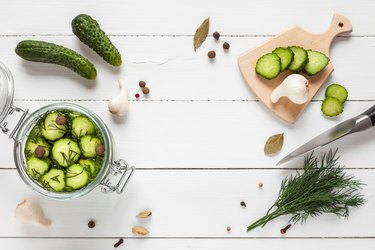
Sodium benzoate is a common type of food preservative and is the sodium salt of benzoic acid. Food manufacturers make sodium benzoate by synthesizing the compounds, sodium hydroxide and benzoic acid, together.
On top of being used as a food preservative, sodium benzoate has other roles in food production. There are some side effects associated with taking in too much sodium benzoate from foods.
Video of the Day
Video of the Day
Tip
Sodium benzoate is an anti-fungal preservative that enhances the flavor of acidic foods.
Sodium Benzoate in Food
Sodium benzoate is primarily added to acidic foods to enhance their flavor. It can be found in foods such as pickles, sauces, jams and fruit juices, per the FDA.
Sodium benzoate preserves food because it has anti-fungal properties, protecting foods from invasion by fungi that cause it to spoil and potentially make you sick, according to an August 2016 review in Biotechnology and Health Sciences.
Sodium benzoate works by entering the individual cells in the food and balancing its pH level, increasing the overall acidity of the food. By lowering the intracellular pH of certain foods, sodium benzoate creates an environment in which fungi cannot grow and spread.
Foods that are made with vinegar, such as salad dressings, typically have very high levels of sodium benzoate. Benzene, a precursor to sodium benzoate, can be found in very small amounts naturally in some fruits, vegetables, meats, dairy products and even drinking water.
Soft Drinks
Sodium benzoate is heavily used by the soft drink industry due because of the high-fructose corn syrup used in carbonated drinks, according to the International Program on Chemical Safety.
Sodium benzoate increases the acidity of soft drinks, which also increases the intensity of flavor you get from the high-fructose corn syrup. On the back of a soda can, you can find sodium benzoate in the ingredients list as E211, which is the number assigned to it as a food additive.
Sodium benzoate is also used in medicines, dye manufacturing, tobacco products and as a rust and mildew inhibitor. Sodium benzoate in food can be toxic when combined with other foods containing vitamin C, according to the FDA.
Soft Drinks With Sodium Benzoate
- Dr. Pepper
- Diet Dr. Pepper
- Mountain Dew
- Diet Mountain Dew
- Barq's Root Beer
- Diet Barq's Root Beer
- Sunkist Orange
- Diet Sunkist
- Schweppes Tonic Water
Diet Soft Drinks
Sodium benzoate, also known as E211, is a major ingredient in many diet soft drinks.
Diet Dr. Pepper and Diet Mountain Dew%2C%20YELLOW%205.) as well as the diet versions of Barq's Rootbeer and Sunkist Orange are all still made with sodium benzoate.
Diet Coke made by Coca-Cola is no longer made with sodium benzoate. Diet Coke, Diet Pepsi, Lipton Diet Iced Tea and Diet Sprite have shifted to potassium benzoate and citric acid to act as preservatives in both canned and plastic-bottled soft drinks.
Regular Soft Drinks
Some, but not all, commercial soft drink companies use sodium benzoate as a preservative. Pepsi does not have the ingredient, while Dr. Pepper uses E211 for soft drinks bottled in plastic containers but not in aluminum cans. Mountain Dew in all forms of packaging uses E211.
Dr. Pepper speciality drinks, including cherry vanilla soda, berries and cream, and cherry soda, all have sodium benzoate. 7-UP has shifted from sodium benzoate to use potassium benzoate and vitamin E acetate as preservatives in their products.
Carbonated soda water and tonic water drinks, such as those made by Schweppes%2C%20Quinine%2C%20Natural%20Flavors.) brand, also use sodium benzoate as a preservative.
Side Effects
Sodium benzoate, when combined with vitamin C, forms benzene. This substance is a carcinogen and is known to cause cancer, according to the FDA.
Sodium benzoate and vitamin C can occur together in beverages such as fruit juice or soda, where these substances have been added to prevent spoilage and inhibit growth of bacteria, molds and yeast. Benzene can form when beverages that have both substances are exposed to heat or light, per the FDA.
That being said, food products that have both vitamin C and sodium benzoate have tested with benzene levels that are below the dangerous limit, per the FDA. Talk to your doctor about sodium benzoate, especially if you eat a lot of foods and drinks that made with this food additive.
- Biochemistry Journal: Studies on the Mechanism of the Antifungal Action of Benzoate
- International Program on Chemical Safety: Benzoic Acid and Sodium Benzoate
- FDA: Data on Benzene in Soft Drinks and Other Beverages; May 2009
- FDA: Questions and Answers on the Occurrence of Benzene in Soft Drinks and Other Beverages
- Coca Cola: Diet Coke