
















































Official partner of the LIVESTRONG Foundation

Fruit and Veggie Smoothies for Kids

Aug 25, 2011 | By Jennifer Hayes

Jennifer Hayes began writing professionally in 2010. Previously published online, Hayes has written a series of crafting tutorials with an emphasis on green crafting and creativity on a budget. She attended Southern Methodist University in Dallas, Texas, where she studied English and art.

Fruit and Veggie Smoothies for Kids
Photo Credit Jupiterimages/Photos.com/Getty Images

Children should consume 1 to 2 cups of fruit and 1 to 3 cups of vegetables each day, depending upon age, gender and level of activity, according to the United States Department of Agriculture (USDA). However, while most kids love fruit, others may run from servings of vegetables. One way to include servings of vegetables into a child's diet is smoothies. Quick and easy, fruit and vegetable smoothies are fun and contain healthy doses of vitamins and other vital nutrients.

Fresh vs. Frozen Fruits and Vegetables

Although it is always good to use fresh fruits and vegetables whenever possible, using frozen produce when making smoothies is beneficial in a number of ways. Frozen produce is packaged clean and ready to eat, with leaves and stems removed prior to freezing, and can quickly go from the freezer to the blender. The use of frozen fruits and vegetables in smoothies can also eliminate the need for ice that may water down the taste of a smoothie.

Berry Carrot Smoothie

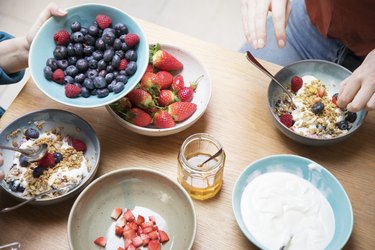
Berries, such as blueberries, raspberries and strawberries not only taste great in smoothies, but also are also high in antioxidants. Carrots are high in vitamin A, which helps maintain eye and skin health. Add portions of a frozen berry blend and frozen baby carrots to low fat plain or vanilla yogurt and fruit juice and blend well. Because berries possess stronger flavors than the milder-tasting carrots, many children may not even realize that they are drinking vegetables.

Tropical Cauliflower Smoothie

For another smoothie with a covert serving of vegetables try a tropical cauliflower smoothie. High in vitamin C, cauliflower is another mild-tasting vegetable easily masked by fruit flavors. Blend frozen cauliflower, frozen pineapple and a ripe banana with low fat yogurt and a small amount of coconut milk. Like cauliflower, pineapple is another source of vitamin C, while bananas contain potassium.

Sweet Green Smoothie

While milder-tasting vegetables can be covertly added to fruit smoothies to fool even the most finicky of children, other vegetables, such as spinach, require a little more finesse, as the sight of green may immediately repel some kids. Try challenging your child to a blind taste test and allow them to sample a fruit-only smoothie along with a sweet green smoothie made from frozen spinach, frozen honeydew, low fat vanilla yogurt, fruit juice and a small amount of honey for sweetness. This activity is both fun and an excellent way to teach kids that green foods taste great.

References

Article reviewed by Stephanie Skernivitz Last updated on: Aug 25, 2011

Must see: Slideshow & Video

Member Comments