


























































Is Apple Cider Vinegar Bad for Tooth Enamel?

Is Apple Cider Vinegar Bad for Tooth Enamel?
Photo Credit Jupiterimages/Polka Dot/Getty Images

Vinegar, particularly raw apple cider vinegar, may help regulate blood sugar levels when taken before starchy meals. But, every silver lining has a cloud, and the acids in vinegar, while offering many health benefits, can also do serious damage. The acids in apple cider vinegar can wear away the enamel on your teeth, but there are ways to ensure that you get the full benefits of taking vinegar as a supplement without any of the drawbacks.

Tooth Enamel

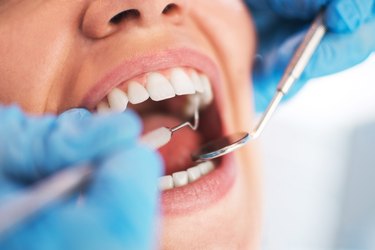
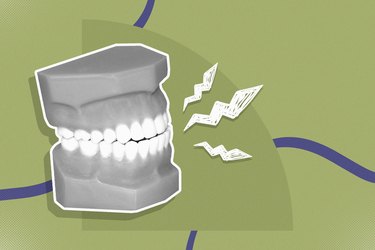
Tooth enamel is comprised of layers. The inner, softer layer is called dentin. On top of that is the shiny, harder enamel. Enamel is largely made up of a mineral called calcium phosphate, which is similar to the calcium carbonate that makes up pearls and the seashells that enclose them. Tooth enamel is also made of a protein called amelogenin. Just as a pearl will dissolve in wine vinegar, your tooth enamel will start to erode if constantly assaulted with pure vinegar.

Apple Cider Vinegar

Apple cider vinegar is usually made from organic apples. They are pressed and strained, and the juice is fermented. Raw apple cider vinegar is rich in nutrients like calcium, potassium, ash, malic acid and acetic acid. These acids can damage your tooth enamel with repeated exposure over time.

Apple Cider Vinegar Benefits

The acetic acid in apple cider vinegar is known to help regulate your body’s insulin response to starchy foods. When you eat something with a high glycemic index like white bread or polished rice, your body converts the starch into sugar. High glycemic index foods produce a lot of sugar, so your pancreas sends out insulin to round up the extra sugar and store it. The more sugar in your system, the more insulin is needed, and it is possible to secrete so much that your liver cannot process it. Vinegar helps slow the insulin response -- though the exact mechanism is not understood.

Precautions

Dilute apple cider vinegar in a 1-to-10 concentration with juice, water or tea. This is important to keep the malic and acetic acids from burning your mouth and throat, as well as to protect your tooth enamel. Mix apple cider vinegar with olive oil for use as a salad dressing. The olive oil will both dilute the vinegar and coat your teeth, making a protective layer between your enamel and the acids. Always rinse your mouth and brush your teeth after consuming apple cider vinegar.

References

Article reviewed by Brigitte Espinet Last updated on: Sep 1, 2011

Must see: Photo Galleries

Member Comments