








































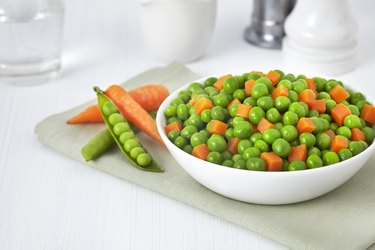
The human body needs proteins, made up of amino acids, to build and repair muscle cells, to function as enzymes, to produce hormones and to provide energy. During the process of digestion, your body breaks down proteins into their individual amino acids, absorbs the amino acids and uses them to produce new protein complexes. Animal-based foods provide the highest-quality proteins; but proteins from vegetables, which can be defined as all non-animal-based sources, are also a good source of protein and amino acids when consumed either raw or cooked.
Complete Versus Incomplete
Your body needs 20 different amino acids to support normal daily function. Of these 20, the body can produce 11 amino acids. You get the other nine, known as the essential amino acids, from the protein foods you eat. Animal proteins, like meat, fish and dairy products, are classified as complete proteins because they provide all of the essential amino acids. In contrast, scientists classify plant-based proteins, like veggies, as incomplete proteins because they do not provide all the essential amino acids. Even so, you can get all the essential amino acids by combining vegetables that contain different amino acids.
Leafy Greens
Leafy green vegetables provide many essential nutrients including protein, potassium, folate, vitamin A and vitamin K. Raw spinach, for example, has 0.86 g protein in each 1-cup serving. Although not technically classified as a complete protein, spinach contains high-quality protein with all of the essential amino acids, although a few of these, like tryptophan and cystine, are present in very small amounts.
Beans
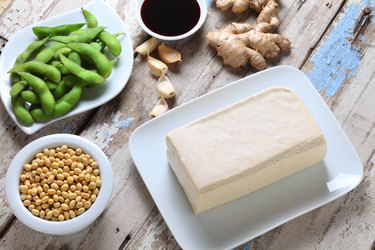
Beans, a veggie often eaten cooked rather than raw, serve as an excellent source of protein. Soybeans are the only vegetarian protein source officially classified as a complete protein. The National Soybean Research Laboratory reports that the amino acid profile of soybeans is nearly equivalent to that of animal protein sources like meat and milk. A one-half cup serving of mature yellow soybeans provides 14.3 g of complete protein. Other beans like lentils and navy beans also contain significant amounts of protein, but soybeans provide the most.
Nuts, Seeds and Grains
Nuts, seeds and grains serve as good sources of protein while also providing other important nutrients like fiber, B vitamins and minerals. Nuts and seeds are high in fat, but it's unsaturated fat, which when consumed in place of saturated fat can help lower your cholesterol and reduce your risk for heart disease. Eating a handful of raw nuts or seeds per day satisfies your urge to snack and contributes to a healthy protein intake. Among nuts, pistachios and almonds contain the highest level of protein, with 6 g per 1 oz serving, according to the International Tree Nut Council Nutrition Research and Education Foundation. Raw sunflower seeds also have 6 g of protein in a 1 oz. serving. When incorporating grains into your diet, choose whole grains like whole wheat bread, Two slices of whole wheat bread contain 5 g protein and provide more fiber, vitamins and minerals than white bread.
References
- USDA National Nutrient Database: Spinach, Raw; 2010
- Harvard School of Public Health: The Nutrition Source: Protein
- National Soybean Research Laboratory: About Soy
- The Vegetarian Resource Group; Protein in the Vegan Diet; R. Mangels, Ph.D., R.D.
- International Tree Nut Council Nutrition Research and Education Foundation: Nutrients in 1 Ounce of Tree Nuts; 2009
- National Sunflower Association: Power of Sunflower Seeds


Member Comments