































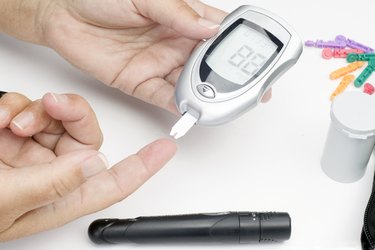








































Your blood contains a small amount of proteins that perform a wide range of functions. Blood protein levels are often tested as part of a comprehensive metabolic panel, or CMP, which is occasionally ordered during routine testing. High blood protein levels are often the first indication of an underlying condition, before any symptoms are even present.
Physiology
Blood proteins are found in the plasma, or liquid, portion of your blood. There are two classes of proteins found in blood plasma – albumin and globulins. Albumin proteins act as carrier molecules, transporting substances like oxygen, vitamins and minerals through your blood. Their major function, however, is in fluid balance. Albumins help keep fluid from leaking out of the blood vessels and into your tissues through a process called osmosis.
The term “globulins” refers to any of the other proteins in your blood, which includes enzymes, hormones and antibodies and several hundred other proteins. The amount of protein in your blood is tested with two values – total protein and the A/G ratio.
High Total Protein
Total protein measures the sum of all of the proteins in your blood. Total protein tests are ordered to assess nutritional status or if diseases involving major organs are suspected. Normal total protein falls between 6.0 and 8.3 grams per deciliter. High total protein values usually indicate chronic inflammation or chronic infections like HIV, hepatitis B and hepatitis C. Multiple myeloma, a type of bone cancer, can also cause high total protein levels.
High Albumin
Normal blood contains a little more albumin than globulins, making the A/G ratio just over 1. Some diseases and conditions cause a rise in albumin, while others cause a rise in globulins. The change in the A/G ratio can help your health care provider determine which condition is causing the problem. Increased albumin levels, also referred to as a high A/G ratio, are usually caused by leukemia, a blood-related cancer or genetic diseases.
High Globulin
High globulin levels cause a low A/G ratio. A low A/G ratio can have a lot of underlying causes, including autoimmune disorders, multiple myeloma, cirrhosis and kidney diseases like nephrotic syndrome. If a high A/G ratio is found, further testing is usually needed to isolate the specific cause.


