


















































Symptoms of Lateral Knee Pain With Running

Symptoms of Lateral Knee Pain With Running
Photo Credit Stockbyte/Stockbyte/Getty Images

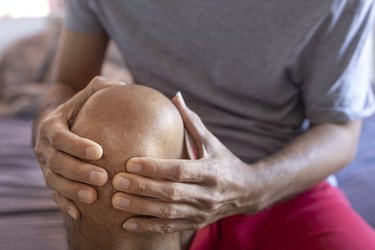
The knee is the largest human joint in terms of its volume and surface area. With many structures making up the knee, there are many possible causes for knee pain. Lateral, or outer, knee pain is the least common pain pattern. Arthritic pain, meniscal or ligament tears are more likely to occur in the medial, or inner, aspect of the knee. By localizing the pain to the lateral aspect of the knee, this greatly reduces the possibilities for what is causing the pain in a running-related injury. The causes vary in terms of symptoms, anatomy and treatment options.

Iliotibial Band Syndrome

The iliotibial band is a long muscle and tendon extending from the hip down the lateral femoral condyle, which is the upper outer aspect of the knee. Iliotibial band syndrome, or ITB, typically occurs in runners and cyclists. It is characterized by an aching or burning pain over the femoral condyle. The pain may occasionally radiate up the thigh toward the hip. Risk factors for developing this syndrome include being bowlegged, running excessive mileage, running continuously on uneven terrain or wearing worn shoes. Treatment options include rest, ice, strengthening of quadriceps muscles, physical therapy, anti-inflammatory medication such as ibuprofen and changing running shoes if they are worn down.

Lateral Comparment Osteoarthritis

Osteoarthritis, or OA, results from multiple factors, including anatomy, genetics, inflammation and mechanical forces. Also known as "wear and tear" arthritis, OA often is seen in the elderly as cartilage of the knee is lost secondary to overuse or age. Lateral compartment osteoarthritis without prior knee injury is rare. Symptoms include lateral burning pain with weight bearing, morning stiffness less than 30 minutes and crepitus. Rarely is osteoarthritis seen in individuals under the age of 50. OA pain may be present with running but would be rare in young adults. Initial treatment includes weight loss if obese, anti-inflammatory medication such as ibuprofen and stretching to increase flexibility. In moderate cases, cortisone or hyaluronic acid injections may be given by physicians for symptomatic relief. In severe cases, a knee replacement may be a last option.

Lateral Meniscal Tear

There are two menisci within the knee joint. The menisci are crescent-shaped pads of cartilage located between the femur and tibia. They aid in cushioning forces placed on the knee and stabilizing the knee joint with twisting motion. A meniscal tear often occurs during a twisting injury of the knee with the foot fixed. There are a wide array of symptoms resulting from a meniscal tear, including pain along the joint line, locking or clicking of knee, "giving out" of knee, inability to fully extend the knee and swelling. Initially after a meniscus tear, most individuals are able to run. Treatment is based on the severity of the symptoms. Initial treatment centers on the RICE method, which stands for rest, ice, compression and elevation. Pain is treated with anti-inflammatory drugs, such as ibuprofen. If a meniscal tear is suspected, seeking a physician's guidance is necessary, as surgery is the definitive treatment for persistent symptoms.

Tendinitis

The biceps femoris muscle tendon attaches to the lateral femoral condyle of the knee. Tendinitis of this muscle tendon can cause lateral knee pain with running. Tendinitis is inflammation of the tendon most often secondary to overuse after deconditioning of the muscle. The symptoms that may be present are burning and an aching pain mostly with extension and flexion of the knee. Sitting for prolonged periods also may cause pain. Treatment options for tendinitis are rest, ice, anti-inflammatory drugs and physical therapy for strengthening. If pain is severe, corticosteroid injections by a physician may be beneficial.

Lateral Collateral Ligament Tear

Lateral collateral ligament, or LCL, injuries are uncommon. The injury occurs when there is dramatic lateral stress placed on the knee. Generally a force placed on the inside of the knee pushing outward causes an LCL injury. An LCL injury presents with pain along the outer joint line of the knee and instability of the the outside of the knee. This ligament stabilizes the outer aspect of the knee. After an LCL injury, most individuals are not able to run. Treatment options include rest, ice and immobilization involving a brace. Anti-inflammatory drugs often are used for pain control. Physical therapy is used for reconditioning after six to eight weeks of rest. In rare and severe cases, surgery may be necessary.

References

Article reviewed by Kile McKenna Last updated on: Sep 7, 2011

Must see: Photo Galleries