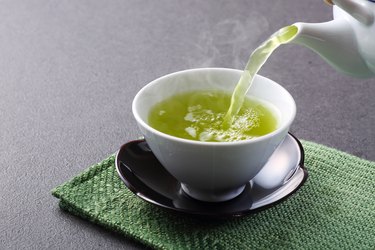
Is it better to drink green tea hot or cold? Does steeping temperature really matter? According to the latest research, cold water steeping increases antioxidant levels in tea and maximizes its healing power.
Cold green tea is just as nutritious as hot brewed tea. Its antioxidant content depends largely on steeping time and leaf quality. Loose-leaf tea typically packs more antioxidants and bioactive compounds than tea bags.
Video of the Day
Video of the Day
Tip
Contrary to popular belief, green tea doesn't lose antioxidants and other phytochemicals when cold. In fact, cold water steeping increases its antioxidant capacity and catechin levels while reducing its caffeine content.
The Antioxidants in Green Tea
White, green, black and oolong teas have been prized for their health benefits for centuries. They all come from the Camellia sinensis plant and possess high antioxidant capacities, notes the Tea Association of the U.S.A.
Drinking three or more cups of green tea daily can significantly lower the risk of heart disease, improve blood lipids and reduce body weight, reports a large-scale study published in the International Journal of Cardiology in November 2014. Regular green tea consumers tend to weigh less and have lower cholesterol levels and blood pressure than non-drinkers. Surprisingly, these effects are more pronounced in men.
Green tea is rich in flavonoids, phenolic compounds and other antioxidants that protect against inflammation, free radical damage, UV damage and cancer. Epigallocatechin gallate (EGCG), which accounts for about 40 percent of the catechin content in its leaves, may improve glucose and lipid metabolism, according to a research paper featured in the British Journal of Pharmacology in October 2016. Animal studies suggest that it may help prevent several types of cancer, including prostate cancer, but more research is needed to determine its effects on human subjects.
Read more: 10 Everyday Ailments Soothed by Tea
Another review, which appeared in the journal Nutrients in February 2019, indicates that green tea polyphenols protect the skin against UV damage, which may help slow aging and reduce the odds of developing skin cancer. This beverage is also a good source of vitamins, minerals, caffeine and amino acids. Its composition and antioxidant levels depend on the degree of fermentation as well as on the age and size of its leaves.
EGCC and other phytonutrients in green tea may also reduce oxidative damage to the brain. As a result, this functional beverage can improve mental health and lower your risk of neurodegenerative disorders, according to the above review. It's important to note, though, that drinking too much green tea may increase free radical levels and lead to DNA damage, heart disease and even cancer. Like with everything else, moderation is key.
Green Tea: Hot or Cold?
Cold green tea benefits your health to the same extent as a hot cup of tea — or at least that's what researchers say. A July 2015 study published in the Journal of Food Science and Technology compared several steeping methods for green, black and oolong teas. Scientists found that cold-water steeping increased the phenolic compounds and antioxidant activity in all teas, especially green and black varieties.
As the researchers note, tea polyphenols are destroyed when processed at temperatures over 194 degrees Fahrenheit. This explains why cold-water steeping helps preserve and even increase antioxidant levels in green tea. Plus, the taste is less bitter compared with that of hot-brewed tea. The only downside is that it leads to lower levels of gallic acid and caffeine.
These findings show that cold-brewed green tea is higher in catechins, flavonoids and other antioxidants than hot-brewed tea. Furthermore, it contains less caffeine, which may benefit those who are sensitive to this compound. To put it simply, cold-brewed tea won't give you the level of jitters and anxiety associated with coffee, black tea or hot green tea.
Making cold-brewed iced tea is really simple. Put one or two tea bags in a cup filled with water (about 12 ounces). Let it steep for 10 minutes or longer, remove the tea bags and enjoy.
Read more: 6 Surprising Ways to Cook With Tea
Another option is to use 1 or 2 tablespoons of loose tea leaves, as they contain more antioxidants. Tea bags are often lower in catechins and other phytochemicals that tend to degrade over time.
Steeping Time Matters, Too
Tea manufacturers typically recommend two or three minutes of steeping. Current evidence, on the other hand, suggests that longer steeping times may increase the antioxidant capacity of green tea.
For example, a November 2015 study published in the Journal of Food Science showed that prolonged cold steeping is the most effective at preserving the antioxidants in green tea. A research paper featured in the journal Beverages in July 2016 reports similar findings. Longer steeping times may increase total polyphenol content and amplify the health benefits of tea. Researchers recommend steeping the tea for at least 10 minutes to preserve its nutritional value.
Water composition plays a role, too. Brewing the tea in bottled or deionized water may double its EGCG content and hence increase its antioxidant capacity, according to an article published in the journal Nutrients in January 2019.
Scientists state that calcium, magnesium and other minerals in tap water may reduce the amount of EGCG. Purified water, by comparison, is lower in minerals and trace elements, allowing you to get the most of your tea.
Another advantage of drinking cold-brewed green tea is that it may lower your risk of esophageal cancer. Very hot beverages, including coffee and tea, have been linked to this deadly disease. A study published in the March 2019 edition of the International Journal of Cancer found that drinking at least 700 milliliters of hot-brewed tea a day may increase the risk of esophageal squamous cell carcinoma by up to 90 percent.
- Tea Association of the U.S.A.: "Tea Fact Sheet – 2018-2019"
- British Journal of Pharmacology: "Antioxidants From Black and Green Tea: From Dietary Modulation of Oxidative Stress to Pharmacological Mechanisms"
- Antioxidants: "Green Tea Catechins for Prostate Cancer Prevention: Present Achievements and Future Challenges"
- Nutrients: "A Review of the Role of Green Tea (Camellia Sinensis) in Antiphotoaging, Stress Resistance, Neuroprotection, and Autophagy"
- Journal of Food Science and Technology: "Effects of Alternative Steeping Methods on Composition, Antioxidant Property and Colour of Green, Black and Oolong Tea Infusions"
- Columbia University: "Bagged Tea Versus Loose Leaf: Which Is Better?"
- Journal of Food Science: "Temperature and Time of Steeping Affect the Antioxidant Properties of White, Green, and Black Tea Infusions"
- Beverages: "Influence of Steep Time on Polyphenol Content and Antioxidant Capacity of Black, Green, Rooibos, and Herbal Teas"
- Nutrients: "The Influence of Water Composition on Flavor and Nutrient Extraction in Green and Black Tea"
- American Cancer Society: "World Health Organization Says Very Hot Drinks May Cause Cancer"
- International Journal of Cancer: "A Prospective Study of Tea Drinking Temperature and Risk of Esophageal Squamous Cell Carcinoma"
- International Journal of Cardiology: "Association of Green Tea Consumption With Risk of Coronary Heart Disease in Chinese Population"