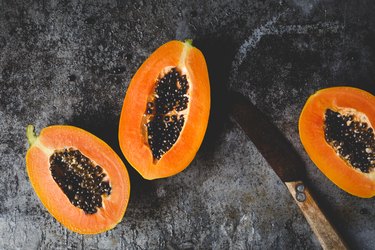
Though papayas are mostly bought for their sweet flesh, the fruit's seeds are also edible and have many health benefits. Helping to treat food poisoning and intestinal parasites are two of papaya seeds' benefits, according to a January 2017 review in the Journal of Pharmacognosy and Phytochemistry.
Papaya Seed Benefits
Video of the Day
Papaya, native to South and Central America, is a tropical fruit that is sweet, aromatic and similar to melon in taste. The fruit can have a yellow, pink or orange-red interior, depending on the variety, according to the University of Arkansas.
Video of the Day
According to the U.S. Department of Agriculture, papaya flesh is rich in vitamins C and A, folate, potassium and magnesium. The fruit also contains nearly zero fat, sodium and cholesterol, which makes it a good option for people who are watching their salt or fat intakes.
Read more: 3 Side Effects of Eating Too Much Papaya
When papaya is sliced open, black, gelatinous seeds fill the center. These kernels could be scooped out and discarded or dried or fermented and used as a food ingredient.
According to a 2014 review published in the International Journal of Herbal Medicine, papaya seeds have a spicy taste and can be ground and used as a substitute for black pepper. Papaya seeds are also fermented and used to produce an indigenous Nigerian food called "daddawa," which is a condiment traditionally sold in balls or patties.
According to the same review, papaya seeds are composed of fatty acids, protein, fiber, papaya oil, carpaine, benzyl isothiocynate, benzyl glucosinolate, glucotropacolin, benzylthiourea, hentriacontane, β-sistosterol, caricin and the enzyme nyrosin. Though they can be eaten and have nutritious components, the U.S. Department of Agriculture does not provide nutrition information for papaya seeds.
Even though nutritional information and suggested serving size are not easily found for papaya seeds, the health benefits of eating them are numerous and supported by research. In a December 2018 study published in the journal BMC Complementary and Alternative Medicine, children fed a porridge fortified with papaya seeds had a significantly reduced amount of Ascaris lumbricoides — an intestinal parasite also known as "large roundworm" — compared to children who were fed the porridge without papaya seeds.
Another benefit of papaya seeds is that eating them could help treat food poisoning. According to the January 2017 review published in the Journal of Pharmacognosy and Phytochemistry, an extract made from papaya seeds has been shown to be effective in killing E.coli, Salmonella, Staphylococus and other bacterial infections.
Read more: Papaya and Pineapple Enzymes
Papaya Seed Side Effects
A link has been shown between eating papaya seeds and female fertility as well as male fertility. According to the January 2017 review published in the Journal of Pharmacognosy and Phytochemistry, papaya seed extract has been shown to decrease sperm count, motility and viability in rats and mice.
Keep in mind, these studies were done on animals. Further research on humans is needed to establish a link between eating papaya seeds and human male fertility.
When it comes to female fertility and papaya seeds, the link is also unclear and further research is required. However, according to the U.S. National Library of Medicine, consuming papaya during pregnancy and while breastfeeding is possibly unsafe. Therefore, pregnant and breastfeeding women should not consume papaya.
There is evidence that papain, a chemical found in the fruit, may poison the fetus or cause birth defects. Though the U.S. National Library of Medicine makes no distinction between papaya and papaya seeds in their recommendation, to be safe, steer clear of consuming papaya seeds while pregnant until research conclusively shows that it is healthy and safe to do so.
Read more: Fruits to Avoid and Eat During Pregnancy
- International Journal of Herbal Medicine: "Carica Papaya Linn: An Overview"
- Journal of Pharmacognosy and Phytochemistry: "The Surprising Health Benefits of Papaya Seeds: A Review"
- University of Arkansas: "Papaya - A Strange Name But Sweet Flavor"
- USDA: "Papayas, Raw"
- BMC Complementary and Alternative Medicine: "Fortification of Carica Papaya Fruit Seeds to School Meal Snacks May Aid Africa Mass Deworming Programs: A Preliminary Survey"
- U.S. National Library of Medicine: "Papaya"