












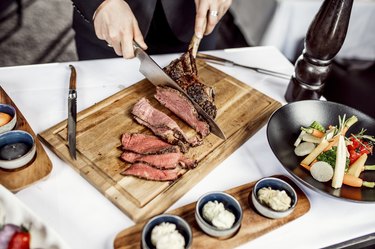




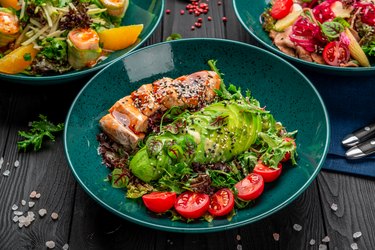

























Gender equality aside, men and women differ from each other biologically. Differences in body composition and biological processes make some nutrients more important for women than men and vice versa. Some of these differences are reflected in the eating habits of both groups. A 2008 survey found that men are more likely to eat meat than are women, whereas fruits and vegetables are more commonly found in women's refrigerators.
Calories
Men and women have different calorie needs. A 30-year-old woman who is 5 feet, 8 inches tall and weighs 165 pounds needs about 2,335 calories per day to maintain a healthy weight, whereas a man of the same age, height and weight needs 2,735 calories each day, according to the Baylor College of Medicine. This is because men tend to burn calories more rapidly than women, due to increased muscle mass and less body fat.
Calcium
Women are more prone to bone loss that occurs naturally with age. According to MayoClinic.com, women are almost twice as likely to suffer a bone fracture than are men. Therefore, although men and women both need the same amount of calcium each day, it is particularly crucial that women get enough in their diet. Lack of calcium contributes to the development of osteoporosis and other bone disorders later in life. For optimal health benefit, women under 50 should get 1,000 milligrams per day, 1,200 milligrams for women over 50. Men, on the other hand, may experience unpleasant side effects when they consume too much calcium and should limit their intake to 800 milligrams per day.
Fiber
Fiber is important for both men and women. However, men not only need more fiber than women, but they may also be less likely to include high-fiber foods in their diets. According to the Harvard Medical School, adequate fiber intake reduces the chances of developing colon cancer, the third most common cause of death among men and the second for women. Men under 50 need 38 grams of fiber each day, 30 grams for men over 50. Women under 50 need 25 grams daily, 21 grams after the age of 50.
Iron
Because women lose blood during their menstrual cycles, they need more iron in their diets than men do. Men only need 8 milligrams each day, whereas women who have not yet reached menopause require 18 milligrams. A woman's iron needs increase during reproductive stages. Pregnant women need 27 milligrams of iron per day, and breastfeeding women need 9 milligrams. Whether you are a man or a woman, always consult your doctor before taking iron supplements, which can be dangerous in excessive doses.


Member Comments