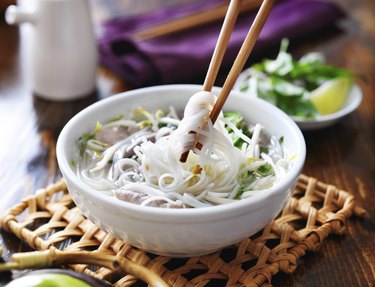
Rice noodles can help you add some variety to your diet, as well as a significant amount of the essential minerals selenium and manganese. However, due to their high carbohydrate content, they can also adversely affect your blood sugar if you eat too much of them or pair them with the wrong foods.
Carbohydrate Content
Video of the Day
A carbohydrate serving for a person with diabetes is 15 grams, which means a 1-cup serving of cooked rice noodles, which has about 42 grams of carbohydrates, counts as three servings of carbohydrates. Each meal should contain three to five carbohydrate servings, depending on whether you're a man or a woman and how active you are. Eating more carbohydrates than this could make your blood sugar levels more likely to spike.
Video of the Day
Glycemic Index
The glycemic index estimates how much a particular food is likely to increase your blood sugar levels. Foods with a low glycemic index of 55 or less aren't likely to greatly affect your blood sugar levels, while those with a high GI of 76 or above are more likely to cause large increases. Rice noodles tend to be among the lower-GI rice products, according to a study published in the "International Journal of Food Sciences and Nutrition" in 2009. Boiled dried rice noodles have a GI of 61, making them a medium-GI food, but if you choose fresh noodles instead, the GI is low at 40. Some dishes using rice noodles can be high on the glycemic index, however, including Chinese fried rice noodles with sliced beef, which has a glycemic index of 80.
Glycemic Load
The glycemic index doesn't take serving size into account, so the glycemic load, which does factor in serving sizes, may be a better way to estimate the effect of rice noodles on your blood sugar levels. A glycemic load under 10 is considered low, and a score over 20 is high. A 1-cup serving of boiled fresh rice noodles has a glycemic load of 15, so it is likely to cause a moderate increase in your blood sugar levels. The same amount of rice noodles boiled from dry has a GL of 23, making it more likely to cause spikes in blood sugar levels.
As Part of a Diabetes Diet
A number of factors can help you lower the total glycemic load, and thus the effect on your blood sugar, of a meal including rice noodles. Consider a smaller serving size, such as 1/2 or 1/3 cup, and pair the noodles with foods that are low on the glycemic index, like nonstarchy vegetables and lean protein foods. Also, minimize the cooking time and include something acidic in your meal, as both of these factors can help lower GL.
- Diabetes Care: International Tables of Glycemic Index and Glycemic Load Values
- Clinical Diabetes: The 3 R's of Glycemic Index: Recommendations, Research, and the Real World
- International Journal of Food Sciences and Nutrition: Glycaemic Index of Some Commercially Available Rice and Rice Products in Great Britain
- World Journal of Gastroenterology: Glycemic Index and Glycemic Load of Selected Chinese Traditional Foods
- University of Kentucky Extension: Carbohydrate Counting
- HealthAliciousNess.com: Nutrition Facts Comparison Tool