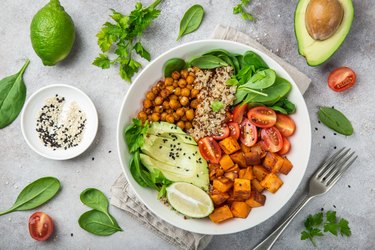
Too often, we associate weight loss and "healthy eating" with less food. Yes, you need to eat fewer calories to lose weight, and yes, food has calories, but it's more about the quality of those calories — what you are eating, rather than how much.
Take thermic foods, for example. Eating them actually gives your metabolism a bump, which can certainly help with weight-loss efforts. Read on for the full breakdown.
Video of the Day
Video of the Day
What Are Thermic Foods?
After you eat, your body uses up some of the calories (or energy) in the food to digest, absorb and store the nutrients your cells need to function.
The thermic effect of food (TEF) is the increase in metabolic rate — the rate at which your body burns calories or energy — that occurs after you eat, Valerie Agyeman, RD, LD, dietitian and founder of Flourish Heights, tells LIVESTRONG.com.
"The TEF accounts for 10 to 15 percent of the total energy expenditure and is influenced by the timing of meals, caloric content and macronutrient composition," explains Mariana Dineen, RD, CDN.
"A number of studies have shown that the thermic effect of food is higher in the morning and reduced in the evening. A proposed mechanism for this may be the effect of our circadian rhythms on metabolism," Dineen says.
Interestingly, not all foods are created equal — and some foods have a higher thermic effect than others. (FYI, this is one of the reasons why a varied pattern of eating is supportive of overall metabolic health.)
10 Thermic Foods That Support a Healthy Metabolism
The following foods have been shown to at least temporarily boost metabolism:
1. High-Fiber Foods
Replacing refined grains with fiber-rich whole grains may have beneficial effects on energy regulation and metabolism.
In a March 2017 study in The American Journal of Clinical Nutrition, participants were asked to substitute whole grains for refined grains throughout a six-week period.
By the end of the study, people who ate around 35 to 45 grams of fiber noticed an increase in their metabolism.
Examples of high-fiber foods include:
- Avocados
- Pears
- Mangoes
- Pistachios
- Artichokes
- Popcorn
- Almonds
Related Reading
2. Lean Animal Proteins
High-quality protein foods offer not only a high thermic effect but also provide a higher degree of satiety, says dietitian Joy Bauer, RD and author of Joy Bauer's Food Cures.
She credits this phenomenon to protein's ability to keep blood sugar levels stable, thus avoiding the sharp, temporary ups and downs in blood glucose that are associated with hunger pangs.
The key, of course, is picking the best proteins to add to your nutrition plan. Great choices in this category include proteins in their whole and minimally processed form with limited added sugars and synthetic fats, such as:
- Lean meats
- Poultry
- Unsweetened fermented dairy (think: plain, low-fat yogurt)
3. Plant-Based Proteins
Like animal-based proteins, plant-based foods high in protein can boost your metabolism, too.
These options require your body to use more energy to digest them, increasing their thermic effect, says dietitian Vanessa Rissetto, RD.
In fact, researchers speculate that the increased oxygen demand needed to metabolize protein foods might cause an increase in satiety, according to a 2014 article in the Journal of Nutrition & Metabolism.
Good options in this category include:
- Lentils
- Nuts
- Beans
- Tofu
4. Seafood
Seafood is also naturally high in protein.
"Research shows that protein has the highest thermic effect," Marisa Moore, RDN, tells LIVESTRONG.com. "Protein requires between 15 to 30 percent more energy to digest, followed by carbohydrates at 5 to 10 percent and fats which are significantly lower at 0 to 3 percent."
"For every 100 calories of protein consumed, about 20 to 30 calories are spent during digestion and absorption," explains Cordiails Msora-Kasago, RDN and media spokesperson for the Academy of Nutrition and Dietetics.
High-protein seafood options include:
- Salmon
- Tuna
- Shrimp
- Scallops
- Cod
5. Foods With Capsaicin
A July 2013 study in PLOS One notes that capsaicin — which is found in chili peppers and paprika — can bolster your metabolic rate and promotes fat burning.
6. Foods Rich in Iron, Zinc and Selenium
Iron, zinc and selenium are nutrients your thyroid gland requires to function at its best, and your thyroid plays a key role in regulating your metabolism, per an April 2014 paper in Physiological Reviews.
Foods rich in these three nutrients include:
- Meat
- Poultry
- Seafood
- Nuts and legumes
- Dairy
7. Iodine-Rich Foods
Iodine is another nutrient that helps your thyroid function at its best, according to the American Thyroid Association.
Foods with iodine include:
- Dairy products, such as milk, cheese and yogurt
- Eggs
- Seaweed
- Shellfish
- Soy products, including soy milk and soy sauce
8. Green Tea
Green tea may offer some moderate metabolism-boosting benefits due to antioxidants called catechins. The catechin known as EGCG, in particular, helps break down fat, says Pauline Jose, MD, a clinical instructor at UCLA and family medicine specialist at pH Labs.
EGCG and caffeine seem to form a kind of dream team: a March 2013 review in Advances in Nutrition says green tea extract has a positive effect on fat metabolism, and other research has found that green tea catechins must be ingested with caffeine in order to aid in weight loss, according to the 2014 book Antioxidants in Sport Nutrition.
9. Coffee
Caffeine gives a temporary lift to the metabolic process, Dineen says.
In one small January 2020 study from the Harvard T.H. Chan School of Public Health, researchers found that drinking four cups of coffee each day led to a 4 percent reduction in body fat in people who were overweight. They theorized that the caffeine increased the participants' metabolism and helped them burn more calories.
10. Water
Every part of your body needs water to function at its best, and that includes your metabolism.
When you're dehydrated, your body burns up to 2 percent fewer calories, according to the American Council on Exercise (ACE), which recommends drinking about 2 liters of water a day.
Tip
Fill your glass with cold water — your body has to work to increase the liquid to body temperature, which helps your burn through a few more calories, per the ACE.
What About Ginger and Apple Cider Vinegar?
These two have been touted as metabolism-boosting foods, but the science isn't there.
"Ginger has been hypothesized as another food that increases TEF," Dineen says. "And although it can be a helpful preventive treatment for nausea, human studies about ginger's effects of TEF are inconclusive and have yielded contrasting results."
Apple cider vinegar is rich in polyphenols, acetic acid and makes great dressings, but: "Unfortunately, the lack of human studies makes it impossible to draw conclusions about the potential effects it has on energy and metabolism," Dineen says.
2 Other Ways to Rev Up Your Metabolism
Food is an important part of the equation, but it's not the only thing that can affect your metabolism. Here are a few more:
1. Get Enough Sleep
Aim for the recommended seven to nine hours between the sheets. A September 2019 study in the Journal of Lipid Research found that lack of sleep (five hours or fewer per night) can change the way your body metabolizes food. It also made people in the study feel less satisfied after a fatty meal, which means it could lead you to eat more.
2. Get Enough Exercise
Exercising burns calories in the moment, but it also amps up your metabolism after your workout. This is known as the afterburn effect or excess post-exercise oxygen consumption.
Exactly how many more calories are torched due to the afterburn effect varies from person to person, but in general, your body expends approximately 5 calories of energy for every liter of oxygen it consumes, according to the ACE. The greater demand for oxygen after your workout means you'll burn more calories overall.
High-intensity interval training (HIIT) is the most effective way to trigger EPOC, per the ACE.
Related Reading
- Journal of Nutrition & Metabolism: "A high-protein diet for reducing body fat: mechanisms and possible caveats"
- PLOS One: "Acute Effects of Capsaicin on Energy Expenditure and Fat Oxidation in Negative Energy Balance"
- The American Journal of Clinical Nutrition: "Substituting whole grain for refined grain: what is needed to strengthen the scientific evidence for health outcomes?"
- Advances in Nutrition: "The effect of green tea extract on fat oxidation at rest and during exercise: evidence of efficacy and proposed mechanisms"
- Antioxidants in Sport Nutrition: "Chapter 8: Green Tea Catechins and Sport Performance"
- Physiological Reviews: "Thyroid Hormone Regulation of Metabolism"
- American Thyroid Association: "Iodine Deficiency"
- Harvard T.H. Chan School of Public Health: "Four cups of coffee a day associated with modest loss of body fat"
- American Council on Exercise: "Slow Metabolism: 8 Things that Slow Down Your Metabolism"
- Journal of Lipid Research: “Four nights of sleep restriction suppress the postprandial lipemic response and decrease satiety”
- American Council on Exercise: "Excess Post-exercise Oxygen Consumption (EPOC)"
- World Fitness Network: Burn Fat With the Thermic Effect of Food