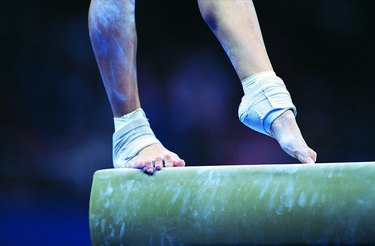
When people talk about having a strong center of gravity, they usually mean good balance, although your center of gravity is only one part of the equation for balance and stability. In athletics, and especially contact sports like football, rugby and wrestling, a strong, low center of gravity is a key to success, and many athletes take great care to maintain this asset. You can improve yours by assessing your mass distribution, and by exercising your legs, core and stabilizer muscles.
Mass Distribution
Video of the Day
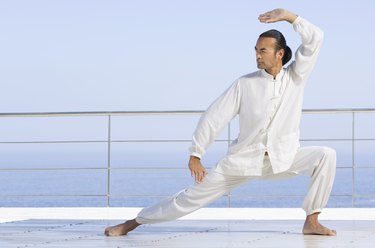
The center of gravity of any object is the area around which the mass of the object is concentrated. The ideal, natural focal point of balance is usually located just below the navel and halfway between the abdomen and lower back, which is midway between the mass of the upper and lower body. For instance, if a woman is overweight or pregnant, her center of gravity will move forward and she will have trouble balancing. Similarly, if a man overdevelops his upper body and ignores his legs, his center of gravity will shift higher, and he will be less stable.
Video of the Day
Strengthen Your Legs
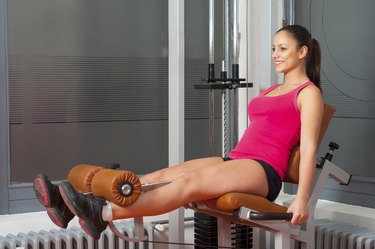
Trucks are manufactured to have as low a center of gravity as possible to keep them from falling over, and many athletes structure their bodies similarly. The more your mass is concentrated in your lower body, the better your balance. This is not to say that you need to have skinny arms and massive legs, but the stronger your legs are, the more stable you are likely to be. Squats, lunges, side lunges and calf raises are just some of the many exercises that will work your legs and improve your center of gravity.
Strengthen Your Core
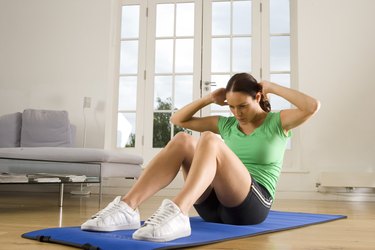
Strong, durable core muscles are another integral part of balance. Because they wrap around your center of gravity, your upper and lower abdominals, obliques and lower back must be in good shape to react quickly to changes in your body's motion and position. Deadlifts are a great cross over exercise to build core as well as leg strength, especially in the lower back. For performance-enhancing ab exercises, try to avoid crunches and stay on your feet. Using free-weights or cables to do standing Russian twists and high woodchoppers will increase the reactive torque you need to remain stable.
Balance Training

While normal leg and core exercises will help improve your balance, you can make them even more effective by incorporating them into direct balance training. To do this, perform exercises on unstable surfaces that will test your balance. These can be squats on a BOSU ball, or situps on a stability ball. As your center of gravity shifts, the small stabilizer muscles in your ankles, knees and core will be engaged, which over time will improve your balance perception and reaction time. Also, the stability and range-of-motion training in yoga is a fantastic way to strengthen your center of gravity.